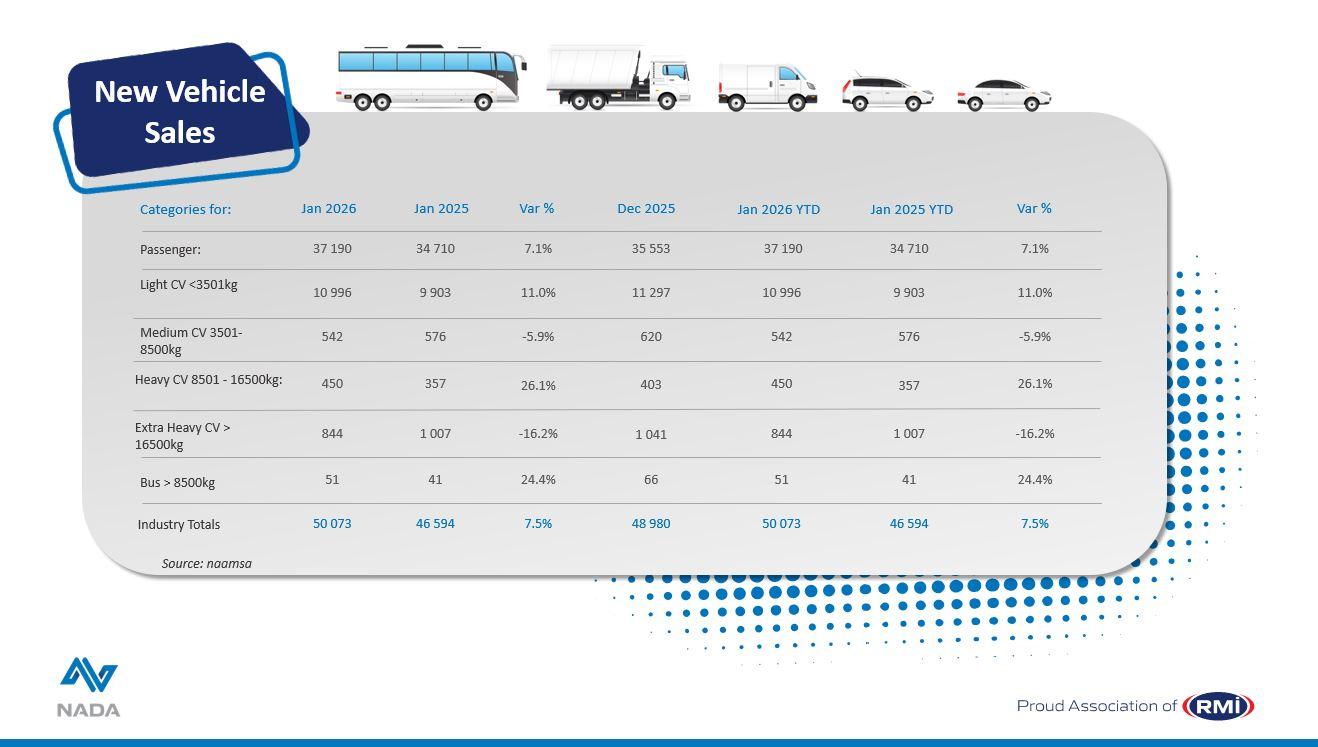
The new car buying trend has continued unabated into the new year, with January figures reflecting a 7.5% increase in total vehicle sales and passenger car volumes rising by 7.1%.
Share with friends
“This is a welcome and encouraging sign for the local motor industry at a time when both the domestic and global economies remain in a state of flux,” says Ryan Seele, executive committee member of the National Automobile Dealers’ Association (NADA), following the release of the latest monthly sales figures by naamsa | The Automotive Business Council.
Ryan notes that January sales figures are traditionally slightly distorted, as many vehicle purchases are concluded in December for delivery in the new year, often supported by year-end incentives from original equipment manufacturers (OEMs).
“While 2025 exceeded most expectations, January has continued with a strong set of numbers, which suggests that these results reflect genuine market momentum rather than a seasonal anomaly,” he says. “January typically sees a moderation in volumes, but this year has clearly proven different.”
He adds that demand continues to be concentrated in the sub-R400 000 price bracket, reinforcing the importance of affordability in the current economic environment. “At the same time, there are still significant waiting lists for some of the more sought-after luxury vehicles, which points to sustained demand across select higher-end segments of the market.”
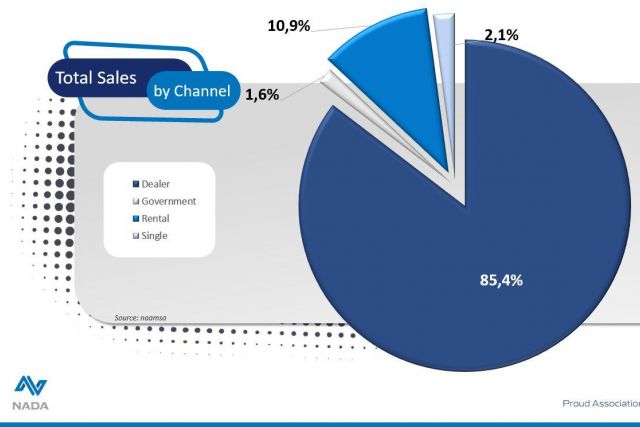
Retail sales channels delivered a solid performance in January, accounting for 85.4% of total vehicle sales. Deliveries to rental companies also recorded growth, contributing 10.9% of overall sales and 13.3% of the passenger car segment.
Total vehicle sales reached 50 073 units in January, representing an increase of nearly 3 500 vehicles, or 7.5%, compared with January 2025. Passenger car sales totalled 37 190 units, reflecting a year-on-year improvement of 7.1%.
Commenting on the interest rate environment, NADA noted that while interest rates were left unchanged by the South African Reserve Bank, stability in borrowing costs continues to provide a degree of certainty for consumers and businesses alike. The organisation reiterated that future interest rate relief would further support vehicle sales.
Additional encouragement for consumers comes in the form of a fuel price reduction effective from 3 February, which is expected to provide some relief to household budgets, ease transport and logistics costs, and contribute positively to overall mobility and vehicle usage levels.
As fuel prices continue to climb across South Africa, many motorists are beginning to question whether owning a car still makes financial sense. With in-land petrol prices now at R26.63 a litre and diesel costs rising sharply in May, transport expenses are placing growing pressure on household budgets.
Pinewood.AI has added two new embedded modules to its Business Intelligence Solution, giving dealers and OEMs greater insight into financial performance and the customer journey, it says.
Pinewood.AI has added two new embedded modules to its Business Intelligence Solution, giving dealers and OEMs greater insight into financial performance and the customer journey, it says.
Margins are shrinking, customers are under financial strain, and competition is intensifying across South Africa’s motor retail sector. Against this backdrop, dealerships are being forced to rethink how they remain profitable while still building customer trust and long term sustainability.
Ford will launch seven new models in Europe by 2029, it announced recently, as it seeks to grow its flagging passenger car sales, fend off fierce competition from Chinese rivals and maintain an edge in the continent's commercial vehicle market.