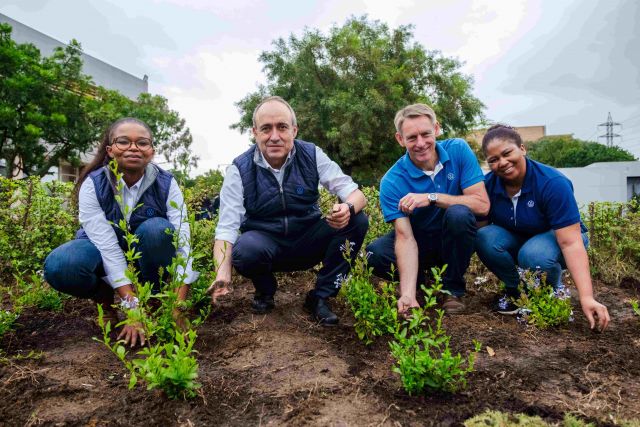
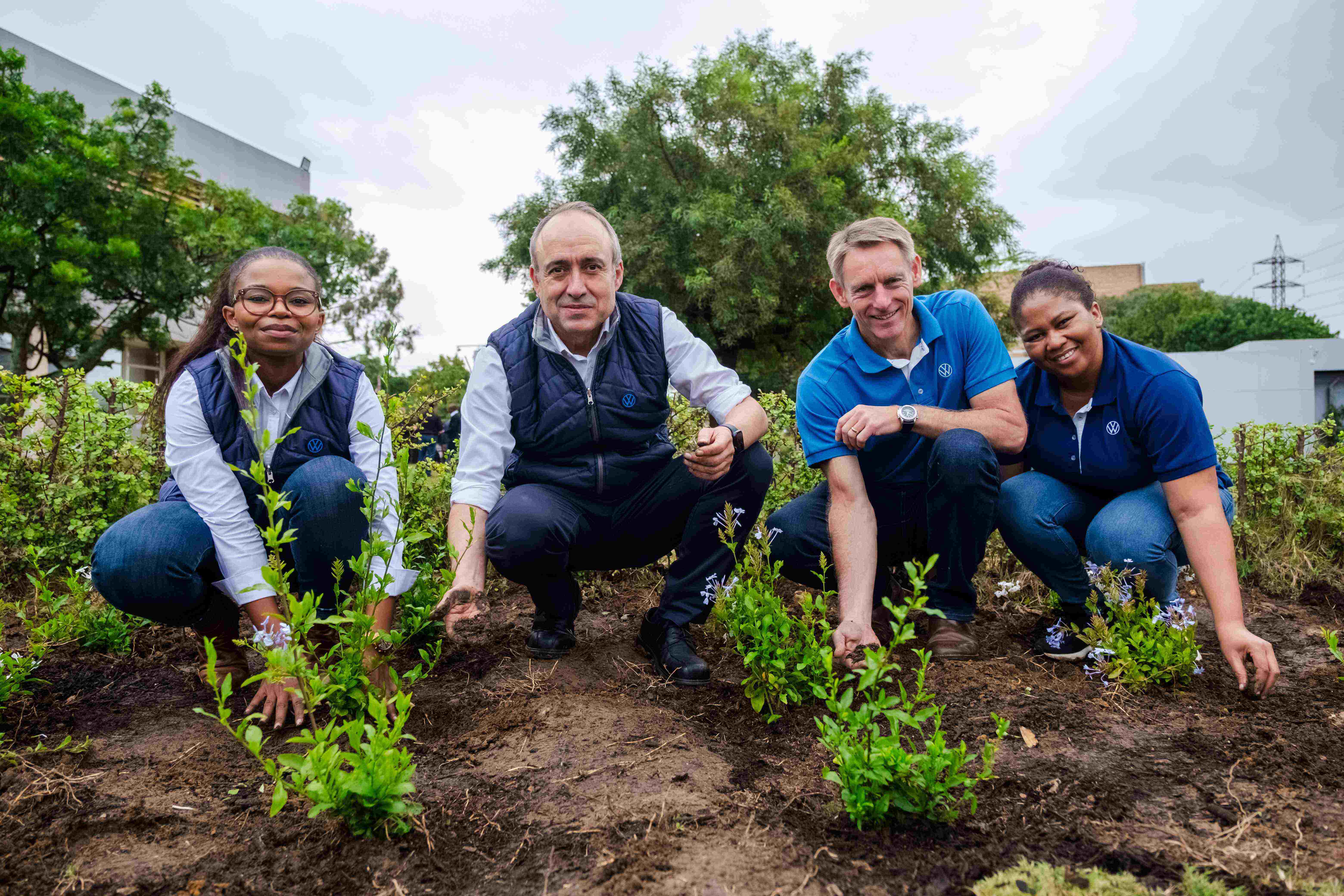
Volkswagen celebrated Biodiversity Day with employees planting Plumbago Auriculata (also known as Cape Plumbago) at its main production plant in Kariega.
Share with friends
This beautiful, blue indigenous flower is rich in nectar and plays a vital ecological role by attracting pollinators such as butterflies, bees and birds. VWGA employees rolled up their sleeves to help plant almost a thousand plants.
VWGA says it is committed to biodiversity initiatives, raising awareness among employees and within the communities where it operates throughout the year. Two years ago, employees planted nearly 5 000 spekboom cuttings on the grounds of its Kariega facilities, and hundreds more were planted at local schools through the Volkswagen Community Trust.
Seen here are Ntsapokazi Ningiza, Ulrich Schwabe (Production Director), Mike Petrie and Reabetsoe Kgoedi.
This remarkable succulent is known for its carbon-absorbing properties, making it an essential player in combating climate change. A single hectare of spekboom can absorb up to 4.2 tons of carbon dioxide a year.
Ulrich Schwabe, Production Director, emphasised that biodiversity is essential for healthy ecosystems. "Without a wide variety of animals, plants and micro-organisms, we wouldn’t have the balanced ecosystems that provide us with clean air, nutrient-rich soil and food," said Schwabe. "We cannot have a Zero Impact Factory and not invest time in promoting biodiversity."
Additionally, the company actively removes invasive trees, shrubs and grasses from its sites while the premises is home to about 40 neutered cats. As natural hunters, cats help control the rodent and pest population.
Charging time remains a worry for many South Africans considering an electric vehicle, who still see it as a disruption rather than a quick stop at a filling station. That view is starting to shift.
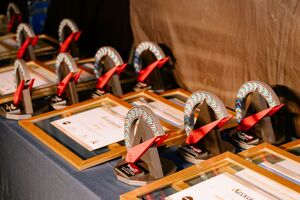
The winners of the 2026 Automotive Business Council | naamsa Accelerator Awards were announced at the recently held Auto Week 2026, which took place in eThekwini, KZN.
When Cobus Coetzee (photo) accepted the opportunity to join the Morgan Group in Upington, he had to weigh up more than a new position. The move meant exchanging the West Coast’s cooler climate and seaside lifestyle for the Northern Cape’s desert heat, while taking responsibility for a multi-franchise operation spread across several premises.
The winners of the 2026 Automotive Business Council | naamsa Accelerator Awards were announced at the recently held Auto Week 2026, which took place in eThekwini, KZN.
With the steep rise in fuel prices since March this year leading to historic record highs following massive increases in October, the government intervention annouched this week, is widely welcomed.
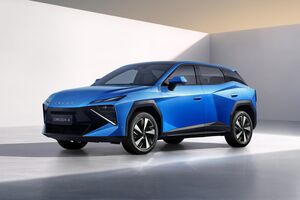
Omoda has confirmed that the new C4 will become the first model from the Chery Group to be built in South Africa, with production set to take place at the company's Rosslyn manufacturing facility in Gauteng.