The confidence of chief executives of automotive companies about the outlook for the new vehicle market over the next six months has deteriorated significantly.
Share with friends
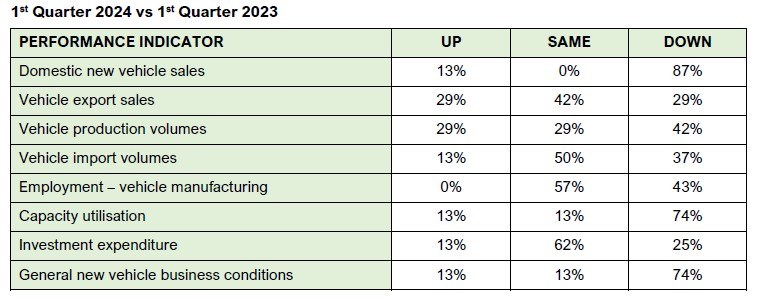
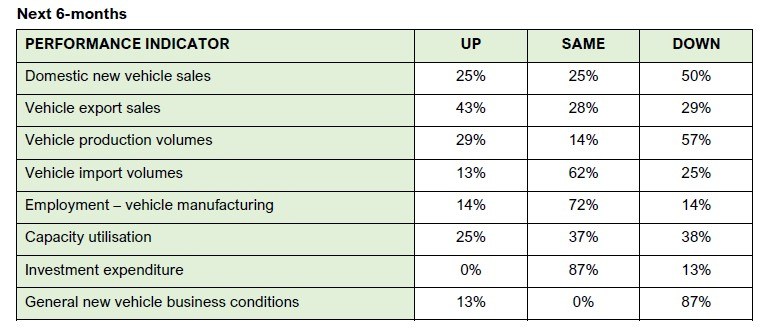
At the end of the first quarter of 2024 (end of March), half of automotive CEOs believed domestic new vehicle sales would deteriorate in the next six months compared to 36% of CEOs holding this view at the end of the previous quarter (to end December 2023).
In addition, only 25% of CEOs believed domestic new vehicle sales would increase in the next six months compared to 36% in the previous quarter.
These opinions were captured in the quarterly CEO Confidence Index, where naamsa captures the opinions of CEOs in the automotive industry and then indexes this data against the previous quarters. The survey is anonymous and is considered an authoritative insight into the business sentiment in the wider automotive industry.
For the next six months, the opinions of CEOs are even more negative. For this period no less than 87% of CEOs expect business conditions to deteriorate compared to 55% in the previous quarter.
However, the percentage of CEOs who believe there will be an improvement in general new vehicle business conditions in the next six months increased to 13% from 9% in the same period.
This anomaly resulted from 36% of CEOs at the end of the fourth quarter who believed that general new vehicle business conditions would remain the same in the next six months compared to no CEO now believing this will happen in the next six months.
Naamsa CEO Mikel Mabasa says the sentiment expressed by the naamsa CEOs is in line with expectations of a taxing first half of the year, with business conditions remaining challenging.
Mabasa says the downward slope in new vehicle sales, which commenced in the third quarter 2023 continued into the first quarter 2024 as the economy remained trapped in a high interest rate environment along with a volatile rand exchange rate and premium fuel prices, all contributing to an affordability crisis faced by consumers of new vehicles.
He says port congestion challenges still continued during the first quarter of 2024, resulting in supply chain disruptions negatively impacting on costs, vehicle production and new vehicle sales.
However, Mabasa says some CEOs of selected imported brands with affordable models, as well as some heavy commercial vehicle OEMs capitalising on the dependency on road transport owing to rail inefficiencies, expressed a more positive sentiment during the quarter.
“The views of the naamsa CEOs continued to reflect that the current market sentiment ranges from negative to cautious for all of the industry’s key performance indicators over the next six months.
“Uncertainty around the looming national elections, as well as the timing of the interest rate cutting cycle and the anticipated extent of the rate cuts, also influenced sentiment.
“Despite various challenges and elements of economic uncertainty, OEMs and importers continue to launch new products into the marketplace,” he says.
Mabasa adds that although there was some relief with load-shedding, as well as an easing of the logistics challenges during the quarter, the automotive sector’s productivity still relies heavily on infrastructure investment, sustainable energy supply and the revitalisation of South Africa’s ports, rail and roads.
“A conducive framework remains crucial to support these critical elements as businesses rely on an enabling environment to grow,” he says.
Mabasa adds that the new vehicle market at present is performing in line with expectations of a year of two halves, consisting of a taxing first half but with brighter economic prospects expected during the second half of the year.
The Kia Carens nameplate makes its return to South Africa, this time as a seven‑seater designed with families in mind. It combines Sport Utility Vehicle (SUV) styling with Multi-Purpose Vehicle (MPV) practicality, offering space, comfort and efficiency, Kia says.
Volvo has confirmed that its vehicles will now integrate Google’s Gemini artificial intelligence system. This development builds on the company’s existing collaboration with Google, which already provides Android Automotive OS and Google services in Volvo models.
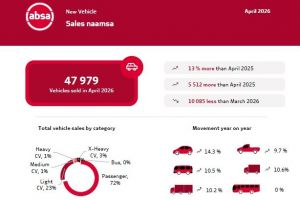
New vehicle sales in 2026 continued their positive trend in April, with the 47 979 units sold marking the best April figure since 2013. This represents a remarkable performance by local automotive retailers despite a host of economic headwinds and a challenging trading environment.
Volvo has confirmed that its vehicles will now integrate Google’s Gemini artificial intelligence system. This development builds on the company’s existing collaboration with Google, which already provides Android Automotive OS and Google services in Volvo models.
New vehicle sales in 2026 continued their positive trend in April, with the 47 979 units sold marking the best April figure since 2013. This represents a remarkable performance by local automotive retailers despite a host of economic headwinds and a challenging trading environment.
April 2026 marked a turning point in South Africa’s economic landscape, as global energy markets were jolted by escalating geopolitical tensions in the Middle East, according to naamsa | The Automotive Business Council.