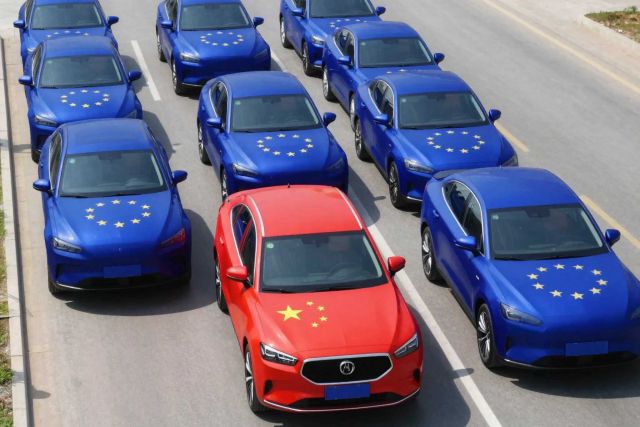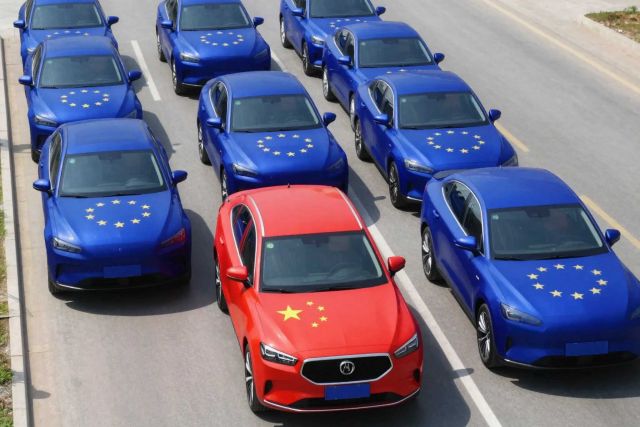
By the end of last year, manufacturers from China were responsible for nearly 10 per cent of all passenger cars sold across the continent in a single month, marking their highest share on record and confirming a year of exceptional momentum.
The gains have been powered almost entirely by electrification. As European demand increasingly shifts towards battery-electric and plug-in hybrid vehicles, Chinese carmakers have exploited their strengths in battery supply chains, cost control and rapid product development. From the Mediterranean markets of Spain, Greece and Italy to the United Kingdom (UK), consumers are responding to well-specified models offered at prices that undercut many established rivals.
Over the course of the year, Chinese brands more than doubled their share of Europe’s electrified vehicle market, reaching double-digit levels. Alongside familiar names such as BYD and MG, newer entrants including Leapmotor and Chery have posted eye-catching sales volumes. When vehicles built in China for Western manufacturers are also counted, the country’s influence becomes even clearer: a significant proportion of Europe’s electric and hybrid cars are now produced on Chinese soil.
This expansion is placing intense pressure on Europe’s automotive sector, one of the region’s most important industries. Car manufacturing supports millions of jobs and contributes a substantial share of economic output, yet manufacturers are being squeezed from multiple directions. Sales in China have softened, access to the US market is constrained by tariffs, and competition at home is intensifying just as firms are forced to invest heavily in electrification.
Despite these headwinds, European carmakers are not standing still. A new wave of smaller, more affordable electric models is starting to reach showrooms, and domestic brands have so far defended their strongest markets, particularly in Germany and France. Partnerships with Chinese companies are also emerging as a strategic response, offering access to technology and scale that would be difficult to replicate alone.
Crucially, Chinese manufacturers are signalling that they intend to become part of Europe’s industrial fabric rather than simply exporters. Plans for local production in Spain and elsewhere, combined with commitments to work with European suppliers, suggest a longer-term strategy aimed at legitimacy and political acceptance.
Policy makers remain divided on how to respond. European Union (EU) tariffs on Chinese-made electric cars have done little to slow sales, while proposals ranging from minimum import prices to revised emissions rules continue to stir debate. Consumers, however, appear largely unmoved by geopolitics. Faced with stretched household budgets, many are opting for lower-priced Chinese models that promise modern technology and long electric range.
As Europe navigates its transition to cleaner transport, one thing is clear: Chinese carmakers are no longer knocking at the door. They are already inside, reshaping competition in one of the world’s most important automotive markets.