

Springboks score tries in Nissan Navara Pro4X
Two leading Springbok rugby players, Aphelele Fassi and Jordan Hendrikse, have taken delivery of their new Nissan Navara Pro4X bakkies in Durban.
- Industry News
- 12 May 2026
In a stark reminder of the COVID-19 pandemic, working from home may soon return on a wider scale as governments and organisations look for ways to curb fuel consumption amid a global oil supply shock.

The International Energy Agency (IEA) has outlined a series of demand-side measures aimed at easing pressure on consumers following major disruptions to oil markets caused by conflict in the Middle East. Chief among these is a renewed push for remote working, seen as one of the quickest ways to reduce fuel demand.
The crisis has triggered one of the most significant supply disruptions in modern oil market history. Shipping through the Strait of Hormuz, a vital artery that typically carries around 20% of global oil consumption, has slowed dramatically.
Roughly 20 million barrels per day of crude oil and refined products usually pass through this route, and the reduction has tightened supply, pushing crude prices above $100 per barrel. Refined fuels such as diesel, jet fuel and liquefied petroleum gas (LPG) have seen even sharper increases.
While restoring flows through the Strait remains critical, governments have already begun responding. On 11 March, IEA member countries agreed to release 400 million barrels from emergency reserves, marking the largest coordinated stock draw in the agency’s history.
However, supply-side interventions alone are unlikely to fully offset the disruption. Reducing demand is now viewed as an immediate and practical tool to lower costs, improve affordability and strengthen energy security.
The IEA’s latest report identifies ten actions that can be implemented quickly by governments, businesses and households. These measures focus largely on road transport, which accounts for approximately 45% of global oil demand, but also extend to aviation, cooking and industry. If widely adopted, they could significantly soften the impact of the crisis.
Road transport presents the greatest opportunity for immediate savings. Behavioural shifts and targeted policies, many of which have been used in previous crises, can deliver rapid results. At the same time, measures in aviation, household energy use and industrial processes can help protect critical fuel supplies and limit further price escalation.
Governments are expected to play a leading role through regulation, incentives and public sector initiatives, while ensuring that financial support is targeted and sustainable. Experience from past crises suggests that well-directed assistance is more effective than broad subsidies.
Although these demand-side measures cannot fully compensate for lost supply, they can meaningfully reduce pressure on markets and help preserve fuel for essential uses until stability returns.
Ten immediate actions to reduce fuel demand:
As countries continue to respond, the success of these measures will depend largely on public cooperation and the speed at which they can be implemented.
(Image: AI generated)

Two leading Springbok rugby players, Aphelele Fassi and Jordan Hendrikse, have taken delivery of their new Nissan Navara Pro4X bakkies in Durban.

Dealership service departments know the pattern: the moment warranties and service plans expire; a portion of owners quietly migrate to the independent aftermarket.

Mercedes-Benz Vans South Africa announced its top-performing Agents and Dealers for 2025, recognising their exceptional dedication, customer service and commitment to the brand.
 Advertisement
Advertisement
Advertisement
I have bad reflexes. I was once run over by a car being pushed by two guys
Woody Allen
Two leading Springbok rugby players, Aphelele Fassi and Jordan Hendrikse, have taken delivery of their new Nissan Navara Pro4X bakkies in Durban.

The Board of Management of Volkswagen Group Africa (VWGA) has appointed Dr Lungile Mashele as Non-Executive Director, effective 1 May 2026.
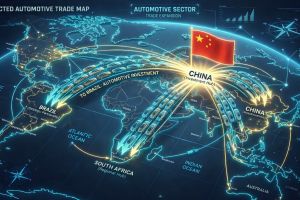
Brazil has climbed back to the top of the global league table for Chinese outbound investment, drawing 10.9% of the total in 2025, according to the Brazil-China Business Council.