Nissan South Africa has officially opened its new South African operational headquarters in Irene. The new head office will serve as the hub for the company’s administrative and strategic functions in South Africa and its Independent Markets Africa division.
Share with friends
The building will enhance collaboration, streamline processes and better serve its customers, explains Nissan South Africa and Independent Markets Africa managing director, Maciej Klenkiewicz. It also reinforces Nissan’s commitment to providing a productive and progressive work environment for the team.
In terms of the move, the management, sales, marketing, corporate finance and communications departments will be based at Irene, with the manufacturing operation continuing unchanged at Rosslyn as it has for the last six decades.
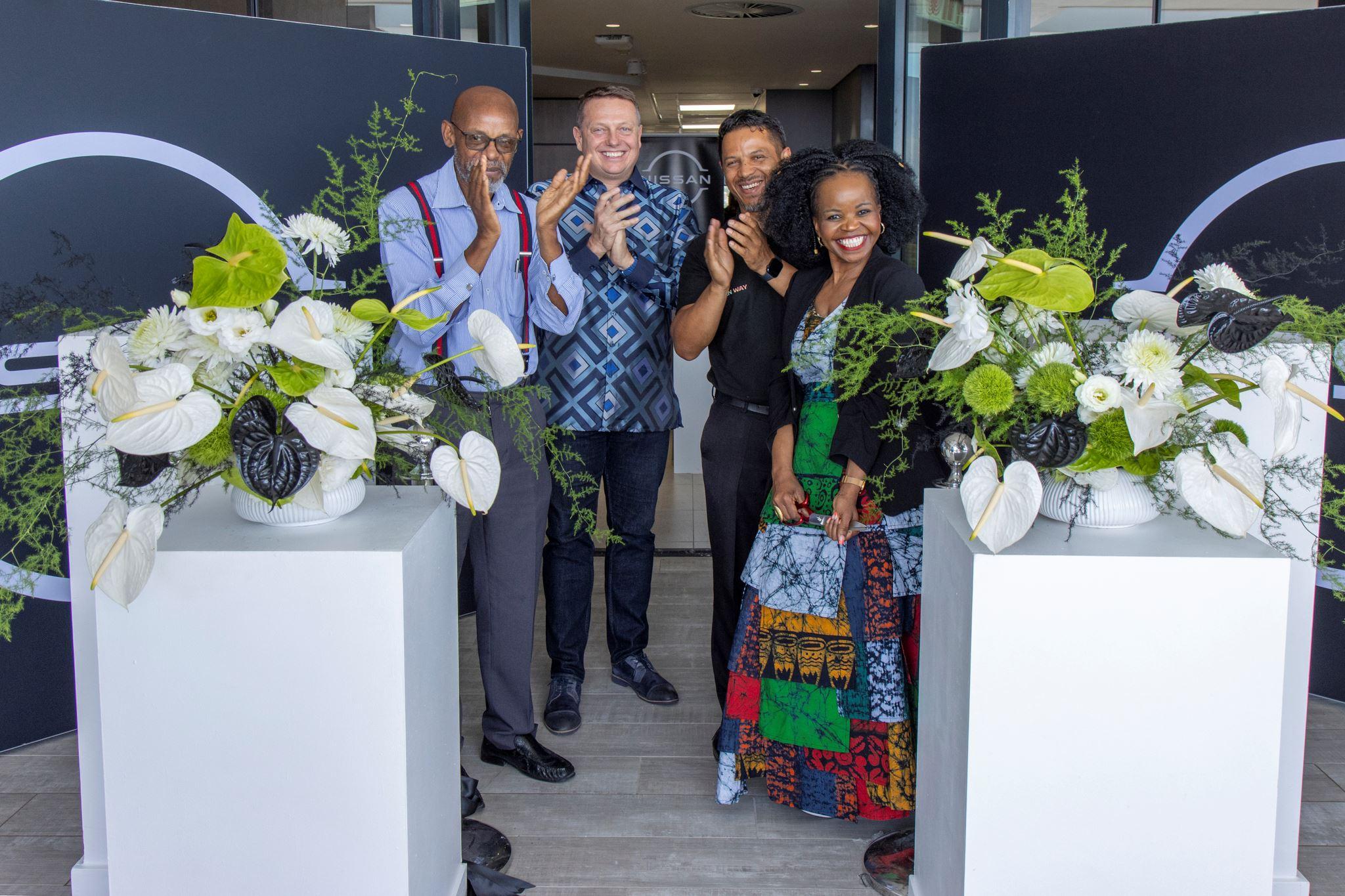
“It’s a decision that makes sense in terms of our strategy to build the business here and across Africa,” says Maciej as he symbolically cut the ribbon to welcome the corporate staff to their new offices.
“In almost every other country, the corporate headquarters of any automotive OEM are physically disassociated from the manufacturing section, to allow company executives, the finance team, sales staff, and dealer network liaisons to become more accessible and develop closer contact with the end user, whether retail, fleet or government,” he says.
Retired Nissan South Africa director of External and Government Affairs, Wonga Mesatywa (left), Nissan Managing Director South Africa and Independent Markets Africa Managing Director, Maciej
“This new head office allows us exactly that, as well as providing the opportunity to ensure that we reflect the technological innovation and all-round efficiency that our vehicles are globally renowned for in our day-to-day engagement with the market and with our customers.”
Creating a corporate presence in a city’s financial centre as opposed to locating it out at the factory is not just in keeping with modern practice, it also harks back to Nissan’s own history in South Africa. Today, most of South Africa’s OEMs have corporate offices situated in one or more of the country’s main cities, which Nissan itself had done until comparatively recently.
“For years, our head office and marketing functions were housed in Alice Lane in Sandton, Johannesburg, opposite Sandton City, before we moved to Midrand in 2004 and then, in 2007, to our current premises at Bill Wilson on the Rosslyn site, where we built the first Nissan vehicle in Africa almost 60 years ago. In many ways, we are once again returning to our South African roots with this geographical split between manufacturing and corporate.”
Nissan’s new corporate offices are located at the brand-new Irene Link office park in Doringkloof, south of Pretoria.
November, he says, is proving to be an auspicious month for Nissan South Africa, with the launch of the new Magnite scheduled for Cape Town on 12 November.
Stellantis is stepping up its China strategy with a fresh agreement alongside Dongfeng to build new Peugeot and Jeep vehicles in Wuhan, as the carmaker looks for a stronger foothold in both the domestic market and overseas exports.
New research from Cox Automotive suggests that car buyers in the United States (US) are feeling more positive about the purchase process, even as the cost of motoring remains a serious concern.
New research from Cox Automotive suggests that car buyers in the United States (US) are feeling more positive about the purchase process, even as the cost of motoring remains a serious concern.
From boardrooms to braais, the rising price of fuel dominates discussion, a shared concern that touches every household and business. The question now is not whether people are worried, but how long they can endure.