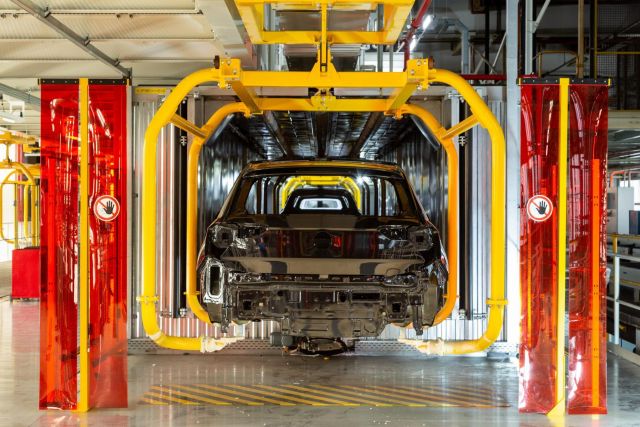
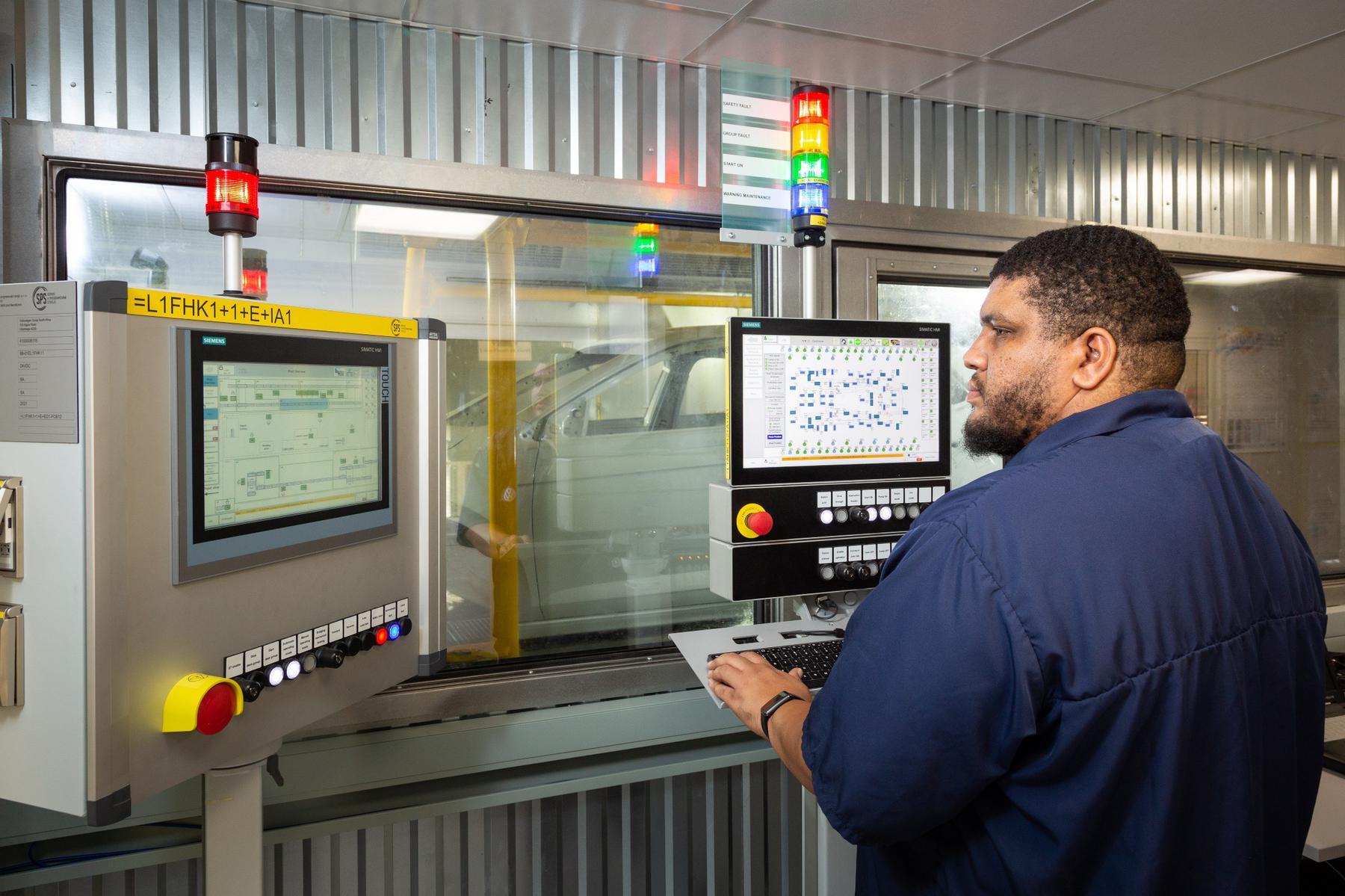
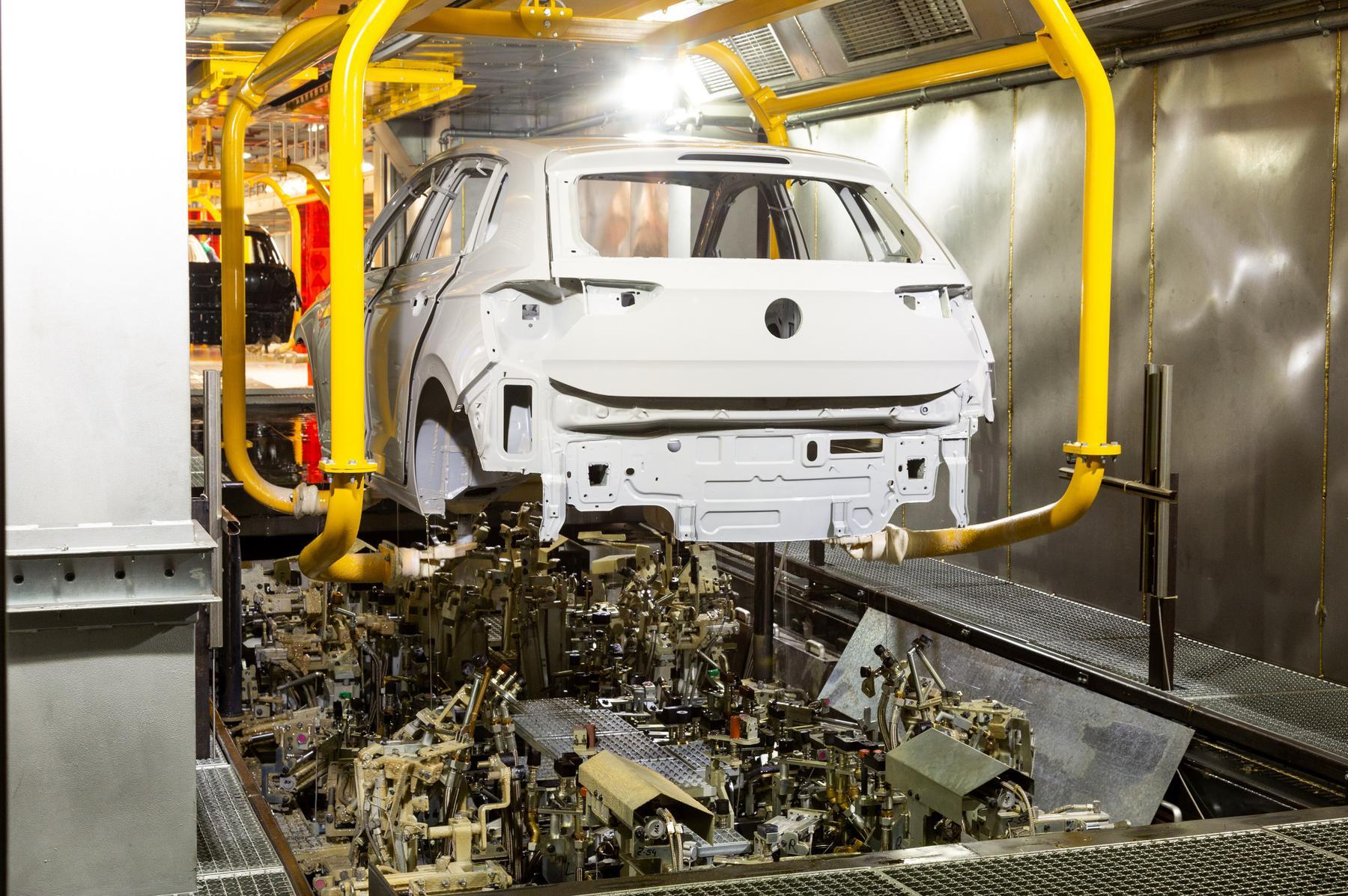
Throughout two and a half years of a worldwide pandemic and varying levels of lockdowns and travel restrictions, a project team across four countries collaborated to establish a new production facility at the Volkswagen Group South Africa (VWSA) plant in Kariega.
Share with friends
This R235-million project came to fruition recently when the ultra-modern wax flooding facility began operating here – simultaneously improving the efficiency and environmental impact of the wax flooding process for locally built Volkswagen Polos and Polo Vivos.
The wax flooding process, which serves to protect Volkswagen vehicles from corrosion in the cavities of the vehicle body, is now performed in a building covering 5 350 m² across four levels, in the plant’s former electro-coating facility. This same process is what enables Volkswagen to sell vehicles with a 12-year anti-corrosion warranty.
To establish this facility, colleagues across the Volkswagen Group in South Africa, Germany, Croatia and the Czech Republic worked remotely from January 2020 to conceptualise the project, using 3D laser scans, models and virtual navigation in the design phase. The international suppliers working on the project first visited the Kariega plant in July 2021, when the manufacturing of components for the facility had already begun.
A year later, the facility was operating across three shifts, producing 680 vehicles a day – though it is capable of meeting the demands of the plant’s fully installed capacity of 710 vehicles a day. In fact, at its full capacity, the wax flooding facility will be able to process 747 vehicles a day.
Using this new facility has not only allowed the VWSA plant to increase the volume of vehicles moving through the wax facility, but it has also reduced the environmental impact of the process. The new facility uses 25% less energy for heating and – as it uses liquefied petroleum gas (LPG) – has reduced CO₂ emissions for the process by 55%.
The Kia Carens nameplate makes its return to South Africa, this time as a seven‑seater designed with families in mind. It combines Sport Utility Vehicle (SUV) styling with Multi-Purpose Vehicle (MPV) practicality, offering space, comfort and efficiency, Kia says.
Volvo has confirmed that its vehicles will now integrate Google’s Gemini artificial intelligence system. This development builds on the company’s existing collaboration with Google, which already provides Android Automotive OS and Google services in Volvo models.
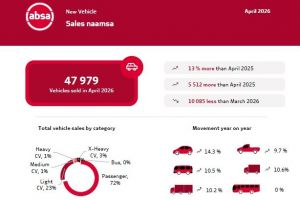
New vehicle sales in 2026 continued their positive trend in April, with the 47 979 units sold marking the best April figure since 2013. This represents a remarkable performance by local automotive retailers despite a host of economic headwinds and a challenging trading environment.
Volvo has confirmed that its vehicles will now integrate Google’s Gemini artificial intelligence system. This development builds on the company’s existing collaboration with Google, which already provides Android Automotive OS and Google services in Volvo models.
New vehicle sales in 2026 continued their positive trend in April, with the 47 979 units sold marking the best April figure since 2013. This represents a remarkable performance by local automotive retailers despite a host of economic headwinds and a challenging trading environment.
April 2026 marked a turning point in South Africa’s economic landscape, as global energy markets were jolted by escalating geopolitical tensions in the Middle East, according to naamsa | The Automotive Business Council.