

Springboks score tries in Nissan Navara Pro4X
Two leading Springbok rugby players, Aphelele Fassi and Jordan Hendrikse, have taken delivery of their new Nissan Navara Pro4X bakkies in Durban.
- Industry News
- 12 May 2026
Morocco has stepped decisively into a leadership role within Africa’s automotive industry, achieving a landmark breakthrough in 2025.
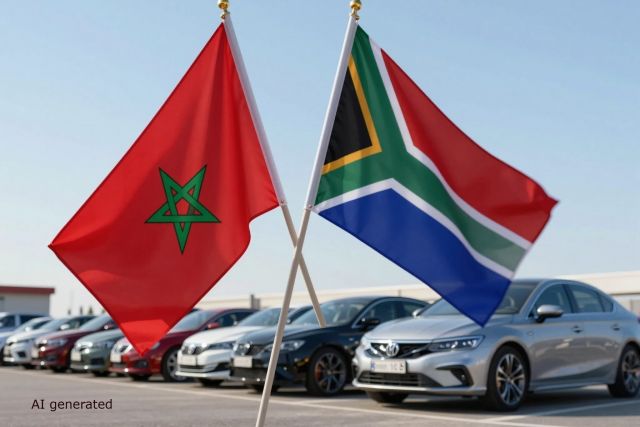
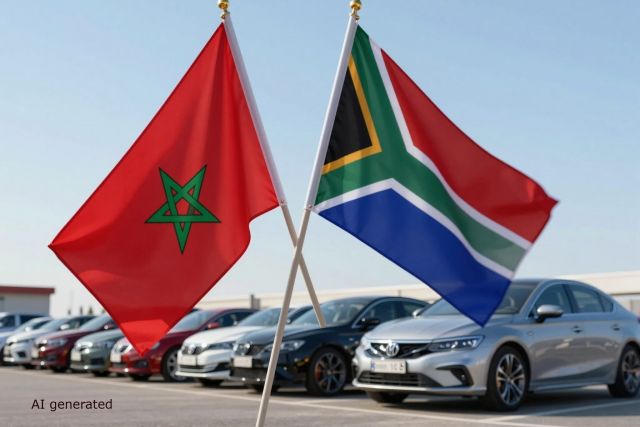
For the first time, the Kingdom surpassed South Africa in total vehicle production, delivering more than one million units and asserting itself as a crucial contributor to the continent’s industrial modernisation and the global shift towards electric mobility.
Crossing the one‑million‑vehicle threshold in 2025 marked a moment of strategic significance for Morocco. The surge from roughly 560,000 units in 2024 reflects extraordinary year‑on‑year growth of nearly 80 per cent. At the same time, the automotive sector strengthened its position as Morocco’s foremost export industry, generating close to €15 billion in overseas sales.
Morocco’s success rests on a well‑developed industrial ecosystem supported by major global players and a broad network of suppliers. Renault’s extensive operations in Tangier and Casablanca continue to be central to national output, while Stellantis is rapidly scaling production at its Kenitra plant. Kenitra alone aims to deliver more than 500 000 units per year, with a strong focus on compact electric vehicles such as the Citroën Ami and Fiat Topolino.
Government-led industrial policy remains highly focused on domestic value creation, with ambitions to raise the local integration rate above 80 per cent in the near term and to move towards 90 per cent by the end of the decade. This approach bolsters national supply chains and reduces dependence on imported materials.
Morocco’s rise has been reinforced by its exceptional logistical platform. The Tangier Med port complex, supported by multiple free‑trade zones, offers swift, cost‑effective access to markets in Europe, Africa and the Middle East.
Political consistency, attractive fiscal incentives, broad free‑trade agreements and an increasingly skilled workforce have further enhanced the country’s capacity to draw and retain global manufacturers.
The Kingdom’s sustained commitment to renewable energy, particularly wind and solar power, provides manufacturers with a competitive, low‑carbon environment aligned with tightening environmental requirements.
Morocco’s ambition encompasses far more than traditional automotive output. The country is staking a claim within the electric‑vehicle value chain, attracting investment in battery manufacturing, component production and new EV assembly operations. The growing presence of additional international investors, including both Asian firms and leading premium brands, reinforces Morocco’s emergence as a “green” industrial hub closely linked to European supply chains.
Morocco’s ascent is altering the balance of automotive production across Africa, shifting the continent’s industrial heartland northwards. This development opens new pathways for partnerships in component manufacturing, logistics and talent development throughout West, Central and Sahelian Africa. The next challenge lies in ensuring these benefits extend beyond coastal zones through deeper regional collaboration and more widespread technology transfer, enabling broader and more inclusive industrial growth across the continent.
Two leading Springbok rugby players, Aphelele Fassi and Jordan Hendrikse, have taken delivery of their new Nissan Navara Pro4X bakkies in Durban.
Dealership service departments know the pattern: the moment warranties and service plans expire; a portion of owners quietly migrate to the independent aftermarket.

Mercedes-Benz Vans South Africa announced its top-performing Agents and Dealers for 2025, recognising their exceptional dedication, customer service and commitment to the brand.
 Advertisement
 Advertisement
I have bad reflexes. I was once run over by a car being pushed by two guys
Woody Allen
Two leading Springbok rugby players, Aphelele Fassi and Jordan Hendrikse, have taken delivery of their new Nissan Navara Pro4X bakkies in Durban.

The Board of Management of Volkswagen Group Africa (VWGA) has appointed Dr Lungile Mashele as Non-Executive Director, effective 1 May 2026.
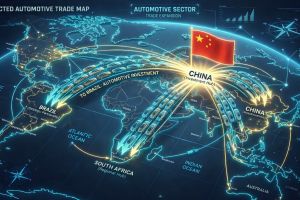
Brazil has climbed back to the top of the global league table for Chinese outbound investment, drawing 10.9% of the total in 2025, according to the Brazil-China Business Council.