
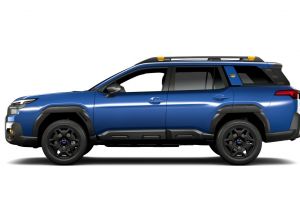
Subaru’s all-new Outback is getting ready for its local launch
Subaru’s all-new seventh-generation Outback has already begun building strong international momentum ahead of its arrival in the local market later this year.
- Product News
- 22 April 2026
Morocco has stepped decisively into a leadership role within Africa’s automotive industry, achieving a landmark breakthrough in 2025.
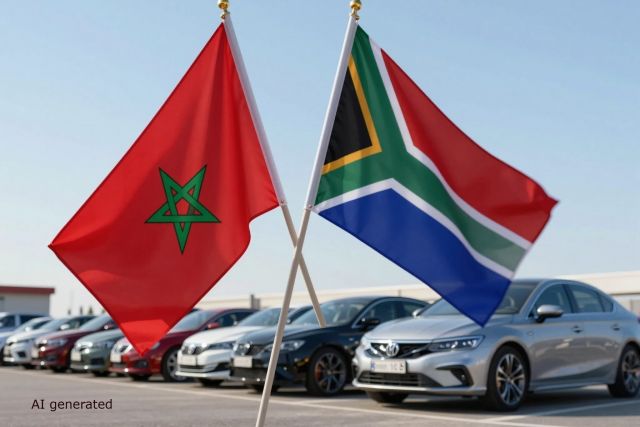
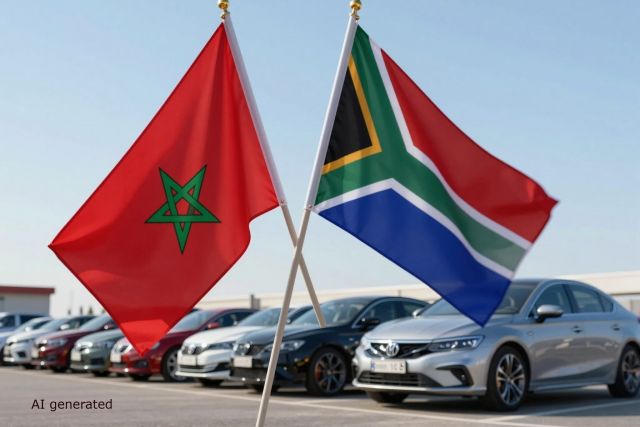
For the first time, the Kingdom surpassed South Africa in total vehicle production, delivering more than one million units and asserting itself as a crucial contributor to the continent’s industrial modernisation and the global shift towards electric mobility.
Crossing the one‑million‑vehicle threshold in 2025 marked a moment of strategic significance for Morocco. The surge from roughly 560,000 units in 2024 reflects extraordinary year‑on‑year growth of nearly 80 per cent. At the same time, the automotive sector strengthened its position as Morocco’s foremost export industry, generating close to €15 billion in overseas sales.
Morocco’s success rests on a well‑developed industrial ecosystem supported by major global players and a broad network of suppliers. Renault’s extensive operations in Tangier and Casablanca continue to be central to national output, while Stellantis is rapidly scaling production at its Kenitra plant. Kenitra alone aims to deliver more than 500 000 units per year, with a strong focus on compact electric vehicles such as the Citroën Ami and Fiat Topolino.
Government-led industrial policy remains highly focused on domestic value creation, with ambitions to raise the local integration rate above 80 per cent in the near term and to move towards 90 per cent by the end of the decade. This approach bolsters national supply chains and reduces dependence on imported materials.
Morocco’s rise has been reinforced by its exceptional logistical platform. The Tangier Med port complex, supported by multiple free‑trade zones, offers swift, cost‑effective access to markets in Europe, Africa and the Middle East.
Political consistency, attractive fiscal incentives, broad free‑trade agreements and an increasingly skilled workforce have further enhanced the country’s capacity to draw and retain global manufacturers.
The Kingdom’s sustained commitment to renewable energy, particularly wind and solar power, provides manufacturers with a competitive, low‑carbon environment aligned with tightening environmental requirements.
Morocco’s ambition encompasses far more than traditional automotive output. The country is staking a claim within the electric‑vehicle value chain, attracting investment in battery manufacturing, component production and new EV assembly operations. The growing presence of additional international investors, including both Asian firms and leading premium brands, reinforces Morocco’s emergence as a “green” industrial hub closely linked to European supply chains.
Morocco’s ascent is altering the balance of automotive production across Africa, shifting the continent’s industrial heartland northwards. This development opens new pathways for partnerships in component manufacturing, logistics and talent development throughout West, Central and Sahelian Africa. The next challenge lies in ensuring these benefits extend beyond coastal zones through deeper regional collaboration and more widespread technology transfer, enabling broader and more inclusive industrial growth across the continent.
Subaru’s all-new seventh-generation Outback has already begun building strong international momentum ahead of its arrival in the local market later this year.
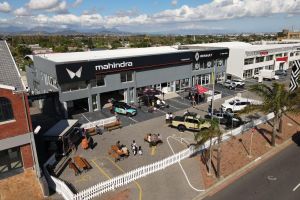
Motus Retail has officially opened its first dedicated Mahindra dealership in the Western Cape, located in Tygervalley. Martin Smit will lead the team as Dealer Principal.
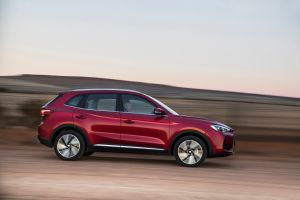
MG Motor South Africa has added two new models to its local range with the introduction of the MG3 hatchback and MG ZS Pro compact SUV or crossover.
 Advertisement
 Advertisement
I have bad reflexes. I was once run over by a car being pushed by two guys
Woody Allen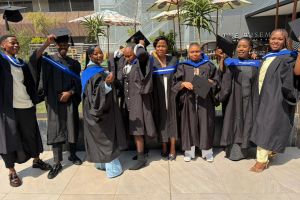
We Buy Cars has continued its involvement in youth skills development, with a recent group of learners completing sponsored programmes in partnership with SA Business School.
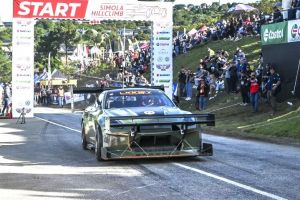
One of South Africa’s most popular motorsport events is just days away, with the Simola Hillclimb once again set to draw fans, competitors and manufacturers to the Garden Route.

Durban played host to a gathering that placed KwaZulu-Natal (KZN) firmly in the spotlight of South Africa’s automotive story.