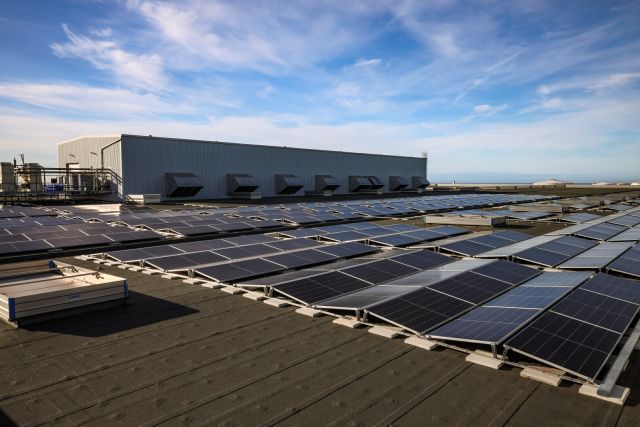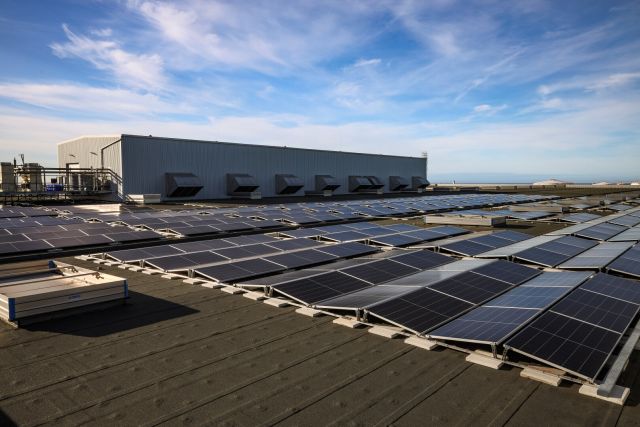
Photovoltaic (PV) technology and devices (solar panels) convert sunlight into electrical energy and contributes to carbon reduction in the manufacturing process.
Mercedes-Benz Group AG, the parent company of MBSA is continuously working on the development of its sustainable business strategy and has set the goal of CO₂ reduction by 2039 with Ambition2039.
Mercedes-Benz intends going all-electric until the end of this decade and aims to cut its carbon footprint per passenger car by more than half by 2030 compared with 2020 levels. To achieve this goal, the key levers include electrifying the vehicle fleet, charging with green energy, improving battery technology, an extensive use of recycled materials and renewable energy in production.
In line with this ambition, MBSA piloted this PV project with the objective of evaluating the solar yield for the East London plant. The 360-kilowatt peak (kWp) solar panels were installed on the roof of its recently commissioned body shop building. Since the start of the pilot project in January 2022, it has thus far produced impressive solar yields.
Commenting on the successful launch of the PV pilot project, Chief Executive Officer of Mercedes-South Africa and Executive Director of Manufacturing, Andreas Brand, said: “As Mercedes-Benz, our goal is to make the world’s most desirable cars. The launch of the PV pilot project attests to our commitment to climate protection and the sustainable manufacturing of our products. We are proud of our successful pilot project here in East London and look forward to actively making a significant contribution to Sustainable Production/Co2 neutral manufacturing.”
The next phase of the project will complete the plant baseload requirement, with future projects on newly commissioned buildings.
Other manufacturers that recently announced plans for reduction in their carbon footprint in South Africa include Volkswagen and Ford.
- As a major step on the road to Zero Impact Production, Volkswagen Group South Africa (VWSA) has implemented two projects. The first is an on-site wastewater recycling facility and the other was the installation of 3 136 solar photovoltaic panels on the roof of the Final Assembly building.
- Ford’s Silverton’s Assembly Plant in Pretoria flipped the switch and is now sourcing 35 percent of its electricity completely emission-free, directly from the sun. The project is the result of the installation of solar photovoltaic (PV) carports for 3 610 vehicles at the Silverton plant.