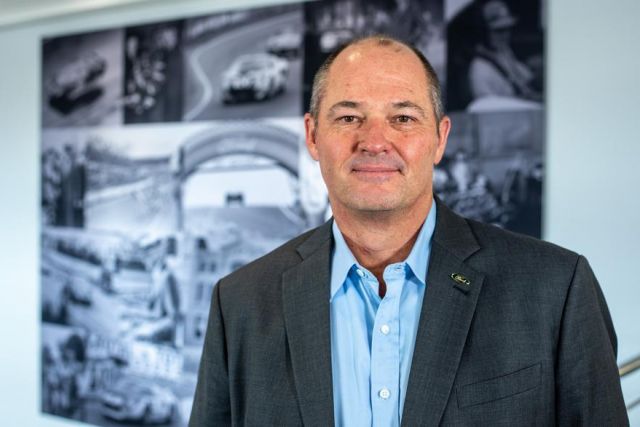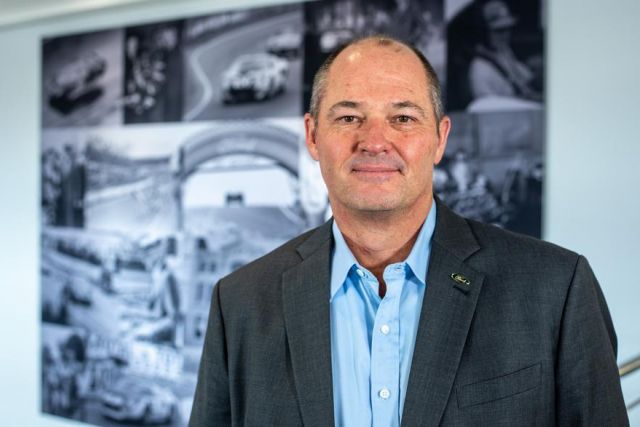
This, despite the progress made by the industry against its key performance indicators (KPIs) in the nine months to 2021 compared to the corresponding period in 2020, says Andrew Kirby, the immediate past president of automotive council, Naamsa.
Kirby says new vehicle sales increased by 30.3% in this nine-month period, while exports grew 19.6%, vehicle production by 21.7% and imports by 34.4%.
“While we welcome this progression for the year under review compared to 2020, we are still not out of the woods because our year-to-date domestic new vehicle sales numbers are still 13.3% below the recorded numbers for 2019 year-to-date,” he says.
In addition, Kirby says export sales in this nine-month period are still 25.4% below the level achieved in 2019, import sales 8.8% below 2019 levels and domestic production volumes 22.8% lower.
However, Kirby highlighted that contrary to the observed declining market trends, and in line with the expected growing demand for new energy vehicles (NEVs) from South Africa’s leading export markets, year-to-date electric, plug-in hybrid and traditional hybrid vehicle sales have increased by 28.8% compared to the same period last year and have also increased by 13.4% compared to the 2019 pre-COVID-19 sales statistics.
“Our Naamsa team predicts that a full recovery is likely to be protracted until around 2023,” he says.
Kirby provided this update on the performance of South Africa’s automotive industry in his Annual Presidential Report as the outgoing president of Naamsa at the council’s annual general assembly last week.
Neal Hill, the managing director of the Ford Motor Company of Southern Africa and president of the Ford Africa region, was elected the new president of Naamsa at the general assembly.
The other Naamsa office bearers elected at the general assembly were Billy Tom, the president and CEO of Isuzu Motors South Africa as vice-president manufacturing original equipment manufacturers (OEMs); Gary Scott, CEO: Kia South Africa as vice-president retailing OEMs; and Flip Van Den Heede, MD of UD Trucks as vice-president heavy commercial OEMs.
Kirby added that the contribution of South Africa’s automotive industry to the country’s GDP and fiscus declined by 23.4% to 4.9% in 2020 from 6.4% in 2019.
He attributed this decline to the sharp drop in global and domestic market demand through the early part of 2020, which was caused by the abrupt and widespread stoppage of trade and economic activity as a result of the impact of the COVID-19 pandemic, which severely impacted the globally integrated South African automotive value chain.
“The vehicle and components production as a percentage of South Africa’s manufacturing output was 18.7%,” he says.
However, Kirby says it is worth noting that the automotive sector remained one of the most visible sectors receiving foreign investments, with the seven OEMs investing a record R9.2 billion in 2020 while the component sector invested R2.4 billion in 2020.
“Investment on this scale is significant and will promote local value addition, while importantly, technology is also embodied in the investment,” he says.
Kirby added that the strong rebound in global economic activity in 2021 has supported vehicle export volumes, which increased by 65.8% in the first half of 2021 compared to the corresponding period in 2020 and was only 0.9% lower than the volume of vehicles exported in this period in 2019.