South Africa’s manufacturing sector stands at a critical crossroads. While the country has made progress in stabilising electricity supply and advancing logistics reforms, new independent research suggests that these gains alone will not be enough to secure future industrial investment. Instead, the country must focus on creating a compelling national proposition that gives manufacturers confidence to invest, expand and create jobs for the long term.
Share with friends
A study conducted by the Centre for Risk Analysis (CRA), with support from Ford Motor Company of Southern Africa, argues that South Africa has the industrial capabilities needed to compete globally. However, the report warns that success will depend on turning potential into practical delivery. Reliable infrastructure, competitive operating costs, policy certainty, skills development and stronger local supplier networks are all identified as critical building blocks for future growth.
From potential to performance:
The research highlights that manufacturers assess investment destinations over many years. While recent improvements in electricity generation have been welcomed, businesses continue to face challenges including high operating costs, skills shortages, crime and infrastructure reliability.
According to the report, reforms need to move beyond broad policy announcements and translate into dependable everyday services. Stable municipal electricity networks, reliable water supplies, functional roads and efficient logistics systems all play a major role in determining whether investors view South Africa as a viable long-term manufacturing destination.
The study also stresses the importance of a more cohesive national strategy. Researchers argue that government, business, labour and civil society must align behind a shared vision for industrial growth. A coordinated approach would provide greater certainty for investors while helping South Africa differentiate itself in a highly competitive global market.
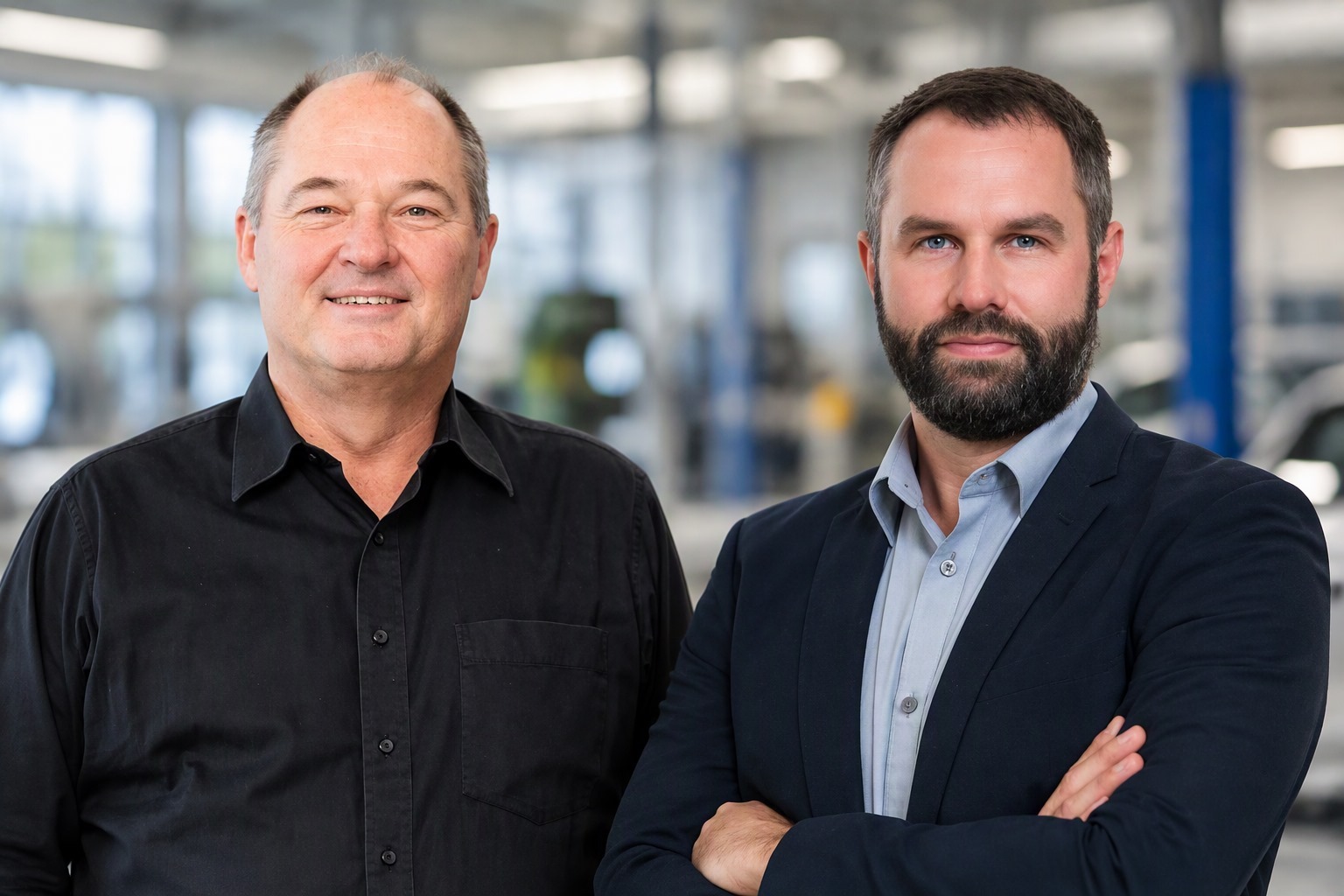
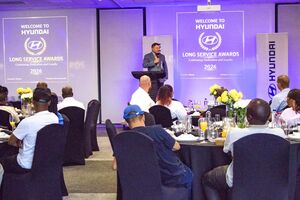
Neale Hill and Chris Hattingh. (Image AI generated).
The importance of partnership:
Ford Motor Company Africa President Neale Hill says the company remains committed to South Africa’s manufacturing future and supported the research to help identify practical steps needed to strengthen the sector.
The report emphasises that policy certainty alone is not sufficient. Effective implementation, supported by measurable actions and clear accountability, is equally important. Government departments, manufacturers, labour organisations and educational institutions all have a role to play in developing a sustainable industrial ecosystem capable of attracting future investment.
Researchers note that recent infrastructure improvements create an opportunity that should not be wasted. Rather than waiting for 2027 to begin implementing reforms, the report argues that decisions, commitments and delivery must start immediately.
Ten priorities for industrial growth:
According to CRA Executive Director Chris Hattingh, the report outlines ten priority actions designed to strengthen South Africa’s manufacturing competitiveness.
On infrastructure, the recommendations include strengthening municipal electricity networks through improved maintenance and protection, establishing targeted partnerships to upgrade water and road infrastructure in key manufacturing corridors, and securing long-term reliable and affordable energy supplies.
Logistics reforms also feature prominently. Recommendations include expanding rail operating capacity through private sector participation, improving port reliability and competitiveness, and strengthening coordinated action against freight crime, infrastructure theft and extortion.
The study further calls for predictable investment conditions that balance transformation objectives, localisation requirements and fair competition.
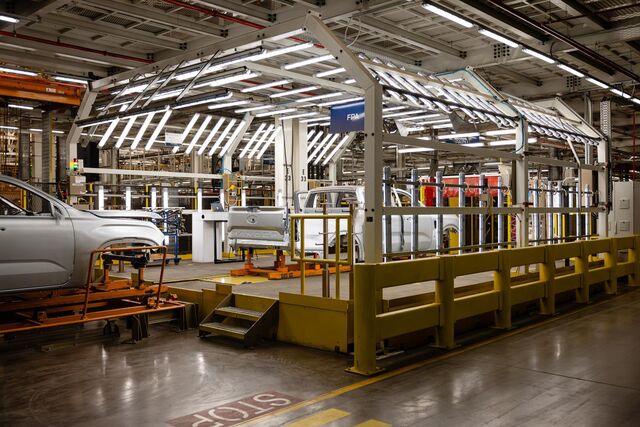
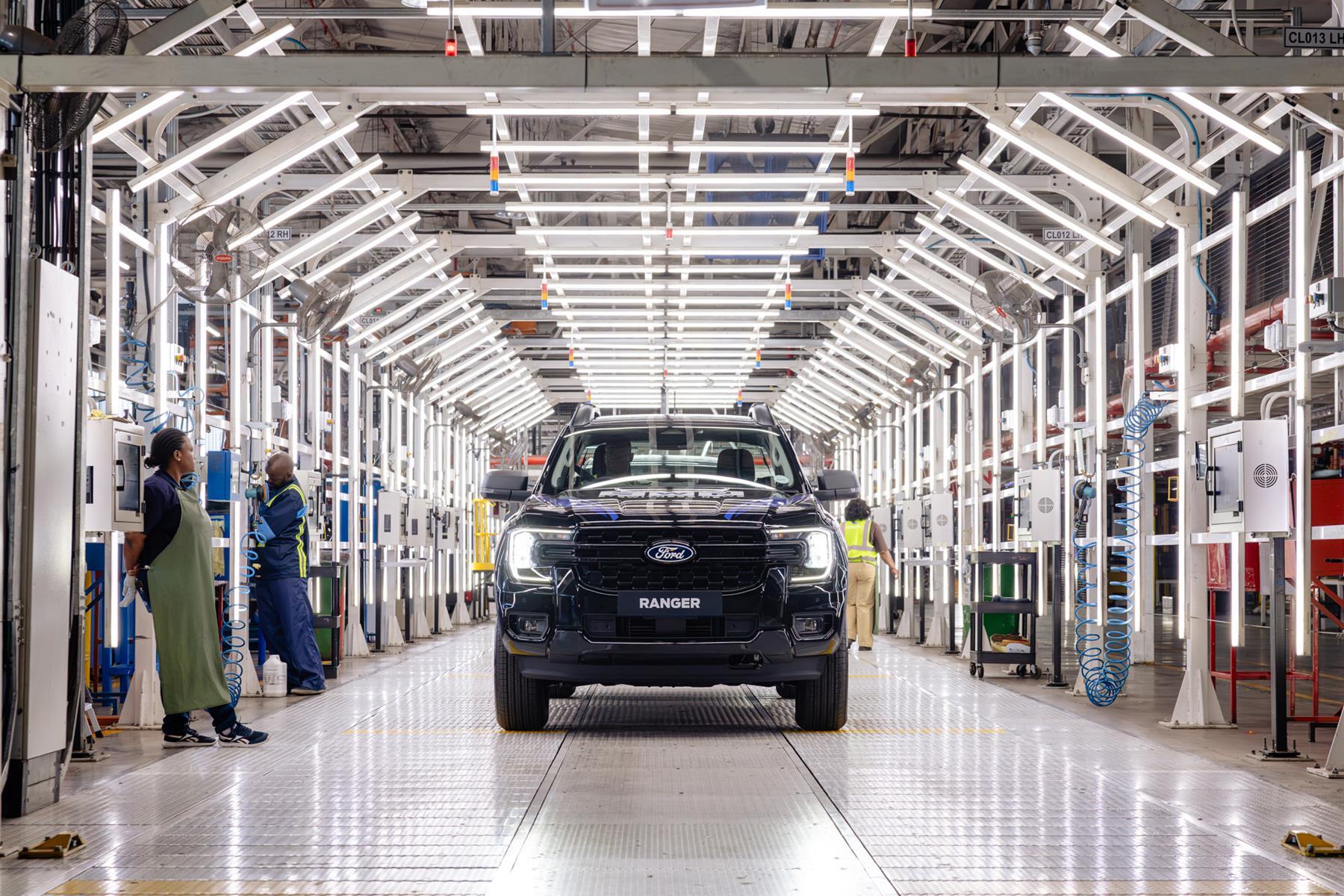
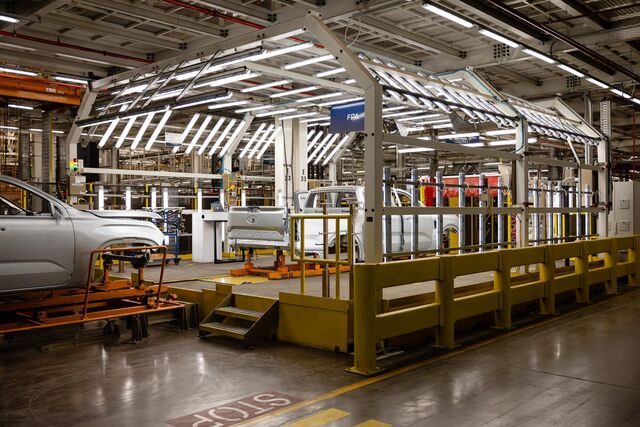
Inside the Ford plant.
Developing long-term value:
Beyond infrastructure and logistics, the report highlights the need to connect investment with broader industrial development.
Among its recommendations are advancing a coordinated trade agenda that supports export growth and reduces uncertainty, building stronger engineering and artisan training pathways linked directly to employment opportunities, and deepening local supplier capabilities.
The report also points to the importance of preparing suppliers and manufacturers for the transition towards new-energy vehicles, ensuring existing industrial capacity can evolve alongside global technological shifts.
Special Economic Zones are identified as another potential area of opportunity. Researchers believe lessons from successful zones could inform carefully designed pilot projects aimed at attracting investment and expanding economic participation.
Action required now:
To ensure meaningful progress, the report recommends assigning clear responsibilities, resources and measurable milestones to each proposed reform. Public reporting on progress is also seen as important for building investor confidence and maintaining accountability.
The research presents two possible future outcomes. One scenario, described as “Critical Mass”, sees reforms supporting stronger growth, investment and industrial development. The other, “Losing Orbit”, suggests continued constraints could gradually weaken manufacturing competitiveness and erode productive capacity.
While the report does not present these scenarios as forecasts, researchers believe South Africa is currently tracking closer to the less favourable outcome. However, they argue that practical reforms implemented now can still shift the country towards a stronger growth trajectory.
For South Africa’s manufacturing sector, the message is straightforward: the opportunity exists, but securing it will require coordinated action, practical delivery and a united effort long before 2027 arrives.
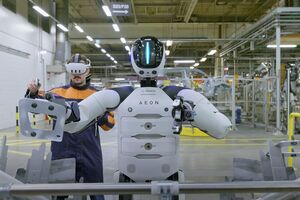
Volvo Cars has brought AEON humanoid robots from Hexagon Robotics to its manufacturing plant in Ghent, Belgium, where they are being trained on real industrial tasks.
Volvo Cars has brought AEON humanoid robots from Hexagon Robotics to its manufacturing plant in Ghent, Belgium, where they are being trained on real industrial tasks.