

CMS Systems marks 25 years in automotive retail technology
CMS Systems is celebrating 25 years in business, marking a significant milestone for a company that has become a central player in automotive retail technology.
- Industry News
- 24 April 2026
Artificial intelligence (AI) is increasingly shaping how South Africa’s property, automotive and retail sectors function.

In property, algorithms are used to generate real‑time valuations and pricing insights. In the automotive sector, AI supports vehicle design decisions, trade‑in pricing and financial modelling. Retailers rely on AI to assess store locations, understand mobility patterns and anticipate consumer demand.
Lightstone works in these sectors by developing AI‑enabled tools that rely on a combination of statistical modelling, machine learning and large proprietary datasets. The aim is to provide clearer, data‑driven insights for organisations that need to make decisions in complex markets. A key element in making AI effective is ensuring that people understand and trust the systems they use.
Transparency and the challenge of “Black Box” models:
Many widely used AI models operate as “black boxes”, producing outputs that are difficult to explain or interrogate. This lack of transparency can create uncertainty, particularly when the outputs influence financial or lifestyle decisions.
Lightstone’s approach is to build models that can be explained and scrutinised by users. This is especially important for tools such as the Property Artificially Intelligent Valuation Model (AiVM) and Vehicle Retail Valuation Forecasts (RVF), which play a role in pricing assets, structuring financial products or guiding buying and selling behaviour. The intention is that people can understand how the model reached a particular conclusion and whether it is suitable for their circumstances.
Local context and data integrity:
AI systems depend on the quality and completeness of the data they use. In South Africa, datasets often contain inconsistencies due to irregular municipal updates, informal economic activity, varying data‑capture standards and uneven service delivery. Without proper oversight, these issues can result in distorted valuations or unreliable forecasts.
In the property market, outdated cadastres or errors in deed‑record logs can misrepresent a home’s characteristics. In the automotive market, missing or incorrect vehicle histories can influence trade‑in pricing or risk calculations. In retail, relying on outdated census averages rather than current neighbourhood‑level information can lead to incorrect decisions about where to open a store or which tenants to include.
To manage these risks, Lightstone combines large, cleaned datasets—ranging from property transactions to mobility patterns and automotive records—with domain specialists who understand regulatory and market contexts. Their role is to check outputs, flag anomalies and ensure the models reflect actual market behaviour rather than only statistical signals.
Property:
The AiVM is used by banks to determine market value during the offer‑to‑purchase stage and has become part of how estate agents, buyers and sellers negotiate prices. Because automated valuations cannot always capture unusual or complex properties, Lightstone attaches a confidence score to each valuation to indicate when human review is advisable.
The system uses information from South Africa’s formal residential property stock and factors in a wide range of property features. Lightstone is also a member of the European AVM Alliance, an organisation that sets standards for automated valuation models, including transparency, data quality and statistical discipline.
Automotive:
AI is used to analyse vehicle data, forecast future values and support pricing decisions for OEMs, dealers, banks and insurers. It assists with customer‑sentiment analysis, lead scoring and personalised engagement in dealership environments. Machine‑learning models also help identify pricing trends, forecast demand and manage stock more effectively.
Retail:
In retail and location analytics, mobility and demographic data help brands identify suitable sites and assess expansion risks. This is particularly relevant in areas where traditional data sources are incomplete or out of date. AI‑driven segmentation models are also used to reduce irrelevant marketing and focus communication on more appropriate audiences.
Why domain‑specific AI matters:
Lightstone’s focus is on narrow, domain‑specific AI rather than general‑purpose systems. These models incorporate local regulatory requirements, data quirks and historical context. For example, property title‑deed information is interpreted through decades of accumulated local knowledge; vehicle records are checked against both public and proprietary sources; and outdated census information is supplemented with spatial data from the property sector.
Because these tools influence real‑world financial outcomes, Lightstone conducts peer‑review processes, anomaly detection and ongoing monitoring to reduce data and model errors. Centralising analytics across sectors means that improvements in one domain can be applied to others.
Looking ahead:
Lightstone expects its advantage to lie in combining well‑maintained proprietary datasets with safe and responsible use of public data across multiple industries. Future work will continue to focus on transparent, explainable AI models and decision‑support tools that give users clearer insight into how conclusions are reached.

CMS Systems is celebrating 25 years in business, marking a significant milestone for a company that has become a central player in automotive retail technology.
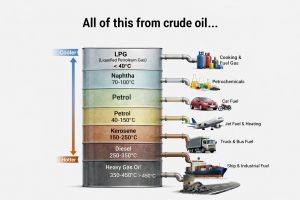
Oil prices jumped on Wednesday after Iran's seizure of container ships in the strait.

Hyundai Motor is preparing an aggressive comeback in China, unveiling plans to launch 20 new vehicles over the next five years as it tries to rebuild its position in the world’s largest car market.
 Advertisement
 Advertisement
You can't buy happiness but you can buy cars and that's kind of the same thing.
Unknown
CMS Systems is celebrating 25 years in business, marking a significant milestone for a company that has become a central player in automotive retail technology.
Oil prices jumped on Wednesday after Iran's seizure of container ships in the strait.
Hyundai Motor is preparing an aggressive comeback in China, unveiling plans to launch 20 new vehicles over the next five years as it tries to rebuild its position in the world’s largest car market.