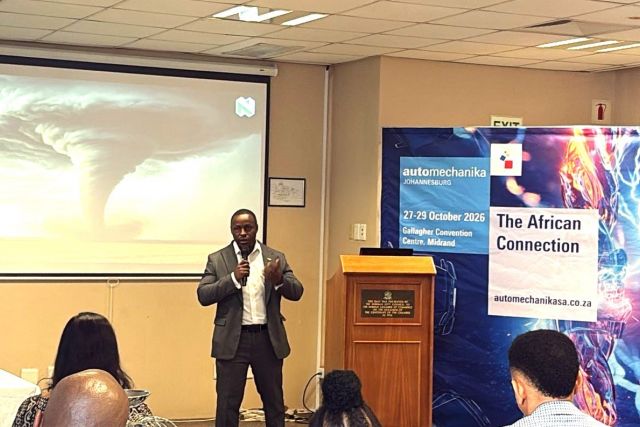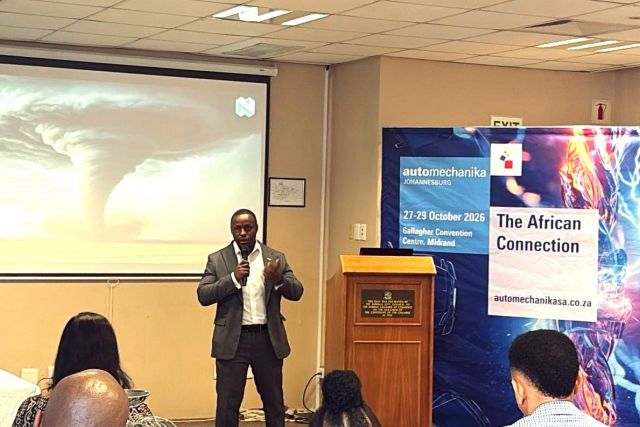
The Automechanika Johannesburg CEO Breakfast brought together executives, policymakers and industry specialists to reflect on the province’s growing role in shaping the sector.
What emerged was a picture of a region that is not only keeping pace with national developments but carving out its own identity as a hub of growth and innovation.
Meschack Zwane from Trade and Investment KwaZulu-Natal set the tone with figures that spoke of resilience and ambition. The province’s gross domestic product (GDP) grew by 1.4 per cent in 2025, supported by a rebound in agriculture and a surge in vehicle and parts exports that exceeded 50 per cent year on year.
Belgium has overtaken the United States as the largest export partner, while the United Arabic Emirates (UAE) recorded growth of nearly 180 per cent. These shifts suggest that KwaZulu-Natal is becoming more deeply integrated into global automotive supply chains, with confidence levels rising to record highs.
National perspectives added further weight. Tshetlhe Litheko of The National Automotive Council | naamsa, pointed to South Africa’s production of more than 618 000 vehicles in 2025 and domestic sales growth of 15.7 per cent. “The 150 per cent investment allowance for Electric Vehicle (EV) production is a direct signal from government that this is a priority. Disruption creates space for those who are prepared, and South Africa has every reason to be prepared."
While exports declined, he argued that this disruption could be a catalyst for repositioning the industry towards new energy vehicles. With government offering a 150 per cent investment allowance for electric vehicle production, the opportunity is clear for those prepared to embrace change.
Attention then turned to the aftermarket, often overlooked but increasingly vital. Anton Fiets of the Automotive Industry Development Centre (AIDC) highlighted township automotive hubs that provide workshop bays, diagnostic tools and training, alongside centres of excellence that build skills in mechatronics and electric vehicle systems. His argument was that the aftermarket is not peripheral but central to building an inclusive economy, ensuring that opportunities extend beyond established players to smaller businesses and communities.
The event closed with reflections from Michael Dehn of Messe Frankfurt South Africa, who underlined the importance of platforms such as Automechanika Johannesburg in connecting industry leaders and turning potential into results.
KZN, he noted, has the exports, confidence and infrastructure to lead, and the breakfast was a reminder that the province’s automotive story is one of momentum and possibility.
The next CEO Breakfast takes place on 7 May 2026 in Gqeberha. Automechanika Johannesburg 2026 opens at Gallagher Convention