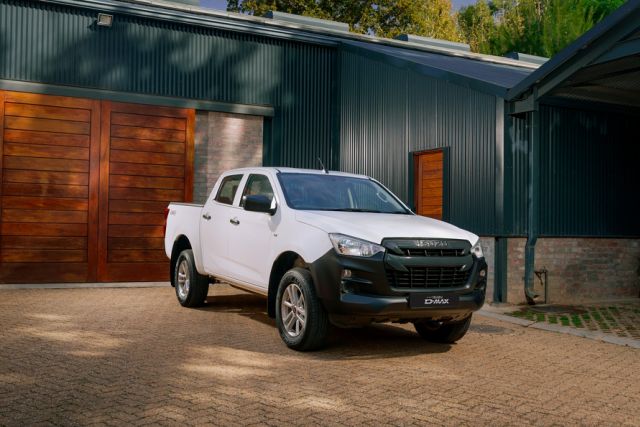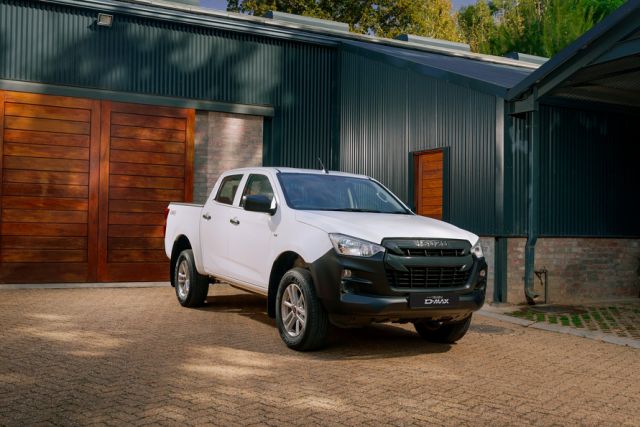
Over the years, the ISUZU D-MAX has earned a reputation for outstanding fuel economy, low running costs, solid performance, dependable reliability and durability amongst commercial and fleet operators, as well as private customers. These attributes were further reinforced with the launch of the seventh-generation D-MAX in 2022, which is assembled at ISUZU’s vehicle plant in Struandale, Gqeberha.
Extensive upgrades were implemented for the proven range-topping 3.0 Ddi engine to improve performance and economy. To further enhance the product line-up, Isuzu also introduced the latest-generation 1.9-litre four-cylinder intercooled turbodiesel engine that has made a significant leap forward on fuel efficiency.
To prove the remarkable fuel-sipping habits of the latest 1.9 Ddi engine, ISUZU recently conducted a fuel-economy test drive from Johannesburg to Cape Town as a precursor to an official ISUZU ‘1 Tank Challenge’ set to take place in March this year.
Driving a D-MAX 1.9 Ddi Double Cab 4x2 Manual, Grant McCleery, the renowned racing driver and head of the ISUZU Driving Academy, completed a 1 431 km test run between South Africa’s two biggest cities. Recording a realistic, real-world average speed of 100 km/h over the entire distance, the D-MAX 1.9 Ddi used a mere 73.82 litres – which translates into a remarkable 5.1 litres per 100 km, or 19.39 km/litre.
What makes this result even more impressive is that a similar test done in 2021 with a previous-generation D-MAX 2.5 Single Cab used a total of 102.31 litres to cover 1 454 km, with an average consumption of 7.02 l/100km or 14.2 km/litre.
“ISUZU customers trust our D-MAX range to deliver superb fuel economy and low running costs, matched to uncompromising reliability and durability, which are essential to keep their vehicles on the road and have fleets running as efficiently and cost-effectively as possible,” said Kevin Fouché, Department Executive: Product Planning and Programme Management at ISUZU Motors South Africa.
“With the launch of the seventh-generation D-MAX last year, we raised the bar significantly in all areas, including technology, safety, comfort and refinement. More importantly, the introduction of the 1.9 Ddi engine is designed to fulfil the requirements for a modern turbodiesel engine that meets the increasingly stringent global emission standards, uses less fuel, is a lot quieter and more refined, and delivers ISUZU’s world-renowned reliability and durability,” Fouché concluded.