

Springboks score tries in Nissan Navara Pro4X
Two leading Springbok rugby players, Aphelele Fassi and Jordan Hendrikse, have taken delivery of their new Nissan Navara Pro4X bakkies in Durban.
- Industry News
- 12 May 2026
South Africa’s automotive industry is urging government to refine existing support measures rather than pursue sharp increases in vehicle import duties, BMW South Africa’s Chief Executive says.
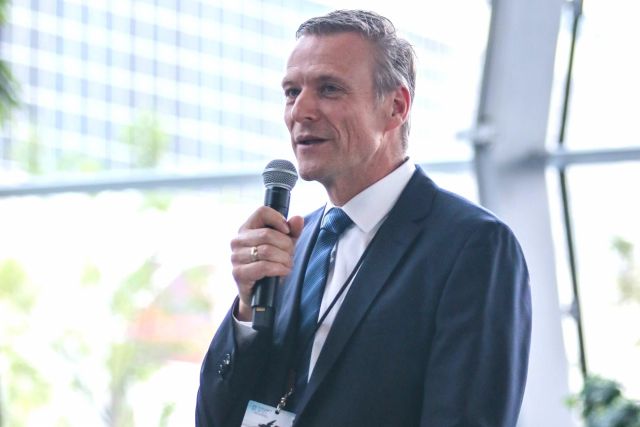
According to Reuters, Peter van Binsbergen made the comments after Parliament queried earlier remarks from the country’s international trade commissioner, who drew attention to the gap between South Africa’s current 25% tariff on imported vehicles and the World Trade Organization’s (WTO) upper limit of 50%.
During Tuesday’s parliamentary session, deputy trade minister Zuko Godlimpi also confirmed that the department is reassessing the possibility of raising tariffs on imported cars.
“Fifty percent is the WTO bound rate. Let me be absolutely clear: no-one in the industry is requesting anything close to that,” Peter told reporters. “The commissioner was merely outlining what is legally permissible.”
Peter, who additionally serves as president of the Automotive Business Councill (Naamsa), says the sector favours “adjustments across the various levers of the APDP rather than relying on a single heavy-handed intervention”, referring to the country’s automotive production and development programme.
A move towards the 50% threshold would cause “a significant shock to the system”, he cautioned, saying such a step would likely harm consumers most, particularly those entering the vehicle market for the first time.
Despite consumer affordability pressures and growing competition from Chinese brands, BMW’s South African subsidiary expanded its premium-market share to 46.2% last year, up from 44.3% in 2024.
The company achieved a 12% rise in local retail sales for the BMW brand in 2025, and the Rosslyn plant produced more than 79 000 vehicles, its highest annual output since opening 52 years ago.
BMW is also preparing to release the BMW iX3, the first model in its fully electric Neue Klasse line-up, to South African buyers in the latter half of the year.
The model is considered one of the group’s flagship contenders in the global premium EV market. In South Africa, BMW currently holds a 22% share of the battery-electric segment.
Two leading Springbok rugby players, Aphelele Fassi and Jordan Hendrikse, have taken delivery of their new Nissan Navara Pro4X bakkies in Durban.
Dealership service departments know the pattern: the moment warranties and service plans expire; a portion of owners quietly migrate to the independent aftermarket.

Mercedes-Benz Vans South Africa announced its top-performing Agents and Dealers for 2025, recognising their exceptional dedication, customer service and commitment to the brand.
 Advertisement
 Advertisement
I have bad reflexes. I was once run over by a car being pushed by two guys
Woody Allen
Two leading Springbok rugby players, Aphelele Fassi and Jordan Hendrikse, have taken delivery of their new Nissan Navara Pro4X bakkies in Durban.

The Board of Management of Volkswagen Group Africa (VWGA) has appointed Dr Lungile Mashele as Non-Executive Director, effective 1 May 2026.
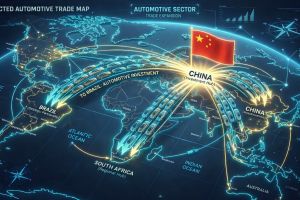
Brazil has climbed back to the top of the global league table for Chinese outbound investment, drawing 10.9% of the total in 2025, according to the Brazil-China Business Council.