IMSAf continues partnership with Nelson Mandela University
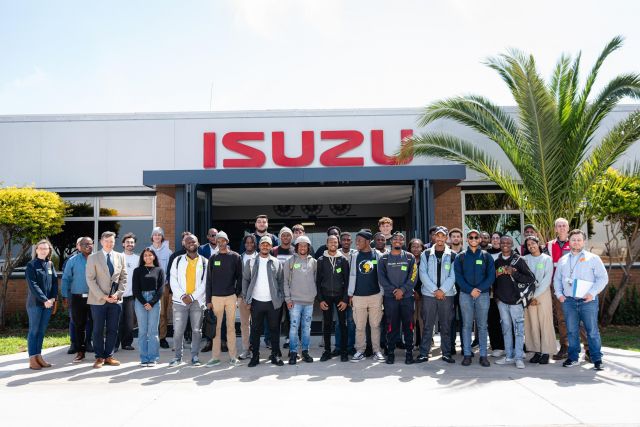
Isuzu Motors South Africa (IMSAf), in partnership with the Nelson Mandela University (NMU) Chair of Mechatronics, is celebrating the success of its long-standing skills development programme that advances education and is designed to enhance the quality of Mechanical and Electrical Engineering graduates.
Share with friends
Established in 2018, the collaboration is testament to IMSAf’s commitment to narrowing the skills gap in the automotive sector by aligning academic learning with real-world industry needs. Through this partnership, students gain invaluable experience within a manufacturing environment at the IMSAf plant, equipping them with the skills required to meet the demands of the job market.
The programme is designed to deeply immerse students within the IMSAf manufacturing plant, allowing them to connect their academic learning with real-world industrial contexts. Through hands-on research and development on actual challenges, combined with dedicated mentorship and project support, students gain a holistic experience.
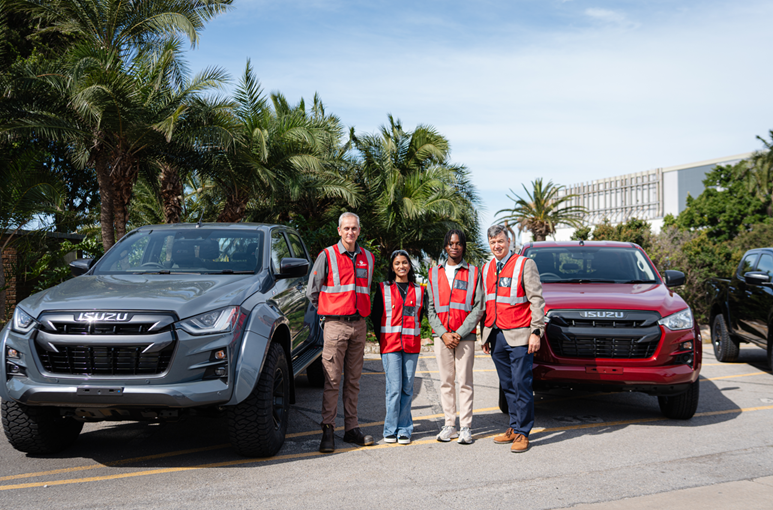
Seen here are Etienne Venter (Senior Manager: Manufacturing Engineering at Isuzu Motors South Africa), Laa’iqah Gaffor & Nqaba Laxa (B-Eng Mechatronics third-year students at Nelson Mandela University), Professor Theo van Niekerk (Head of Mechatronics Department at Nelson Mandela University).
“Over the years, we have been able to empower Nelson Mandela University engineering students who have come through our system to develop innovative solutions, thereby building practical job-ready skills,” says Professor Theo van Niekerk, Head of the Mechatronics Department at the Nelson Mandela University. “This is largely owing to our collaboration with Isuzu Motors South Africa through our Chair of Mechatronics, which has allowed us to bridge the gap between academia and industry ensuring a seamless integration of our graduates into the world of work.”
The partnership has set an ambitious goal to reach and expose 400 students in the Mechatronics, Mechanical and Electrical Engineering fields by 2030, reinforcing its dedication to nurturing local talent and driving innovation.
“Our partnership with Nelson Mandela University is a critical part of our long-term vision to build a sustainable talent pipeline for the automotive industry in South Africa,” says Celestin Ndhlovu, Executive Vice President for the Corporate Services Division, Isuzu Motors South Africa. “By connecting academic knowledge with hands-on industrial experience, we are not only preparing students for the world of work but also inspiring them to become the innovators and problem-solvers of tomorrow. We are proud of the progress made, and we are committed to reaching our goal of impacting 400 students by 2030.”
The Kia Carens nameplate makes its return to South Africa, this time as a seven‑seater designed with families in mind. It combines Sport Utility Vehicle (SUV) styling with Multi-Purpose Vehicle (MPV) practicality, offering space, comfort and efficiency, Kia says.
Volvo has confirmed that its vehicles will now integrate Google’s Gemini artificial intelligence system. This development builds on the company’s existing collaboration with Google, which already provides Android Automotive OS and Google services in Volvo models.
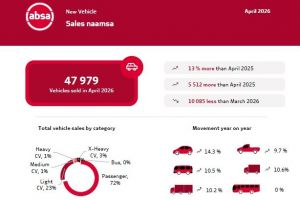
New vehicle sales in 2026 continued their positive trend in April, with the 47 979 units sold marking the best April figure since 2013. This represents a remarkable performance by local automotive retailers despite a host of economic headwinds and a challenging trading environment.
Volvo has confirmed that its vehicles will now integrate Google’s Gemini artificial intelligence system. This development builds on the company’s existing collaboration with Google, which already provides Android Automotive OS and Google services in Volvo models.
New vehicle sales in 2026 continued their positive trend in April, with the 47 979 units sold marking the best April figure since 2013. This represents a remarkable performance by local automotive retailers despite a host of economic headwinds and a challenging trading environment.
April 2026 marked a turning point in South Africa’s economic landscape, as global energy markets were jolted by escalating geopolitical tensions in the Middle East, according to naamsa | The Automotive Business Council.