Hyundai and Kia breakthrough in hidden hazard detection
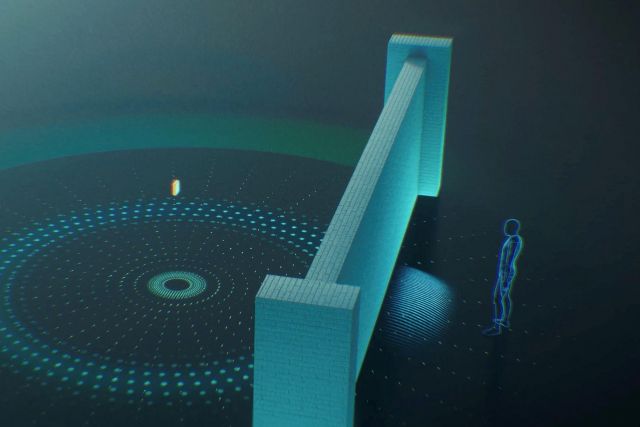
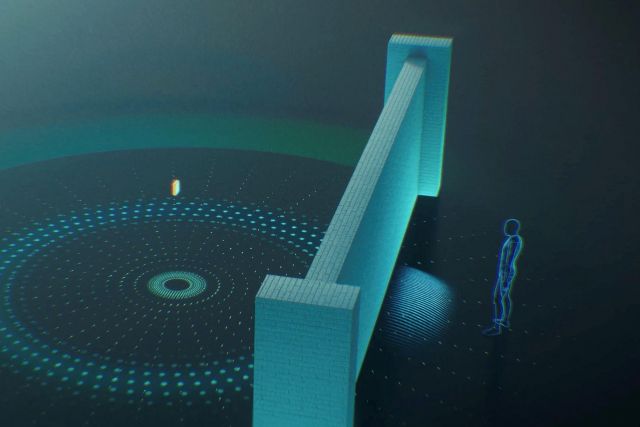
Hyundai Motor Company and Kia Corporation have unveiled Vision Pulse, an advanced safety technology designed to identify obstacles that drivers cannot see.
Share with friends
By harnessing ultra‑wide band (UWB) communication, the system delivers highly accurate, real‑time detection of surrounding objects, offering drivers an additional safeguard in busy or complex environments.
Cutting‑edge awareness through UWB:
Vision Pulse operates through UWB modules fitted to vehicles. These modules exchange signals with other UWB‑enabled items, ranging from smartphones to wearable devices and tracking tags carried by pedestrians or cyclists. By measuring the travel time of these signals, the system calculates precise object locations. Should a potential impact be forecast, alerts are issued instantly, providing critical time for driver intervention.
Many Hyundai and Kia models equipped with the Digital Key 2 system already include UWB hardware, allowing Vision Pulse functionality without any further installation requirements.
Moving beyond conventional blind‑spot systems:
Traditional blind‑spot solutions often depend on fixed infrastructure or slower communication channels, limiting their responsiveness. Vision Pulse overcomes these shortcomings by using rapid UWB radio transmissions, delivering both high accuracy and cost efficiency while reducing reliance on pricier sensors such as radar and LiDAR.
UWB’s broad bandwidth supports resilience against interference and enables signal penetration through obstacles. This capability allows Vision Pulse to function reliably in scenarios such as crowded junctions, heavy rain, or low light. The system detects objects within an approximate 10‑centimetre margin across distances of up to 100 metres and sustains over 99 per cent accuracy. Communication speeds as fast as one to five milliseconds ensure the system reacts almost instantaneously.
Enhanced predictive algorithms further strengthen performance by tracking multiple fast‑moving objects simultaneously, an essential feature for real‑world traffic environments.
Applications beyond motoring:
Hyundai and Kia anticipate Vision Pulse becoming valuable in a range of sectors. In industrial facilities, it may help reduce collisions between machinery and personnel. During emergency response operations, the technology could assist in locating individuals trapped beneath rubble.
The promotional video Sight Beyond Seeing
showcases Vision Pulse in use on school buses. To support ease of adoption among young children, Hyundai and Kia created guardian‑angel‑shaped UWB keyrings that can attach to backpacks, doubling as soft nightlights to encourage regular charging.
Pilot testing is already under way at Kia’s PBV Conversion Centre and at Busan Port Authority, where the system is being evaluated within active industrial environments.
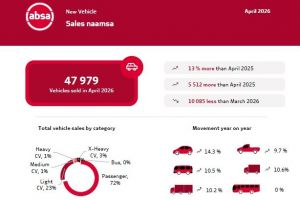
New vehicle sales in 2026 continued their positive trend in April, with the 47 979 units sold marking the best April figure since 2013. This represents a remarkable performance by local automotive retailers despite a host of economic headwinds and a challenging trading environment.
April 2026 marked a turning point in South Africa’s economic landscape, as global energy markets were jolted by escalating geopolitical tensions in the Middle East, according to naamsa | The Automotive Business Council.
Audi is preparing to roll out its biggest SUV yet in the United States (US) this summer, betting that demand for high-end, three-row models will hold up even as trade tensions threaten to raise import costs.
New vehicle sales in 2026 continued their positive trend in April, with the 47 979 units sold marking the best April figure since 2013. This represents a remarkable performance by local automotive retailers despite a host of economic headwinds and a challenging trading environment.
April 2026 marked a turning point in South Africa’s economic landscape, as global energy markets were jolted by escalating geopolitical tensions in the Middle East, according to naamsa | The Automotive Business Council.
Audi is preparing to roll out its biggest SUV yet in the United States (US) this summer, betting that demand for high-end, three-row models will hold up even as trade tensions threaten to raise import costs.