

New JMC Vigus will make an impression
Following the official brand re-launch by the Salvador Caetano Group, JMC South Africa announce the arrival of the All-New JMC Vigus.
- Product News
- 17 April 2026
A growing international movement is challenging the dominance of touchscreen‑centric car interiors, as China and Europe introduce stringent new rules aimed at reducing driver distraction and improving safety.
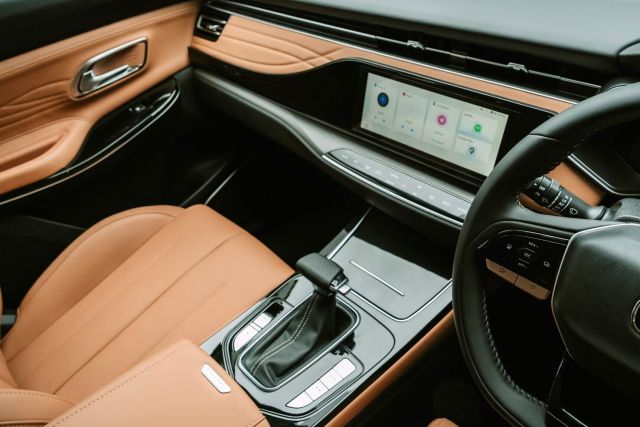
China’s Ministry of Industry and Information Technology (MIIT) has proposed a return to physical, tactile controls for essential functions such as turn signals, hazard lights, gear selection and emergency calling.
These controls must be operated via switches with a surface area of at least 10mm by 10mm, rules specifically designed to prevent drivers from “hunting” through digital menus while on the move. The shift reflects widespread frustration with lag‑prone screens and cluttered interfaces that can be cumbersome during real‑world driving.
China is also preparing to eliminate two high‑profile design trends: steering yokes and flush, retractable door handles. From 2027, steering yokes will be banned after failing updated impact‑testing requirements that assess ten points around a full circular rim, a test yokes cannot physically satisfy.
Regulators have also warned that their incomplete structure increases the risk of airbag deployment irregularities and more severe injuries in collisions. Similarly, flush electronic door handles have been linked to instances where rescuers were unable to access occupants after crashes, contributing to fatalities.
Meanwhile, Europe is reinforcing its own stance on the matter. Beginning in 2026, Euro NCAP will deduct points from vehicles that rely exclusively on touchscreens for vital functions. To secure a five‑star rating, cars must include physical controls for indicators, hazard lights, windscreen wipers, the horn and emergency call systems. The revised 2026 rating model further underscores intuitive, low‑distraction design as a key pillar of vehicle safety, alongside crash avoidance, occupant protection and post‑crash accessibility.
Taken together, these measures signal a decisive international shift away from minimalist “glass cockpit” interiors. Though expansive screens remain fashionable, regulators in China and Europe are drawing a firm line: safety, immediacy and tactile clarity must outweigh aesthetic minimalism.
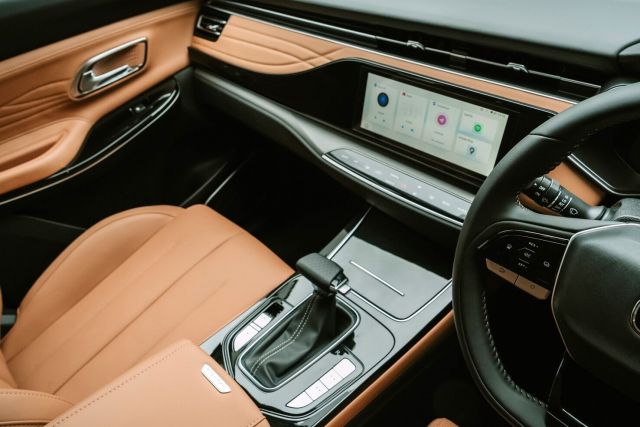
Following the official brand re-launch by the Salvador Caetano Group, JMC South Africa announce the arrival of the All-New JMC Vigus.

Jetour South Africa hosted its inaugural Dealer of the Year Awards on Tuesday night, bringing together its national dealer network of nearly 60 dealerships.

South Africa’s motorists and automotive sector are facing a fresh layer of uncertainty as the Middle East conflict continues to disrupt global oil markets, but for now the country’s fuel supply remains stable even as costs rise.
 Advertisement
Advertisement
Advertisement
You can't buy happiness but you can buy cars and that's kind of the same thing.
Unknown
South Africa’s motorists and automotive sector are facing a fresh layer of uncertainty as the Middle East conflict continues to disrupt global oil markets, but for now the country’s fuel supply remains stable even as costs rise.

Stellantis has struck a five year strategic partnership with Microsoft as it accelerates its shift towards software defined vehicles and digital services.

Auto China 2026 marks another milestone in the evolution of an event that has tracked China’s rise from emerging market to global automotive powerhouse.