Ford announced the winners of the Ford College Community Challenge (C3), run in partnership with global non-profit organisation Enactus.
Share with friends
Enactus is a platform to practically demonstrate the power of entrepreneurial action to transform lives and shape a better, more sustainable world.
For the second successive year, the University of KwaZulu-Natal walked away with top honours at the South African finals and the chance to compete on the global Enactus stage. UKZN presented their ‘Ubuntu Social Enterprise’ project – responding to the challenges articulated in the UN’s Sustainable Development Goals around poverty, unemployment and inequality.
The premise of UKZN’s project is to share knowledge with small-scale farmers by providing mentorship and educational assistance on vertical farming, worm farming and drone technology. The project has already generated a total revenue of R512 369, with new farming methods having a measured positive impact on the environment – saving up to 60% of water and producing yields up to five times the generally accepted norm.
Further to the Enactus national finals, each year the Ford Fund selects four universities from the Enactus participants to receive a $5 000 grant (approximately R70 000). The Ford Motor Company Fund is the philanthropic arm of the Ford Motor Company, and in partnership with Enactus, it promotes the development of innovative solutions among university students to address critical needs in their communities.
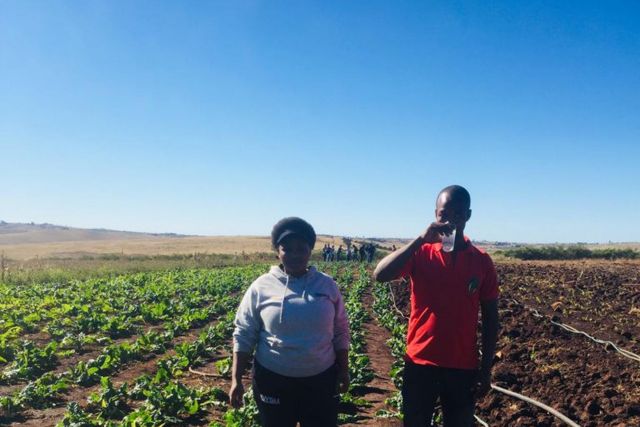
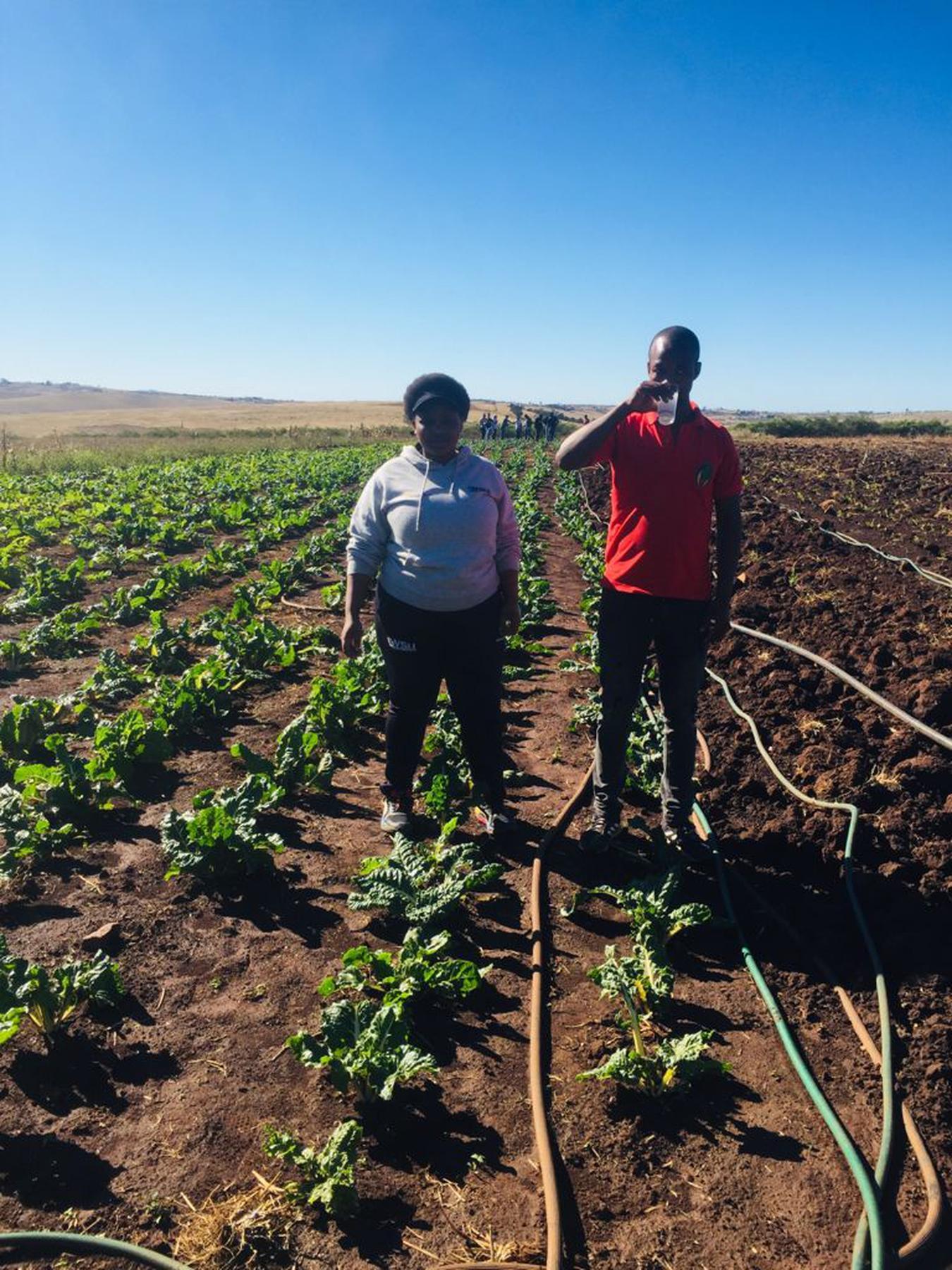
The Greenfields farming project focuses on organic farming.
Last year, the Central University of Technology, Rhodes University, the University of KwaZulu-Natal and the University of Mpumalanga received grants from Ford. This year, finalists from the Central University of Technology, Vaal University of Technology, Walter Sisulu University and the University of Mpumalanga will receive grants from the Ford Fund to implement their projects.
The Central University of Technology will be implementing an EcoBin project, in terms of which they will build dustbins for domestic use as well as large containers to store leftover food for homeless people. Not only will this project address waste management but it will also alleviate hunger by providing food for homeless people.
The Vaal University of Technology has identified a sustainable coal project that addresses issues of more affordable alternative energy, while also providing knowledge of how to run a successful and sustainable coal businesses.
The Walter Sisulu University will undertake a Greenfields farming project, focusing on organic farming and improving the yields of rural farmers. This project aims to introduce new ways of farming and shifting rural farmers from subsistence farming to commercial farming. This will be done by providing mini greenhouse grow beds and seedlings to rural farmers.
And last, the University of Mpumalanga has created a model called Hatching Hope. Hatching Hope is driven by a give-back model, whereby beneficiaries will expand the network of egg layers by bringing back a one-off set of eggs that will be hatched and then redistributed to the next set of beneficiaries.
Zero Carbon Charge (CHARGE) welcomes the government’s extension of short term fuel levy relief measures aimed at cushioning consumers from rising fuel prices, but cautions that these interventions do not address the underlying structural challenge facing South Africa’s transport economy.
At Auto China 2026 this weekend, President of Jetour International, Ke Chuandeng, made the announcement that from 2027, Jetour will be producing some of their models locally in South Africa
At Auto China 2026 this weekend, President of Jetour International, Ke Chuandeng, made the announcement that from 2027, Jetour will be producing some of their models locally in South Africa
Changan has unveiled its ambitious “1+4+4+5” global strategy, signalling a determined push to become one of the world’s top ten automotive brands by 2030.