In preparation for the upcoming launch of the Next-Generation Ford Ranger later this year, the Ford Struandale Engine Plant in Gqeberha has commenced production of the latest generation of Ford engines.
Share with friends
This forms part of Ford’s R600-million investment in the Struandale Engine Plant operations, which has also facilitated upgrades to the existing assembly line for the 2.0L Single Turbo and Bi-Turbo diesel engines. Design changes and additional derivatives of the engines have been added for the Next-Gen Ranger, which will be sold locally and exported to more than 100 global markets.
“The modernisation and upgrades to the Struandale Engine Plant began in July 2021, and the construction was completed on time in December, ready to begin our tooling trials and pre-production runs this year in preparation for Job 1 for both engine programmes commencing in August,” says Shawn Govender, Plant Manager of the Ford Struandale Engine Plant.
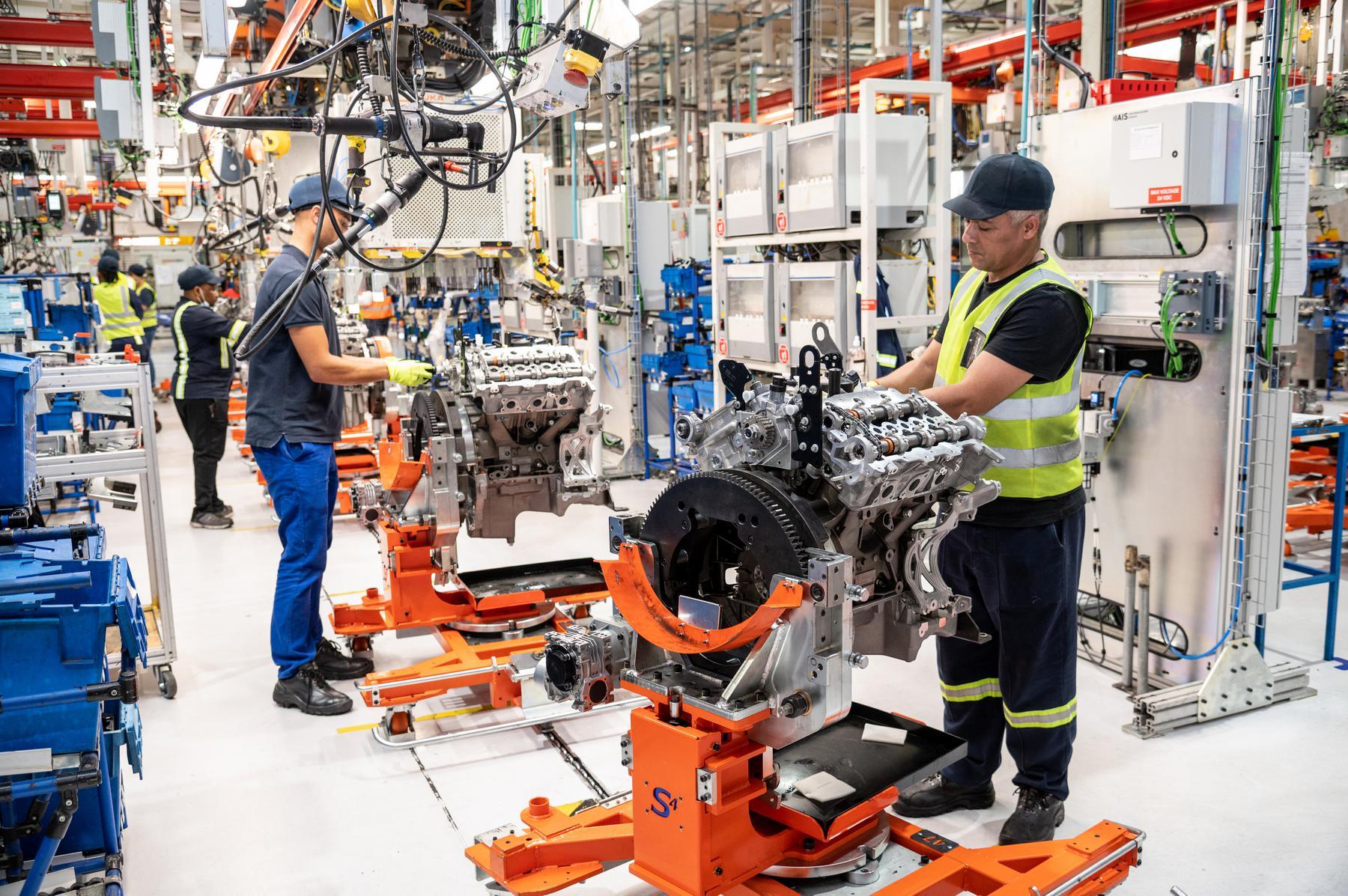
“In its updated and extended format, the assembly line that is now producing the new 3.0L V6 turbodiesel continues with production of the existing 2.2 and 3.2 Duratorq TDCi engines, making it the only facility of its kind in the Ford world that produces both V-configuration and in-line engines on the same line,” Shawn says.
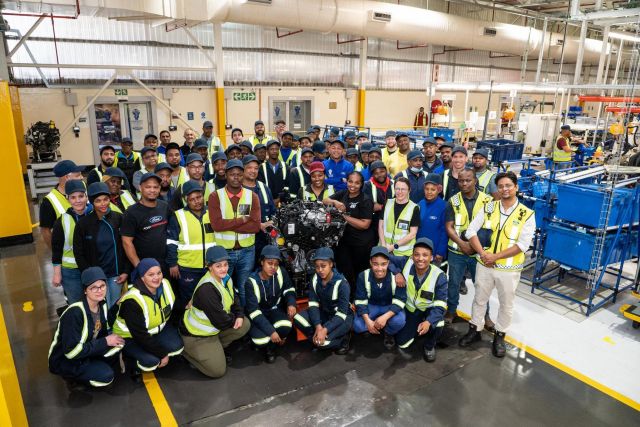
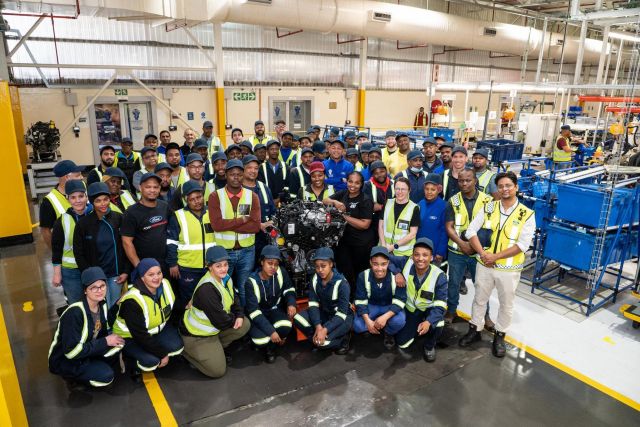
Ford employees on the Struandale V6 engine line.
Relying on a flexible production format, with scheduled batches of the two different engine programmes being assembled, the line incorporates 40 stations that are common to both units and a further 25 stations that are unique to the 3.0L V6 Diesel. The total installed capacity for this line is 130 000 engines a year.
The Struandale Engine Plant is also responsible for machining the cylinder heads for the 3.0L V6 Diesel, which is performed in a completely revamped facility using new and redeployed machines that have been updated with the latest tooling, operating and quality control systems.
The R600-million Struandale Engine Plant investment introduced numerous changes for the latest versions of the 2.0L Single Turbo and 2.0L Bi-Turbo diesel engines that will be the core line-up for the Next-Gen Ranger. Around 23 design changes were implemented for the new application, while the number of derivatives produced on the dedicated assembly line for this engine programme has increased from nine to thirteen.
To support the increased demand for the 2.0-litre diesel engines, the plant has gone from the previous two shifts to 2.5 shifts, with a total installed capacity to produce up to 120 000 engines a year.
The Kia Carens nameplate makes its return to South Africa, this time as a seven‑seater designed with families in mind. It combines Sport Utility Vehicle (SUV) styling with Multi-Purpose Vehicle (MPV) practicality, offering space, comfort and efficiency, Kia says.
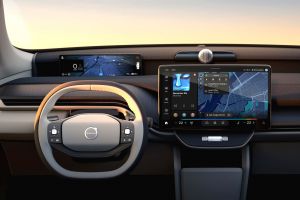
Volvo has confirmed that its vehicles will now integrate Google’s Gemini artificial intelligence system. This development builds on the company’s existing collaboration with Google, which already provides Android Automotive OS and Google services in Volvo models.
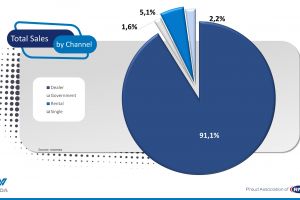
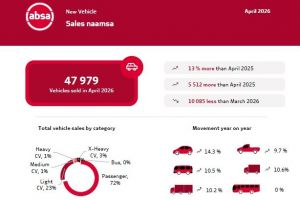
New vehicle sales in 2026 continued their positive trend in April, with the 47 979 units sold marking the best April figure since 2013. This represents a remarkable performance by local automotive retailers despite a host of economic headwinds and a challenging trading environment.
Volvo has confirmed that its vehicles will now integrate Google’s Gemini artificial intelligence system. This development builds on the company’s existing collaboration with Google, which already provides Android Automotive OS and Google services in Volvo models.
New vehicle sales in 2026 continued their positive trend in April, with the 47 979 units sold marking the best April figure since 2013. This represents a remarkable performance by local automotive retailers despite a host of economic headwinds and a challenging trading environment.
April 2026 marked a turning point in South Africa’s economic landscape, as global energy markets were jolted by escalating geopolitical tensions in the Middle East, according to naamsa | The Automotive Business Council.