EU – especially Germany – SA’s main trading partner
South Africa and its automotive industry are set to build resilience in 2025 and strengthen their trading position amid rising geopolitical uncertainties.
Share with friends
The domestic automotive industry’s top automotive regional trading partner in 2024 remained the European Union (EU), according to data in the latest edition of the Automotive Business Council’s (naamsa) Automotive Trade Manual 2025.
Vehicle and automotive component exports to the EU increased by R9.6 billion, or 6.5%, from R147.1 billion in 2023 to R156.7 billion in 2024, mainly owing to a rise in the value of vehicle exports to the region.
Automotive imports from the EU decreased by R900 million, or 0.7%, from R139.4 billion in 2023 to R138.5 billion in 2024, in line with lower original equipment component imports from the region.
The EU, Africa and US-Mexico-Canada Agreement (USMCA) were the regions with a trade surplus in 2024. The largest deficit was recorded with the 48-country Asia region, including countries such as China, Japan, India and Thailand.
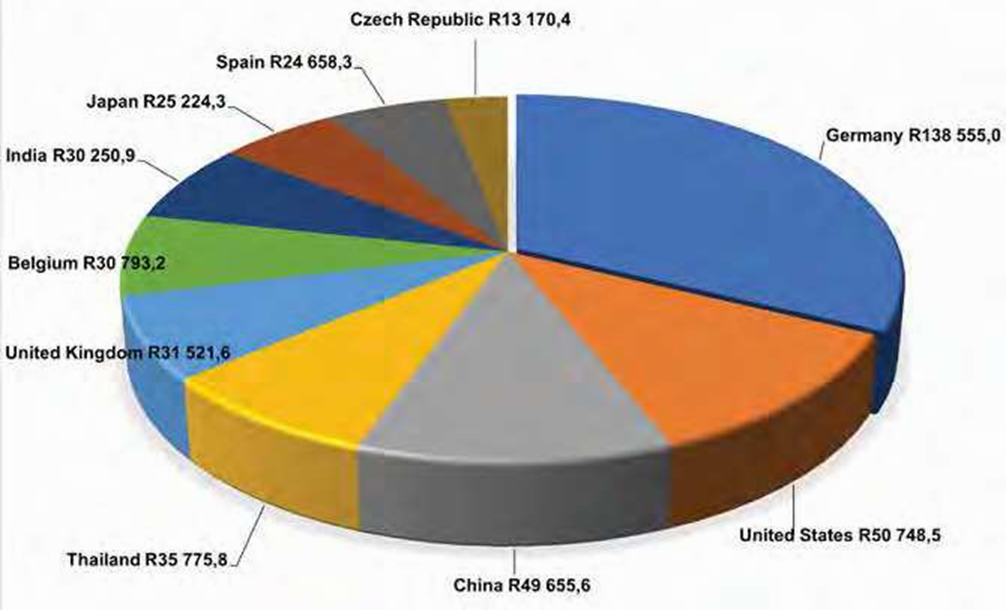
Germany, home to BMW, Volkswagen and Mercedes-Benz, remained the South African automotive industry’s biggest single trading country partner (exports and imports of vehicles and components combined) in 2024. Despite decreasing from the R161.1 billion in 2023, total automotive trade between the two countries still reached a significant R138.6 billion in 2024.
The South African automotive industry’s trade relationship with five of its top trading countries reflected a surplus in 2024. There were no changes in South Africa’s top 10 automotive trading partners, but China improved its ranking year-on-year in 2024.
The global transition to EVs is reshaping South Africa’s automotive export landscape considering the decrease in exports for internal combustion engine (ICE) vehicle components over the past two years. Four OEMs are currently manufacturing hybrids and plug-in hybrid models (Toyota, Ford, Mercedes-Benz and BMW) in the domestic market, while several localisation opportunities for EV components have been identified or already exist and should contribute to offset the losses in ICE vehicle component exports over the medium term.
South Africa’s main automotive regional trade partners – 2024:
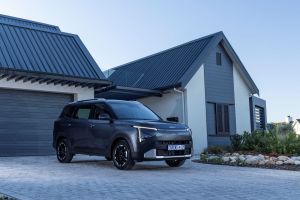
The Kia Carens nameplate makes its return to South Africa, this time as a seven‑seater designed with families in mind. It combines Sport Utility Vehicle (SUV) styling with Multi-Purpose Vehicle (MPV) practicality, offering space, comfort and efficiency, Kia says.
Volvo has confirmed that its vehicles will now integrate Google’s Gemini artificial intelligence system. This development builds on the company’s existing collaboration with Google, which already provides Android Automotive OS and Google services in Volvo models.
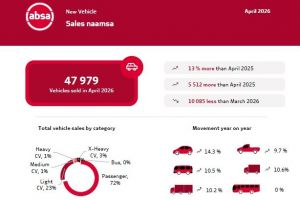
New vehicle sales in 2026 continued their positive trend in April, with the 47 979 units sold marking the best April figure since 2013. This represents a remarkable performance by local automotive retailers despite a host of economic headwinds and a challenging trading environment.
Volvo has confirmed that its vehicles will now integrate Google’s Gemini artificial intelligence system. This development builds on the company’s existing collaboration with Google, which already provides Android Automotive OS and Google services in Volvo models.
New vehicle sales in 2026 continued their positive trend in April, with the 47 979 units sold marking the best April figure since 2013. This represents a remarkable performance by local automotive retailers despite a host of economic headwinds and a challenging trading environment.
April 2026 marked a turning point in South Africa’s economic landscape, as global energy markets were jolted by escalating geopolitical tensions in the Middle East, according to naamsa | The Automotive Business Council.