
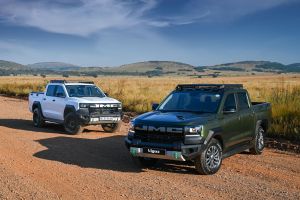
New JMC Vigus will make an impression
Following the official brand re-launch by the Salvador Caetano Group, JMC South Africa announce the arrival of the All-New JMC Vigus.
- Product News
- 17 April 2026
South Africa and its automotive industry are set to build resilience in 2025 and strengthen their trading position amid rising geopolitical uncertainties.
The domestic automotive industry’s top automotive regional trading partner in 2024 remained the European Union (EU), according to data in the latest edition of the Automotive Business Council’s (naamsa) Automotive Trade Manual 2025.
Vehicle and automotive component exports to the EU increased by R9.6 billion, or 6.5%, from R147.1 billion in 2023 to R156.7 billion in 2024, mainly owing to a rise in the value of vehicle exports to the region.
Automotive imports from the EU decreased by R900 million, or 0.7%, from R139.4 billion in 2023 to R138.5 billion in 2024, in line with lower original equipment component imports from the region.
The EU, Africa and US-Mexico-Canada Agreement (USMCA) were the regions with a trade surplus in 2024. The largest deficit was recorded with the 48-country Asia region, including countries such as China, Japan, India and Thailand.
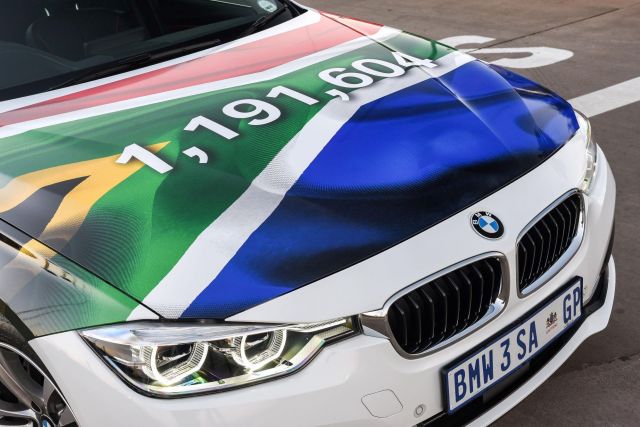
Germany, home to BMW, Volkswagen and Mercedes-Benz, remained the South African automotive industry’s biggest single trading country partner (exports and imports of vehicles and components combined) in 2024. Despite decreasing from the R161.1 billion in 2023, total automotive trade between the two countries still reached a significant R138.6 billion in 2024.
The South African automotive industry’s trade relationship with five of its top trading countries reflected a surplus in 2024. There were no changes in South Africa’s top 10 automotive trading partners, but China improved its ranking year-on-year in 2024.
The global transition to EVs is reshaping South Africa’s automotive export landscape considering the decrease in exports for internal combustion engine (ICE) vehicle components over the past two years. Four OEMs are currently manufacturing hybrids and plug-in hybrid models (Toyota, Ford, Mercedes-Benz and BMW) in the domestic market, while several localisation opportunities for EV components have been identified or already exist and should contribute to offset the losses in ICE vehicle component exports over the medium term.
South Africa’s main automotive regional trade partners – 2024:
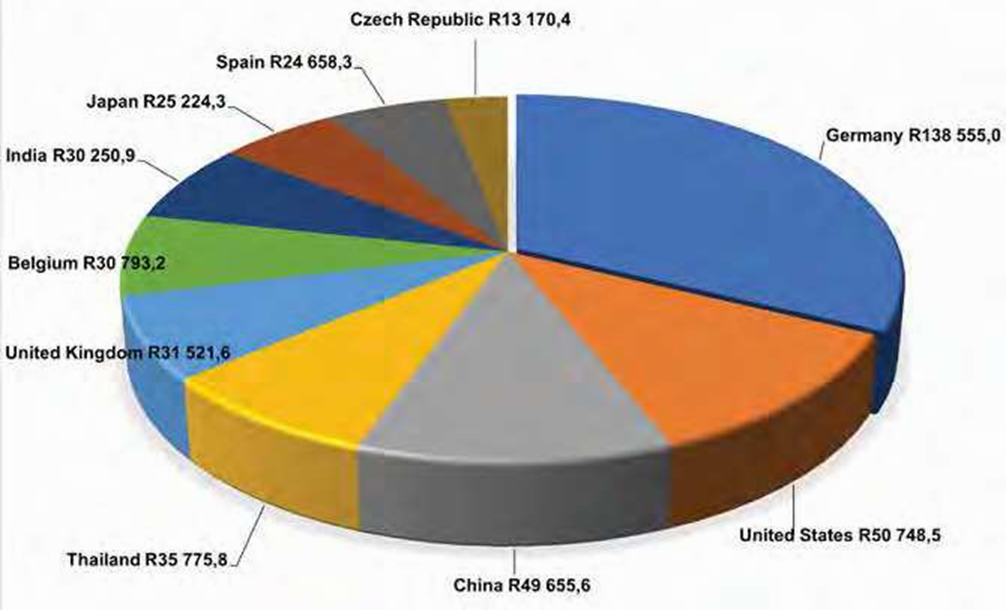
Source: naamsa, SARS
Following the official brand re-launch by the Salvador Caetano Group, JMC South Africa announce the arrival of the All-New JMC Vigus.

Jetour South Africa hosted its inaugural Dealer of the Year Awards on Tuesday night, bringing together its national dealer network of nearly 60 dealerships.
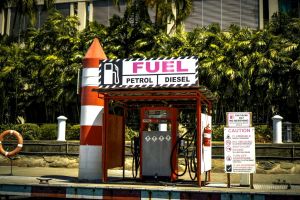
South Africa’s motorists and automotive sector are facing a fresh layer of uncertainty as the Middle East conflict continues to disrupt global oil markets, but for now the country’s fuel supply remains stable even as costs rise.
 Advertisement
 Advertisement
Have you ever noticed that anybody driving slower than you is an idiot, and anyone going faster than you is a maniac?
George Carlin
South Africa’s motorists and automotive sector are facing a fresh layer of uncertainty as the Middle East conflict continues to disrupt global oil markets, but for now the country’s fuel supply remains stable even as costs rise.

Stellantis has struck a five year strategic partnership with Microsoft as it accelerates its shift towards software defined vehicles and digital services.

Auto China 2026 marks another milestone in the evolution of an event that has tracked China’s rise from emerging market to global automotive powerhouse.