
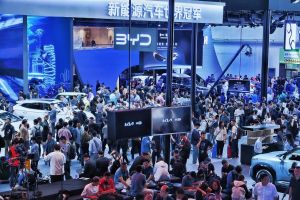
Auto China 2026 promises to be milestone event
Auto China 2026 marks another milestone in the evolution of an event that has tracked China’s rise from emerging market to global automotive powerhouse.
- Industry News
- 16 April 2026
Egypt's automotive industry is experiencing a seismic shift as the government doubles down on its localisation ambitions with a revised investment commitment of R28.7 billion (EGP 1.5 billion).

This dramatic funding increase from the original EGP 1 billion allocation signals Cairo's unwavering determination to establish Egypt as a regional automotive powerhouse whilst reducing dependency on imports.
The cornerstone of this industrial revolution lies in achieving domestic component integration exceeding 45% across vehicle manufacturing operations. With fifteen established manufacturers already operating within Egypt's borders, the groundwork for this transformation has been steadily building, positioning the nation to capitalise on its strategic geographic location and competitive labour costs.
International manufacturers are responding enthusiastically to Egypt's incentive programmes. Nissan has become the first beneficiary of the government's performance-linked support scheme, receiving EGP 120 million that can be applied against tax obligations, effectively reducing operational overheads whilst encouraging expanded local production. This innovative financing model demonstrates Egypt's sophisticated approach to industrial development, moving beyond traditional subsidies towards mutually beneficial arrangements.
The ripple effects of this investment are already manifesting across the automotive value chain. Sumitomo's decision to construct its largest global wiring harness facility in 10th of Ramadan City exemplifies international confidence in Egypt's manufacturing capabilities. The Japanese company's substantial investment promises to generate 10 000 employment opportunities whilst establishing Egypt as a critical supply hub for European automotive markets.
Domestic players are equally impressive in their achievements. Al Nasr Automotive Company has surpassed the government's local content targets, achieving over 50% domestic component integration in its annual production of 300 buses. Similarly, Geely's Egyptian operations demonstrate the viability of high-volume production with strong local content, manufacturing 10 000 vehicles annually with 45% domestically sourced components.
The strategy extends beyond traditional automotive manufacturing into emerging technologies. Egypt has commenced production of its inaugural electric minibus, a 24-seat vehicle with initial production targets of 300 units. Complementing this initiative, a dedicated battery manufacturing line is being established with capacity projections of 600 units annually by 2026, positioning Egypt at the forefront of the electric vehicle revolution.
Supporting industries are flourishing within this ecosystem. Prometeon Tyre Egypt's annual production of 1.1 million heavy-duty tyres, predominantly destined for export markets, demonstrates the potential for Egyptian manufacturers to compete globally. Meanwhile, specialised component production continues to expand, with Al-Mansour's filter manufacturing facility producing over 10 million units yearly following investment exceeding R238.8 million.
Skills development remains central to sustaining this growth trajectory. The Android Automotive programme has produced its first cohort of graduates, equipping Egyptian workers with expertise in automotive software and intelligent vehicle systems essential for next-generation manufacturing.
This comprehensive transformation represents more than industrial policy; it embodies Egypt's broader economic modernisation strategy. The 2024-2030 national automotive plan envisions annual production capacity of 400 000 to 500 000 vehicles, with export markets accounting for 25% of output and generating approximately R95.5 billion in annual revenue. Through strategic partnerships, technological advancement and substantial financial commitment, Egypt is constructing an integrated automotive ecosystem designed to compete internationally whilst serving domestic demand, fundamentally reshaping the nation's industrial landscape for decades to come.

Auto China 2026 marks another milestone in the evolution of an event that has tracked China’s rise from emerging market to global automotive powerhouse.

Isuzu Motors South Africa (IMSAf) has announced the appointment of Takashi Nishida as its new Chairman (Non-Executive Director), effective 1 April 2026.

Jetour has quickly established itself in South Africa since its arrival in 2024, with the Dashing and X70 Plus paving the way for the rugged T-Series.
 Advertisement
 Advertisement
Have you ever noticed that anybody driving slower than you is an idiot, and anyone going faster than you is a maniac?
George Carlin
Auto China 2026 marks another milestone in the evolution of an event that has tracked China’s rise from emerging market to global automotive powerhouse.
Isuzu Motors South Africa (IMSAf) has announced the appointment of Takashi Nishida as its new Chairman (Non-Executive Director), effective 1 April 2026.
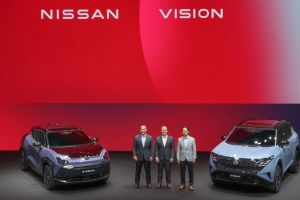
Nissan is reshaping its future by cutting back the number of models it sells globally and putting more focus on electric and hybrid technology as it works to recover from years of financial and operational pressure.