
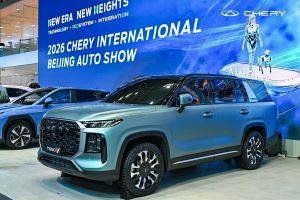
Chery Group showcase a variety of new vehicles
Brands in the Chery Group showcase their latest offerings at the 2026 Beijing Auto Show recently held in China.
- Industry News
- 29 April 2026
South Africa’s Eastern Cape automotive hub is entering a precarious period as infrastructure failures, policy drift and external trade shocks converge to undermine confidence across major plants and supply chains.
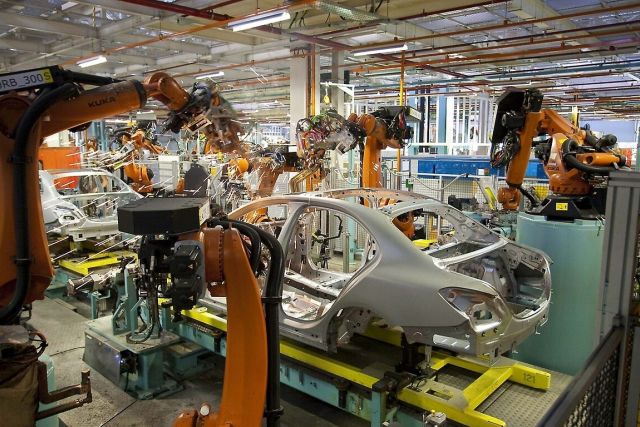
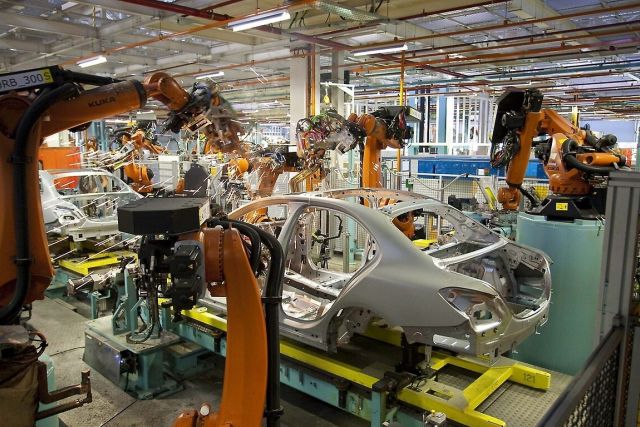
Parliament’s recent oversight visit found manufacturers increasingly constrained by unreliable electricity and water supply, coupled with inefficient logistics networks that have raised operating costs and eroded competitiveness.
In Nelson Mandela Bay, collapsing pylons, prolonged outages and severe water losses have amplified these pressures, leaving factories and residents alike exposed to service interruptions that routinely halt industrial activity.
Even where progress has been made, fragility remains. Durban’s notorious port backlog has eased after equipment upgrades and operational reforms, yet exporters still face delays that disrupt shipping schedules and inflate costs. Transnet’s car terminals in Durban, East London and Gqeberha have posted strong throughput figures, indicating that capacity is not the core challenge; rather, reliability and coordinated planning remain the missing ingredients.
Global market turbulence has added another layer of uncertainty. Mercedes‑Benz South Africa is reported to be in discussions with Great Wall Motor about potential co‑manufacturing at its East London plant, a move driven partly by volatility in United States (US) market access following tariff changes. Although the company has not confirmed any deal, the talks highlight the urgency of stabilising production volumes as duty‑free access to the US remains uncertain.
Meanwhile, domestic producers are losing market share to rapidly expanding imports from China and India. Lower‑priced models continue to flood the entry‑level and mid‑range segments, prompting policymakers to consider raising tariffs to safeguard local assembly.
Volkswagen’s Kariega plant is among the most exposed. Management and lawmakers warn that without swift policy clarity, 2026 could determine whether future models and exports remain viable.
Government’s primary industrial lever, the Automotive Production and Development Programme, is being reshaped to encourage higher localisation and support South Africa’s shift toward electric vehicles (EV). Draft amendments aim to integrate EV‑related incentives and strengthen compliance requirements.
Despite these headwinds, the African Continental Free Trade Area offers a rare source of optimism. Demand for South African components is climbing in emerging automotive hubs such as Morocco, Ghana, Kenya and Egypt, presenting opportunities to diversify away from volatile global markets.
The Eastern Cape retains the skills, plants and supplier networks to compete globally. Its future, however, rests on restoring municipal stability, accelerating policy certainty and anchoring new export pathways across Africa before competitive pressures push the region further into industrial decline.
Brands in the Chery Group showcase their latest offerings at the 2026 Beijing Auto Show recently held in China.

South African motorists are heading for another fuel price adjustment in early May, with increases likely to be driven mainly by global oil prices and a weaker rand, rather than additional tax changes.

Mahindra South Africa has announced a change to its key leadership position with Rajesh Gupta, current CEO of Mahindra South Africa, appointed as Regional Head for South Africa, Australia, New Zealand and South Asia for the parent company Mahindra and Mahindra.
 Advertisement
 Advertisement
I have bad reflexes. I was once run over by a car being pushed by two guys
Woody Allen
Brands in the Chery Group showcase their latest offerings at the 2026 Beijing Auto Show recently held in China.
South African motorists are heading for another fuel price adjustment in early May, with increases likely to be driven mainly by global oil prices and a weaker rand, rather than additional tax changes.
Mahindra South Africa has announced a change to its key leadership position with Rajesh Gupta, current CEO of Mahindra South Africa, appointed as Regional Head for South Africa, Australia, New Zealand and South Asia for the parent company Mahindra and Mahindra.