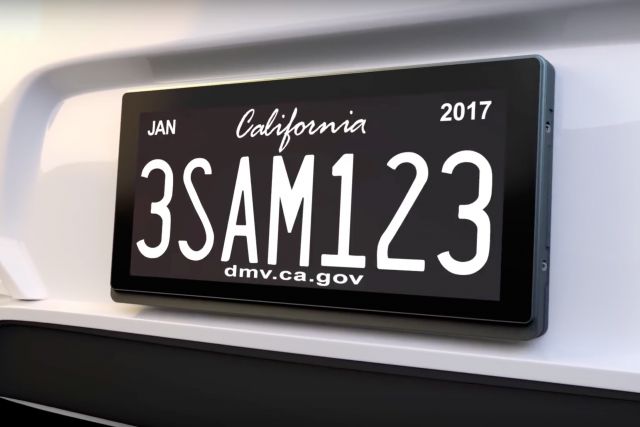
Electronic licence plates are not only the next big thing in vanity, but they also bring a whole array of benefits to the motor owner.
Share with friends
The patented plates, manufactured by Reviver, will not be available in South Africa in the foreseeable future, but at least four US states, including California and Texas, have given them the green light and a nationwide roll-out is in the pipeline.
The plates, which have been in development since 2009, are customisable, trackable and make renewing registrations an easier process using an app. They can be either battery powered or directly wired into your vehicle. In the US, they will set you back $19.95 (approximately R350) a month for a 48-month subscription or $215.40 (approximately R3 800) for a four-year plan.
The cloud-connected vehicle platform can also authorise law-enforcement to disable the vehicle once the owner reports the vehicle stolen.
The plates contain internal components that include a processor that stores vehicle information. It also has speed- and light-detection sensors, and an ignition disrupter that disables ignition when the vehicle is locked. Each of the hardware components is said to be tamper-proof.
The displays are made from e-ink or electronic paper and instead of emitting light, the e-paper display (EPD) reflects light and can be read under direct sunlight.
Charging time remains a worry for many South Africans considering an electric vehicle, who still see it as a disruption rather than a quick stop at a filling station. That view is starting to shift.
The winners of the 2026 Automotive Business Council | naamsa Accelerator Awards were announced at the recently held Auto Week 2026, which took place in eThekwini, KZN.
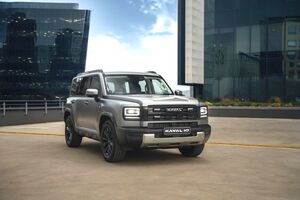
GWM has expanded its local SUV line-up with the introduction of the all-new Haval H7. Replacing the outgoing model, the newcomer blends boxy styling, advanced technology and a choice of petrol, hybrid and plug-in hybrid powertrains, giving buyers a versatile family SUV with genuine all-terrain credentials.
The winners of the 2026 Automotive Business Council | naamsa Accelerator Awards were announced at the recently held Auto Week 2026, which took place in eThekwini, KZN.
With the steep rise in fuel prices since March this year leading to historic record highs following massive increases in October, the government intervention annouched this week, is widely welcomed.
Most motorists will go their entire driving lives without deliberately pushing their vehicle to the limits of adhesion. Yet a sudden downpour, a patch of gravel, standing water or simply carrying too much speed into a bend can quickly expose the limits of a vehicle's grip.