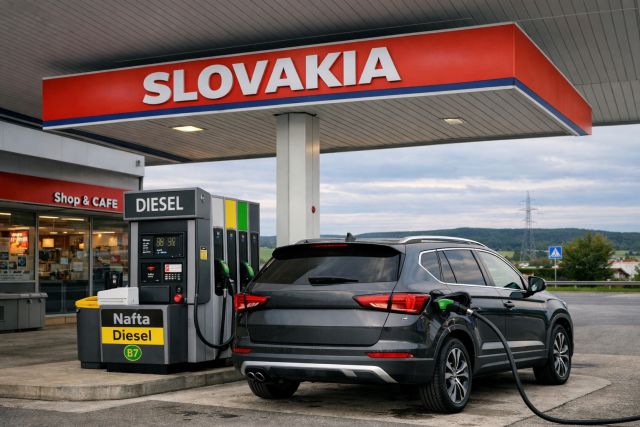
The government says the objective is to protect local availability, especially in border areas, after a jump in cross-border refuelling and as international fuel markets react to heightened geopolitical risk linked to the war involving Iran.
At the core of the plan is a retail limit: filling stations may sell diesel in quantities no greater than a full tank per purchase, with an additional allowance of up to 10 litres. The resolution also allows stations to charge foreign-plated vehicles according to a benchmark connected to average diesel prices in neighbouring countries.
By narrowing the price advantage for non-residents, officials hope to reduce the incentive for drivers to cross the border solely to fill up. The measures are set to run for 30 days, apply to diesel rather than petrol, and are accompanied by tighter oversight of diesel exports during the period.
Slovak authorities say the pressure has been most apparent in the north, where price gaps made local forecourts attractive to motorists arriving from Poland. In some towns, officials reported that the added demand was enough to outstrip normal deliveries, leading to intermittent outages at the pump. Because diesel underpins freight, farming and portions of manufacturing, even short-lived disruption can quickly affect transport schedules and local supply chains.
The timing reflects broader market anxieties. With fighting involving Iran keeping traders focused on the Strait of Hormuz, a narrow but essential corridor for global energy shipments, any escalation that slows tanker traffic or increases insurance and freight costs can translate into higher replacement costs for fuels entering Europe. Even countries that do not import directly from the Gulf can feel the knock-on effect through tighter regional balances and higher wholesale prices.
Slovakia’s supply planning has also been complicated by disruptions on the Druzhba pipeline route, a major conduit for crude into Central Europe. After damage on Ukrainian territory affected flows, Bratislava authorised releases from strategic reserves to keep the Slovnaft refinery supplied while alternative crude is arranged. That extra strain, officials argue, makes it riskier to allow a border-driven demand spike to drain retail inventories.
Across the region, responses have differed. Hungary has leaned on capped prices to soften the blow for consumers, while Poland’s largest refiner, Orlen, has indicated it can reduce margins to limit pump-price pass-through.
Beyond Central Europe, governments exposed to potential Hormuz-related disruption have discussed or deployed familiar crisis tools: closer monitoring of fuel distribution, faster access to emergency inventories, demand-reduction messaging, and in some cases temporary limits on exports of key products.
Analysts say these policies share a common logic: when volatility widens price gaps, fuel can move rapidly - legally through “fuel tourism” or through informal channels - creating local shortages even if national supply looks adequate on paper. Authorities in Pakistan, for example, have ordered crackdowns on petroleum smuggling and tighter monitoring of transport and storage; price gaps and scarcity can also feed informal cross-border trade on routes linked to Afghanistan.
For Slovakia, the message is straightforward: in a shock, keeping diesel available can require short-term controls until logistics and markets settle.
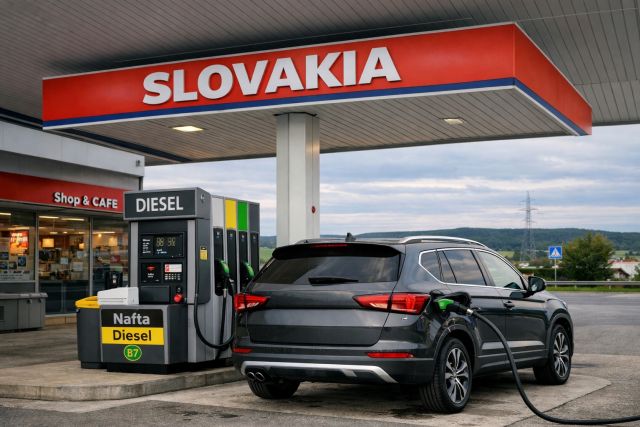
Photo: AI Generated.