Crucially important acronyms for Motor Vehicle Dealers
DocFox recently reported on new amendments to the status of Motor Vehicle Dealers (MVDs) from Reporting Institutions to Accountable Institutions as regulated through the Financial Intelligence Centre (FIC) by the Financial Intelligence Centre Act (FICA).
Share with friends
It is, however, important to take a look at what exactly these acronyms represent.
The Financial Intelligence Act (FICA) came into effect in July 2003 along with the establishment of the Financial Intelligence Centre (FIC) which is essentially responsible for overseeing compliance with the Act.
The Act is aimed at combating financial crimes such as money laundering, tax evasion and terrorist financing. According to the FIC Act, the responsibility as an Accountable Institution includes identifying and verifying your clients and ensuring that their information is correct and up to date.
The Amendment Act brings South Africa closer to international anti-money laundering standards and the best practices recommended by the Financial Action Task Force (FATF).
During the State of the Nation 2021 Address, in an attempt to further enhance the country’s fight against corruption and financial crime, President Cyril Ramaphosa went further and announced the formation of the National Anti-Corruption Advisory Council.
Why is FICA important?
As a member of the FATF, South Africa has agreed to play a role in the international fight against money laundering and terrorist financing. FICA is South Africa’s local legislation to achieve this.
FICA complements other South African legislation such as the Prevention of Organised Crime Act (POCA), the Protection of Constitutional Democracy Against Terrorism Related Activities Act (POCDATARA), and the Prevention and Combating of Corrupt Activities Act (PRECCA).
Since the establishment of the Financial Intelligence Centre (FIC) and the onset of FICA, impressive strides have been made to combat money laundering and other financial crimes in South Africa.
In partnership with law enforcement, intelligence services and other supervisory bodies, the FIC has assisted in many financial crime investigations, including bringing an estimated R12 billion* Ponzi scheme to a halt, exposing an import/export ring as well as exposing a case of theft and money laundering to the value of about R21 million.
Based on these and other findings, it is clear to see that the processes and legislation enforced by the FIC do work and have a positive effect of working towards ending financial crime and protecting innocent businesses from unknowingly facilitating crimes.
*The estimated value for the South African leg of the scheme.
What does this mean for you?
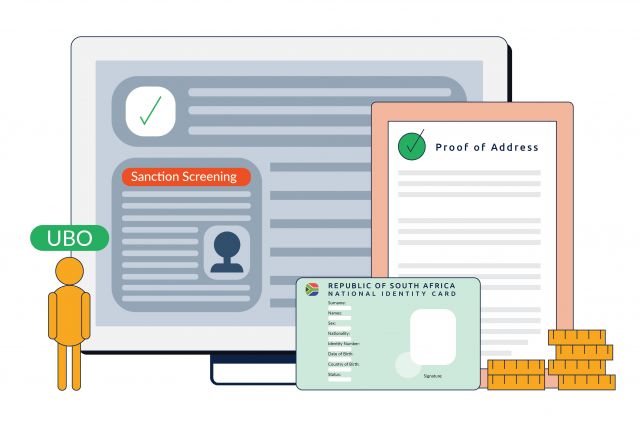
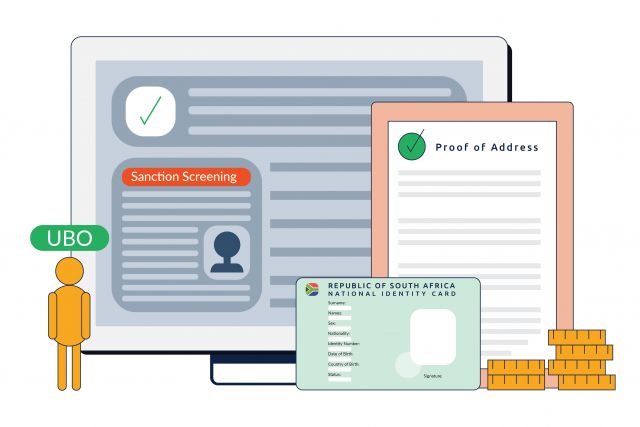
FICA requires Accountable Institutions to develop and implement a Risk Management and Compliance Programme (RMCP) that documents the risk-based approach of the institutions’ FICA compliance strategy.
This should include elements such as:
Customer Due Diligence (CDD) processes that identify and verify clients, their related parties and ultimate beneficial owners (UBO).
Processes to identify whether clients are domestic prominent influential persons (DPIP) or foreign prominent public officials (FPPO). (As of 29 December 2022, Domestic Prominent Influential Persons (DPIPs) and Foreign Prominent Public Officials (FPPOs) have been replaced with the acronyms Domestic Politically Exposed Persons (DPEPs) and Foreign Politically Exposed Persons (FPEPs). (Read more here.)
Screening against sanctions watchlist.
Record-keeping and reporting obligations.
Accountable Institutions that fail to comply with their FICA obligations may open themselves up to a range of consequences, including a requirement to remedy any identified weaknesses in their controls, administrative sanctions, sizeable fines or even prison sentences.
How do we make FICA simple and seamless?
To ensure compliance, systems like DocFox ensure that your compliance process is hassle-free and automated.
DocFox automatically assists with:
Remote, digital and automated document collection and analysis so that you don’t have to spend hours chasing and checking documents but can be assured that you don’t onboard fraudsters.
A configured risk rating that is unique to your business needs and ensures a consistent risk* assessment among clients as well as enhanced due diligence to help you identify high-risk clients.
Automated Client Reviews so that you never miss a review date.
Daily anti-money laundering watchlist screenings and adverse media screenings to help you determine your clients’ risk profile and identify possible ongoing threats.
We understand that compliance needs vary greatly depending on your industry, which is why DocFox can be configured according to your rules no matter what industry you are in. Don’t take our word for it, see for yourself.
The compact SUV market in South Africa has gained a new contender with the arrival of the GAC Emzoom Nova. It joins the existing Emzoom Executive and Emzoom R‑Style models, broadening the range offered by Salvador Caetano South Africa, the official distributor of GAC Motor.
Chinese vehicle brand Changan has strengthened its South African retail presence with the opening of a new flagship dealership in Umhlanga, KwaZulu-Natal, as the company pushes ahead with plans to establish about 45 dealerships nationally during 2026.
A South African dealership has been instructed to remove or amend an advertisement for a new Jetour T2 after the Advertising Regulatory Board (ARB) ruled that the listing created the impression that a specific vehicle was immediately available for purchase when it was not.
A South African dealership has been instructed to remove or amend an advertisement for a new Jetour T2 after the Advertising Regulatory Board (ARB) ruled that the listing created the impression that a specific vehicle was immediately available for purchase when it was not.
If you were hoping to experience the roaring streets of the Isle of Man TT in 2026, you are already too late. This event, with practice sessions starting on 25 May 2026 and racing commencing on the 30th, requires at least six to twelve months of planning, along with a substantial budget.
Pinewood.AI has added two new embedded modules to its Business Intelligence Solution, giving dealers and OEMs greater insight into financial performance and the customer journey, it says.