

Chery Group showcase a variety of new vehicles
Brands in the Chery Group showcase their latest offerings at the 2026 Beijing Auto Show recently held in China.
- Industry News
- 29 April 2026
The global oil market is under pressure, with geopolitical instability driving prices higher and directly impacting consumers at the pump.
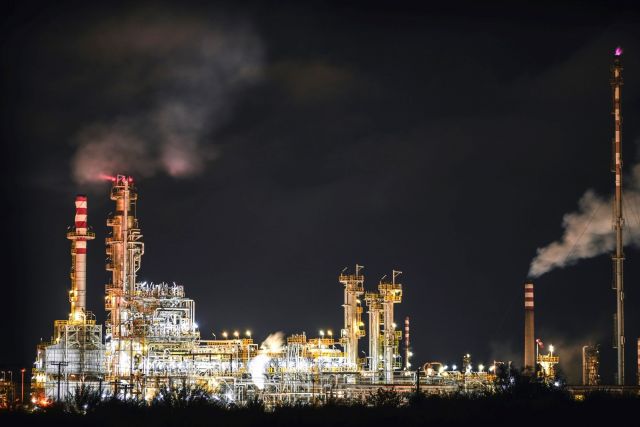
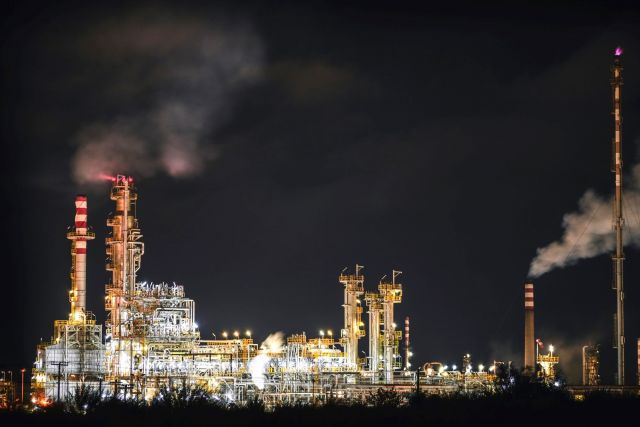
Attacks on Iran by the United States (US) and Israel and Iran’s subsequent reply with attacks on many oil producing countries have sent oil prices skyrocketing. Analysts warn that prolonged instability in the Middle East could pressure already-strained supply chains and increase costs for manufacturers and consumers.
In the days since the military offensive began February 28, shipping through the Strait of Hormuz effectively stopped and oil prices jumped.
Automotive News reports that roughly 20 million barrels of crude oil travel through the strait every day, according to the automotive and industrial practice at AlixPartners Consultants. The passage, which links the Persian Gulf to the Gulf of Oman and Indian Ocean, is also a vital sea lane for large quantities of liquified natural gas, aluminium, steel inputs, and plastic materials such as ethylene, polyethylene and polypropylene.
A prolonged closure would snarl automotive supply chains, particularly in Asia and Europe. But increased oil costs could threaten automaker and supplier business across the globe.
“Instability in the region absolutely has knock-on effects that are going to be very hard to predict. For auto companies, this is just one more disruption, one more thing to be worried about,” Dan Hearsch, global co-leader of the automotive and industrial practice at AlixPartners, told Automotive News. “It certainly adds risk and you’ve got to be thinking about rerouting anything that’s going to go through that part of the world just out of an abundance of caution.”
For now, there are no immediate reports of widespread plant shutdowns in Europe. But the industry’s exposure to maritime trade remains significant. Automakers and suppliers depend heavily on Asia–Europe sea lanes for semiconductors, battery materials, electronics and other high-value components.
The ongoing conflict is expected to affect vehicle shipments and sales in the Middle East, with Chinese automaker Chery having the highest exposure, followed by SAIC Motor and Great Wall, according to a March 3 report from Bernstein Wealth Management. Chery counts on the region for 12 percent of its global sales, SAIC for 11 percent and Great Wall for 6 percent, according to the consultancy.
Iran’s Revolutionary Guards on March 2 said a fuel tanker was burning in the strait after being hit by two drones, according to Reuters. They later declared it closed and vowed to fire on any ship trying to pass through, Reuters reported.
Oil prices surged nearly 7 percent March 2, briefly crossing (R1 353) $82 a barrel before settling around R1 287 ($78). Some analysts warned that prices could jump to over R1 649 ($100) a barrel if the conflict lingers well into March.
President Donald Trump said the attacks could last at least four to five weeks and on March 2 indicated the U.S. has “the capability to go far longer.”
The National Automobile Dealers’ Association (NADA) in South Africa notes the fuel price increases of 20 cents per litre rise in petrol and increases of up to 65 cents per litre in diesel. “Higher fuel prices affect more than the cost of filling up at the pump. As transport and logistics costs rise, these increases filter through the value chain, contributing to higher prices across the basket of goods and services purchased by households. This places additional strain on already constrained consumer budgets.
“For the automotive retail sector, rising fuel and levy costs add further pressure to overall vehicle ownership expenses at a time when household finances remain tight. Continued volatility in global oil markets, in response to rapidly escalating developments in the Middle East, also introduces uncertainty for both consumers and businesses,” according to NADA.
Photo: Unsplash
Brands in the Chery Group showcase their latest offerings at the 2026 Beijing Auto Show recently held in China.
South African motorists are heading for another fuel price adjustment in early May, with increases likely to be driven mainly by global oil prices and a weaker rand, rather than additional tax changes.

Mahindra South Africa has announced a change to its key leadership position with Rajesh Gupta, current CEO of Mahindra South Africa, appointed as Regional Head for South Africa, Australia, New Zealand and South Asia for the parent company Mahindra and Mahindra.
 Advertisement
 Advertisement
You can't buy happiness but you can buy cars and that's kind of the same thing.
Unknown
Brands in the Chery Group showcase their latest offerings at the 2026 Beijing Auto Show recently held in China.
South African motorists are heading for another fuel price adjustment in early May, with increases likely to be driven mainly by global oil prices and a weaker rand, rather than additional tax changes.
Mahindra South Africa has announced a change to its key leadership position with Rajesh Gupta, current CEO of Mahindra South Africa, appointed as Regional Head for South Africa, Australia, New Zealand and South Asia for the parent company Mahindra and Mahindra.