

VW celebrated top dealers and top motoring groups
CFAO‘s Mc Duling Motors under the leadership Allan Stiles as Dealer Principal scooped the top award as Dealer of the Year at VW’s recently held Grand Prix Awards.
- Dealer News
- 5 May 2026
Parliament’s Portfolio Committee on Trade, Industry and Competition has renewed calls for stronger localisation, expanded job creation and deeper transformation in South Africa’s automotive industry after reviewing progress on the South African Automotive Industry Master Plan 2035.
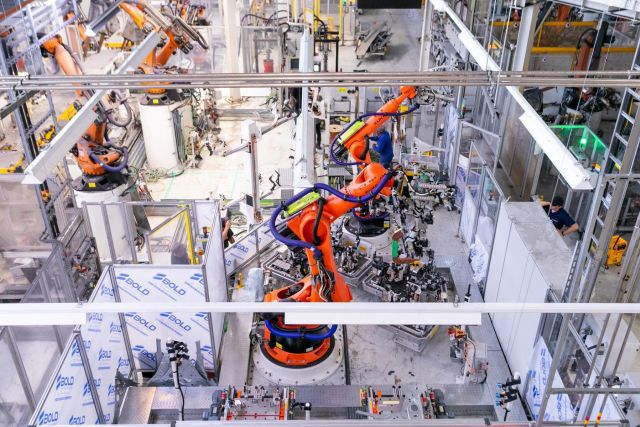
The committee held discussions with the Department of Trade, Industry and Competition (DTIC), its entities and representatives from the automotive industry to assess whether the Master Plan is delivering on its objectives of strengthening the automotive value chain and stimulating broader economic growth.
The Automotive Industry Master Plan 2035 is intended to grow the sector by raising local content levels, boosting international competitiveness, increasing value addition and transforming ownership and participation across the entire value chain. Central to the plan is the goal of doubling employment in the automotive industry by 2035.
During the briefing, the DTIC and industry stakeholders confirmed that production volumes, employment figures and export levels have recovered to those seen before the COVID-19 pandemic. Despite this recovery, they warned that the industry is still falling short of the targets outlined in the Master Plan. Committee members expressed particular concern that local content remains stuck at approximately 40%, which continues to limit opportunities for job creation and the development of local suppliers.
In response to these challenges, the DTIC told the committee that it is reviewing existing automotive policies to introduce more decisive interventions. The review focuses on tackling pressure from lower-cost vehicle imports, navigating global economic uncertainty, and responding to the global transition from internal combustion engine vehicles to electric vehicles. Strengthening localisation and accelerating transformation are key priorities of the policy process.
Industry representatives argued that reforming tax and incentive structures is critical to protecting and expanding domestic vehicle manufacturing. They pointed out that the current framework allows independent importers and semi-knocked down (SKD) assemblers to import vehicles at significantly lower costs, while delivering minimal benefits to the local economy. This, they said, weakens demand for locally produced vehicles and threatens employment across the automotive value chain.
Stakeholders also urged government to apply local public procurement policies more robustly, particularly in the management of public vehicle fleets. They noted that prioritising locally manufactured vehicles, alongside the inclusion of black-owned businesses and service providers in fleet management systems, would strengthen the local industry, support transformation and create sustainable jobs.
Committee chairperson, Mzwandile Masina, highlighted the automotive sector’s importance as a strategic pillar of the South African economy.
“The automotive industry is a key driver of economic activity and offers significant potential for transformation, including the development of township economies,” Mzwandile said. “Public procurement should be used more effectively to support local manufacturers, achieve economies of scale and broaden the range of components produced within the country.”
Mzwandile added that many of the concerns raised fall across the responsibilities of the DTIC, National Treasury and the Department of Transport. He said the committee will consolidate its findings into a report for submission to the National Assembly, including recommendations to the Minister of the DTIC based on the deliberations.
Also see our reporting on issues raised in parlement in this regard:
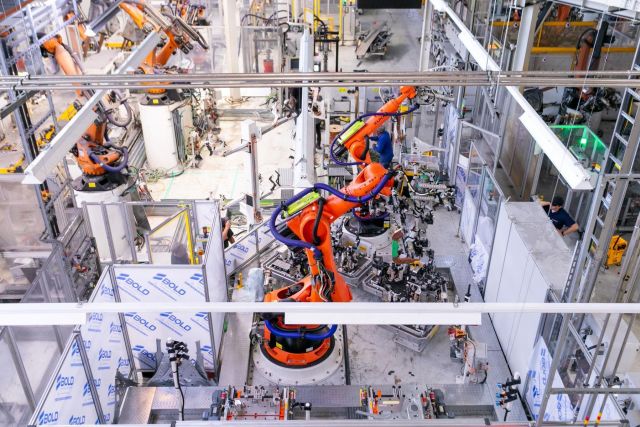
CFAO‘s Mc Duling Motors under the leadership Allan Stiles as Dealer Principal scooped the top award as Dealer of the Year at VW’s recently held Grand Prix Awards.
Nissan’s decision to drop a planned $500 million investment in electric vehicle (EV) production at its Canton, Mississippi plant is the latest indication that established manufacturers are reassessing how quickly the market will shift to battery power.
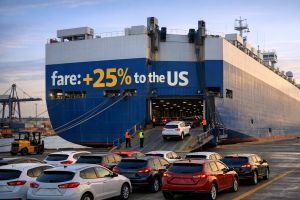
Donald Trump has threatened to increase United States (US) tariffs on cars and trucks imported from the European Union to 25% from next week, up from the 15% rate set under last year’s so-called Turnberry framework.
 Advertisement
 Advertisement
I have bad reflexes. I was once run over by a car being pushed by two guys
Woody Allen
Donald Trump has threatened to increase United States (US) tariffs on cars and trucks imported from the European Union to 25% from next week, up from the 15% rate set under last year’s so-called Turnberry framework.
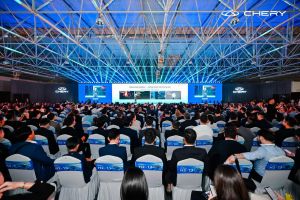
No, the Chinese are not coming to take over – they are already busy accomplishing it.

Motorists and households already under pressure will have to dig deeper into their pockets yet again from Wednesday, with sharp fuel and energy price hikes taking effect across South Africa.