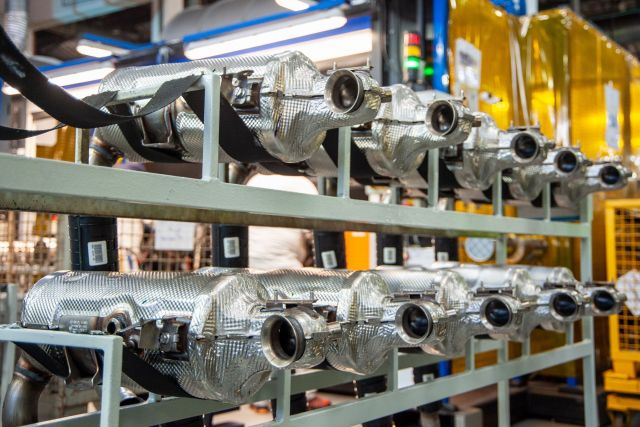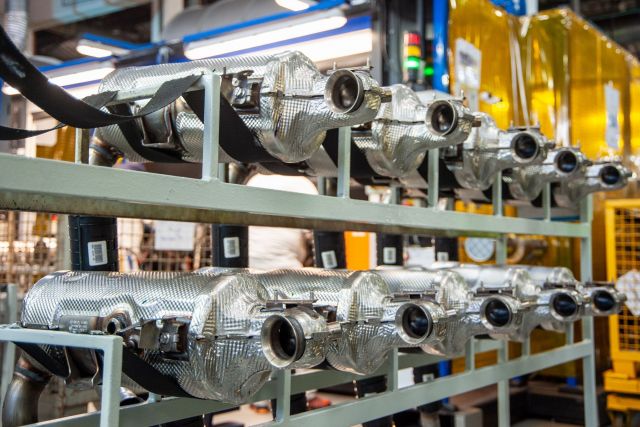
Locally manufactured catalytic converters are by far the single largest export component going from South Africa literally across the globe. It is also a useful method to offset a percentage of the import duties bringing vehicles and components into the country.
According to the Trade Manual, automotive component exports decreased by R3.4 billion, or 5.2%, to R63.4 billion in 2024 from R66.9 billion in 2023, mainly owing to the decline in catalytic converter exports.
However, catalytic converters remain the top automotive component exported from South Africa, comprising 30.4% of total automotive component exports, followed by engine parts, tyres and transmission shafts and cranks.
The global demand and supply patterns that have changed from the dominance of ICE vehicles to a mix that incorporates BEVs, plug-in hybrids and hybrids continue to affect the demand for catalytic converters.
A quick Internet search reveals that the main minerals used in catalytic converters are platinum, palladium and rhodium, tasked with cleaning the air from pollutants in exhaust fumes. The reason why South Africa is at the forefront of manufacturing and exporting converters is because of our healthy reserves of these three minerals.
Electric Vehicles do not use catalytic converters. The batteries used in EVs fortunately contain minerals like lithium, nickel, cobalt, manganese and graphite. South Africa is the leading producer of manganese and the country has healthy deposits of the rest alongside countries like the DRC, Chile, Australia and China.
This means that South Africa could be a key player in the supply chain of the EV (and hybrid) power source alongside switching some of its ICE production over to manufacturing EVs with the growing demand for new-energy vehicles predicted in the coming years.
South Africa’s automotive clusters are strategically located to leverage infrastructure, skilled labour and proximity to major markets, and they play a vital role in its industrial strategy, leveraging regional strengths and global partnerships to maintain competitiveness.
South Africa provides the US with 25% of all its imports of nine critical minerals, including manganese and platinum. Therefore, AGOA (the African Growth and Opportunity Act), is a US trade law enacted in 2000 that provides duty-free access to the US market for eligible sub-Saharan African countries.
(Picture: Ford).
Catalytic converters:
Country |
2020 |
2021 |
2022 |
2023 |
2024 |
Total (R million) |
25 978.1 |
34 890.9 |
33 955.1 |
29 494.0 |
19 263.8 |
Germany |
30% |
36% |
32% |
33% |
42% |
Czech Republic |
26% |
22% |
20% |
22% |
25% |
Thailand |
- |
1% |
3% |
4% |
8% |
Turkey |
3% |
4% |
3% |
3% |
6% |
USA |
12% |
12% |
16% |
14% |
4% |