

New JMC Vigus will make an impression
Following the official brand re-launch by the Salvador Caetano Group, JMC South Africa announce the arrival of the All-New JMC Vigus.
- Product News
- 17 April 2026
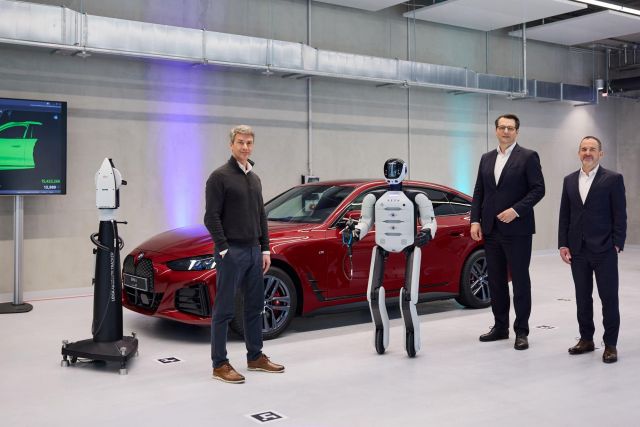
The BMW Group is advancing its digital manufacturing strategy with the introduction of a new pilot project involving humanoid robots at its Leipzig plant.
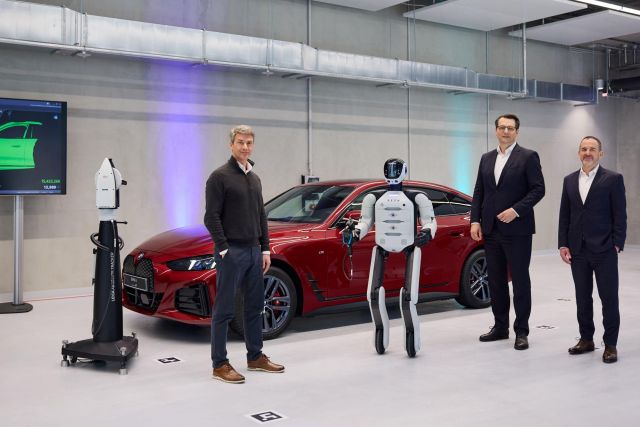
This marks the first time Physical AI, the fusion of artificial intelligence with real‑world robotics, is being deployed in a European BMW facility. The initiative aims to test how humanoid robots can be seamlessly integrated into vehicle, battery, and component production.
The decision follows the success of an earlier pilot in Spartanburg in 2025, where the humanoid robot Figure 02 supported production of BMW X3 models. Over ten months, it performed repetitive and physically demanding tasks with high precision, moving more than 90 000 components and operating reliably across full shifts. These results demonstrated that humanoid robots could transition efficiently from laboratory training to real‑world factory operations.
In Leipzig, BMW is collaborating with Hexagon Robotics and its humanoid robot AEON. After theoretical evaluation and successful laboratory trials, AEON began initial tests at the plant in late 2025. Its human‑like form, combined with interchangeable tools and dynamic wheeled mobility, makes it suitable for multifunctional tasks such as high‑voltage battery assembly and component manufacturing. Full pilot deployment is expected to begin in summer 2026.
Central to the initiative is BMW’s unified IT and data architecture, which replaces isolated data silos with a consistent, standardised platform. This foundation allows AI systems to learn continuously and operate autonomously, forming the backbone of BMW’s Physical AI approach. Such capabilities are essential for integrating robotic systems into complex environments while maintaining safety, accuracy, and production efficiency.
To support this growing field, BMW has established a dedicated Centre of Competence for Physical AI in Production. This hub consolidates expertise across robotics, AI, and manufacturing, ensuring that successful technologies can be evaluated, piloted, and eventually scaled throughout the global production network.
By methodically expanding its Physical AI applications, BMW is strengthening its long‑term strategy for flexible and competitive manufacturing. Through collaboration with leading technology partners and systematic real‑world testing, the company continues to position itself at the forefront of intelligent industrial automation.
Following the official brand re-launch by the Salvador Caetano Group, JMC South Africa announce the arrival of the All-New JMC Vigus.
Jetour South Africa hosted its inaugural Dealer of the Year Awards on Tuesday night, bringing together its national dealer network of nearly 60 dealerships.

South Africa’s motorists and automotive sector are facing a fresh layer of uncertainty as the Middle East conflict continues to disrupt global oil markets, but for now the country’s fuel supply remains stable even as costs rise.
 Advertisement
 Advertisement
You can't buy happiness but you can buy cars and that's kind of the same thing.
Unknown
South Africa’s motorists and automotive sector are facing a fresh layer of uncertainty as the Middle East conflict continues to disrupt global oil markets, but for now the country’s fuel supply remains stable even as costs rise.

Stellantis has struck a five year strategic partnership with Microsoft as it accelerates its shift towards software defined vehicles and digital services.
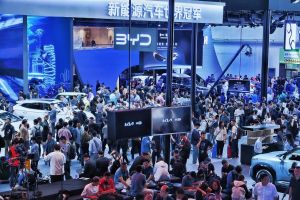
Auto China 2026 marks another milestone in the evolution of an event that has tracked China’s rise from emerging market to global automotive powerhouse.