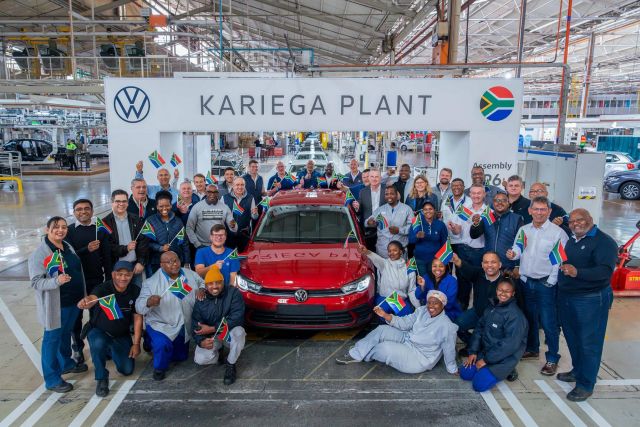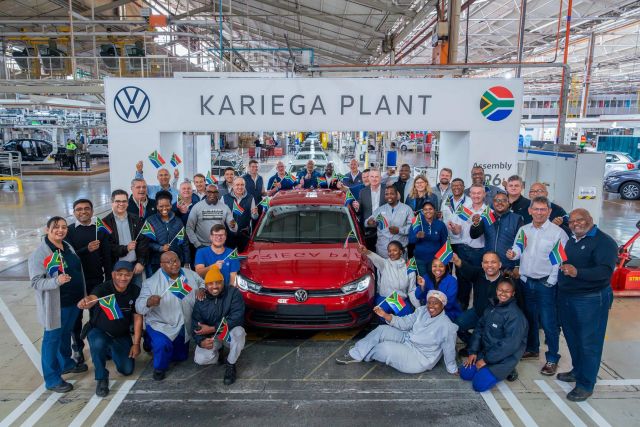
The half-millionth facelift Polo, a Kings Red Polo bound for the brand’s home country of Germany, rolled off the production line in Kariega earlier this month.
Plant Kariega has been building Polos steadily since 1996, and the current facelift version since August 2021. Since July 2024, this plant is also the sole exporter of the Polo for the Europe and Asia-Pacific markets, exporting this vehicle to over 30 countries in addition to its strong presence in the South African market.
At the point of achieving this milestone, a total of 452 207 current Polos had been built for export and the remaining 47 793 vehicles for South Africa. A total of 1 992 464 Polos have been built in Kariega over the past 29 years.
The Polo was also South Africa’s most exported car in 2024 and was recently named as both the Vehicle of the Year: Top Local Manufacturer and the Top Exported Vehicle of the Year at the Naamsa Accelerator Awards.
“The role of the Polo in the Volkswagen Group Africa’s success story has been a strong one, and the same can be said of its contribution to this country’s automotive exports,” says Ulrich Schwabe, Production Director at VWGA. “I am proud to share in this milestone with the colleagues who build, sell and export this high-quality car to the world.”