
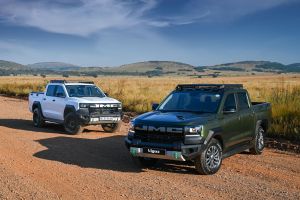
New JMC Vigus will make an impression
Following the official brand re-launch by the Salvador Caetano Group, JMC South Africa announce the arrival of the All-New JMC Vigus.
- Product News
- 17 April 2026
At the Automechanika CEO Breakfast in Johannesburg, Retail Motor Industry (RMI) CEO Ipeleng Mabusela emphasised a central truth often overlooked: South Africa’s automotive retail and aftermarket sector is the country’s true engine of mobility.

Ipeleng noted that the aftermarket touches every household, operating across all districts through workshops, testing centres, parts suppliers, body repairers, tyre fitment outlets and fuel retailers. This extensive national footprint forms the practical foundation for mobility, enabling millions to commute, earn a living and participate in the economy.
Government departments have increasingly acknowledged the sector’s central role. The Department of Trade, Industry and Competition (DTIC) recognises that the South African Automotive Masterplan relies on integrating the aftermarket into domestic‑market optimisation.
The Department of Transport sees the sector as critical for roadworthiness enforcement, while the Department of Higher Education and Training (DHET) and merSETA point to its importance for skills development and industry transformation.
The automotive aftermarket remains a job‑rich pillar of South Africa’s economy. Around 70% of employment in the automotive value chain stems from this segment, representing approximately 270,000 jobs, most within small and medium‑sized (SME) enterprises. Despite broader economic pressures, employment in the sector grew at 1.2% annually between 2020 and 2024, demonstrating its resilience.
With over 23 000 businesses, 80% of which are SMEs, the sector provides unmatched labour‑absorption capacity. The RMI alone represents 8 500 firms and negotiates wages for more than 300 000 workers.
Recent data shows the aftermarket accounts for more than 54% of automotive value add, over R200 billion, surpassing manufacturing. This positions the sector not just as a support mechanism but as a vital contributor to gross domestic product (GDP), consumer safety and national productivity.
However, the sector faces a deepening skills crisis. Artisan numbers have declined by 31% over the past decade, despite a surge in apprenticeship enrolments. This shortage threatens repair quality, delays service delivery and compromises transformation, especially in township economies where automotive trades offer accessible career pathways.
Ipeleng reaffirmed that a functioning national skills pipeline already exists. Through partnerships involving the RMI, merSETA, the Automotive Industry Development Centre (AIDC), Technical and Vocational Education and Training (TVET) colleges and original equipment manufacturers (OEM) academies, programmes now support thousands of learners, offer Recognition of Prior Learning opportunities, and expand training for electric vehicles and advanced diagnostics.
Her vision for 2026 centres on strengthening skills, easing compliance for SMEs, modernising vehicle testing and expanding local value creation through remanufacturing and green‑parts industries. Collaboration, she emphasised, is the key to unlocking the sector’s full potential, and ensuring safe, affordable mobility for all South Africans.

Following the official brand re-launch by the Salvador Caetano Group, JMC South Africa announce the arrival of the All-New JMC Vigus.

Jetour South Africa hosted its inaugural Dealer of the Year Awards on Tuesday night, bringing together its national dealer network of nearly 60 dealerships.
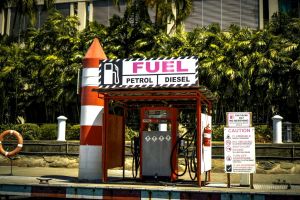
South Africa’s motorists and automotive sector are facing a fresh layer of uncertainty as the Middle East conflict continues to disrupt global oil markets, but for now the country’s fuel supply remains stable even as costs rise.
 Advertisement
 Advertisement
I have bad reflexes. I was once run over by a car being pushed by two guys
Woody Allen
South Africa’s motorists and automotive sector are facing a fresh layer of uncertainty as the Middle East conflict continues to disrupt global oil markets, but for now the country’s fuel supply remains stable even as costs rise.

Stellantis has struck a five year strategic partnership with Microsoft as it accelerates its shift towards software defined vehicles and digital services.

Auto China 2026 marks another milestone in the evolution of an event that has tracked China’s rise from emerging market to global automotive powerhouse.