

Hatfield Motor Group takes top honours at Audi Dealer Awards
Audi South Africa honoured the outstanding achievements of its national dealer network at the annual Audi Vorsprung Awards.
- Dealer News
- 28 April 2026
Automotive leaders are reporting the highest levels of job anxiety of any major sector, according to a report in Automotive News.

This finding reflects the industry’s position as the most disrupted for the second consecutive year, according to both recent data and wider industry developments.
AlixPartners’ 2026 Disruption Index highlights disruption as a constant presence in global boardrooms. Inflation, energy prices, geopolitical friction and cybersecurity continue to weigh heavily on decision‑making, even as labour and supply‑chain pressures begin to ease.
Nearly half of all executives report experiencing significant disruption and 80 percent express optimism about the promise of artificial intelligence (AI). However, CEO pressure continues to intensify. Forty‑five percent of CEOs fear losing their jobs and 85 percent say they require more personal and professional support, underscoring how demanding the current climate has become.
For automotive companies, these macro‑level challenges overlap with long product cycles and high capital requirements. Executives identify rising protectionism and shifting tariff regimes as leading threats.
Recent United States (US) trade policies have disrupted cost bases and supply routes while prompting retaliatory actions that have created a complex network of trade barriers. Analysts estimate that these tariff battles have already cost the industry billions and forced many carmakers to rethink production strategies, inventory decisions and model plans.
Although vehicle sales have shown resilience, analysts caution that persistent consumer uncertainty and ongoing policy volatility continue to challenge the sector. Some tariff pressures have eased, yet key markets remain exposed to fluctuating trade policies, slowing disposable income growth and broader macroeconomic headwinds.
Europe faces added complexity due to intensifying competition with both China and the US in the electric‑vehicle arena, where industrial policies and tariff structures increasingly shape global competitiveness.
Despite the volatility, automotive leaders see meaningful opportunity. Revenue growth is expected from software‑defined vehicles, autonomous features and AI‑driven offerings. Growth‑oriented companies are already leaning into AI adoption, business‑model transformation and geopolitical repositioning in order to harness disruption rather than resist it. However, long development cycles limit the speed at which new technologies can generate returns. Many companies are therefore using AI primarily to reduce operational costs rather than accelerate revenue expansion. (Source text)
In summary, today’s automotive leaders are navigating a challenging and rapidly shifting operating environment defined by rising tariffs, accelerating technological demands and strategic uncertainty. The winners are likely to be those capable of using software innovation, reconfigured supply chains and disciplined investment choices to convert disruption into sustained forward momentum.

Audi South Africa honoured the outstanding achievements of its national dealer network at the annual Audi Vorsprung Awards.
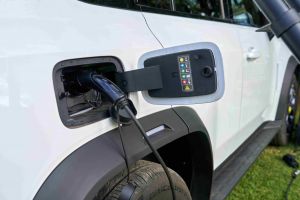
South Africa is experiencing its fastest shift yet towards electric mobility, driven not by environmental policy but by sheer economics.
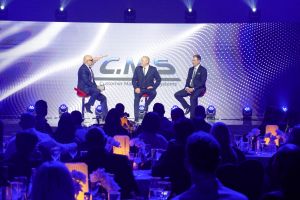
CMS Systems is celebrating 25 years in business, marking a significant milestone for a company that has become a central player in automotive retail technology.
 Advertisement
 Advertisement
You can't buy happiness but you can buy cars and that's kind of the same thing.
Unknown
CMS Systems is celebrating 25 years in business, marking a significant milestone for a company that has become a central player in automotive retail technology.
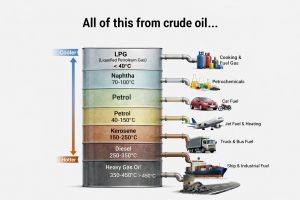
Oil prices jumped on Wednesday after Iran's seizure of container ships in the strait.
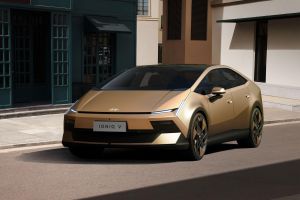
Hyundai Motor is preparing an aggressive comeback in China, unveiling plans to launch 20 new vehicles over the next five years as it tries to rebuild its position in the world’s largest car market.