

Mpho Matseba steps up as head of FUSO Trucks SA
Daimler Truck Southern Africa has appointed Mpho Matseba as the new Head of FUSO Trucks Southern Africa, effective 1 April 2026.
- Industry News
- 16 April 2026
At the recent Automechanika Breakfast, Paul‑Roux de Kock, Chief Analytics Officer from Lightstone, offered a concise yet insightful overview of an automotive sector undergoing significant structural and behavioural shifts.

His presentation drew on decades of market data to illustrate how both global and South African trends continue to reshape the industry’s direction.
A central focus was the global recovery in new‑vehicle sales following the disruptions caused by Covid‑19. Markets such as the United States (US), Canada, Australia, the United Kingdom (UK) and China have generally recovered to levels close to, or exceeding, their pre‑pandemic averages.
While each market shows its own rhythm, they share a pattern of lingering supply constraints, rising economic pressures and evolving consumer expectations that have permanently altered buying behaviour. South Africa follows this broader trend, though its recovery remains more uneven due to local economic challenges, higher interest rates and specific consumer dynamics.
South Africa’s long‑term new‑vehicle market history, stretching from 1980 to 2025, highlights the cyclical nature of the sector, with periods of growth and contraction closely tied to economic conditions. In recent years, new light‑vehicle sales have shown marked sensitivity to interest rate changes. As the cost of borrowing rises, sales tend to soften, demonstrating how closely South African purchasing decisions are linked to affordability and financial pressure.
Affordability concerns are further compounded by steadily rising vehicle prices across the market, a trend clearly reflected in Lightstone’s weighted‑average price data. At the same time, consumers now face a broader array of vehicle brands than ever before.
Over the last three decades, the number of available makes has expanded significantly, with 2024 and 2025 standing out as years of exceptional variety. Much of this growth comes from new Asian brands, especially from China, bringing increased competition through attractive pricing, modern styling and strong technological features.
These shifts are evident when examining the changing rankings of top‑selling manufacturers. Established leaders like Toyota, Volkswagen, Hyundai and Ford continue to perform strongly, but brands such as Chery and Haval have gained impressive traction, illustrating South African consumers’ willingness to embrace newcomers when the value proposition aligns with their needs.
Brand origin and manufacturing location have also evolved. Chinese‑origin brands and Chinese‑assembled vehicles now occupy a growing share of the market, while vehicles from Japan, Germany and South Africa remain significant contributors.
Looking ahead, Lightstone’s forecast for new‑vehicle sales through 2026 suggests cautious optimism. Despite economic pressures, consumer demand for mobility persists, and the industry continues to innovate.

Daimler Truck Southern Africa has appointed Mpho Matseba as the new Head of FUSO Trucks Southern Africa, effective 1 April 2026.

Toyota Motor Corporation and Isuzu Motors are stepping up plans to bring hydrogen power into Japan’s light‑duty truck market, confirming a jointly developed fuel cell model scheduled for production in the 2027 financial year.

Chinese EV newcomer iCAUR is putting its promise of personalisation to the test in South Africa, with the brand now using an influencer-led design competition to show local buyers just how far they can tailor their vehicles to suit their own tastes.
 Advertisement
 Advertisement
You can't buy happiness but you can buy cars and that's kind of the same thing.
Unknown
Daimler Truck Southern Africa has appointed Mpho Matseba as the new Head of FUSO Trucks Southern Africa, effective 1 April 2026.
Chinese EV newcomer iCAUR is putting its promise of personalisation to the test in South Africa, with the brand now using an influencer-led design competition to show local buyers just how far they can tailor their vehicles to suit their own tastes.
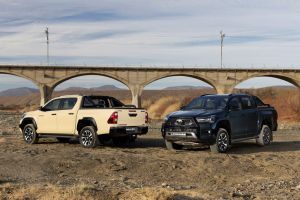
Toyota South Africa Motors (TSAM) is set to make history with a series of Guinness World Records attempts, bringing Hilux owners together from across the country in a bold, large-scale celebration of the all-new 9th generation Toyota Hilux.