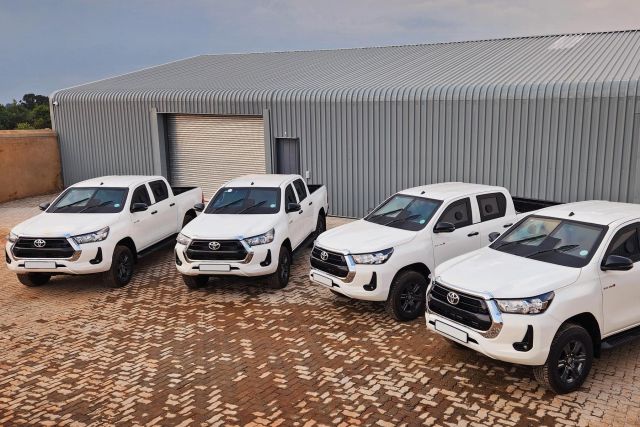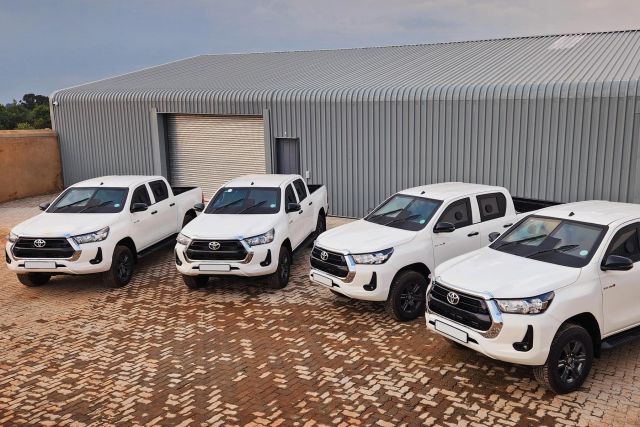
The fleet consists of Hilux 2.4 GD-6 Raider double-cab bakkies built at the local Prospecton plant and then armoured with the semi-discreet B6 Stopgun V2.0 armouring to offer full ballistic protection against assault rifles, including the AK47, R1 and R5.
Toyota is the largest manufacturer in KwaZulu-Natal and was forced to close for more than a week in July 2021 as civil unrest swept through the province. While the plant itself was not raided, the nearby Toyota dealer was struck, as were many others in the vicinity.
SVI says the semi-discreet kit is available for the single-, extended- and double-cab body styles. It takes around four weeks to prepare and just three weeks to instal, with the vehicle remaining fully serviceable at the agent.
The Stopgun V2.0 option also includes uprated door hinges to cope with the additional mass of the various B6 components and the non-obtrusive door armouring. SVI also uses flat armoured glass in the windows to allow for easy replacement if damaged.
In addition to the integrated door armour and ballistic glass, the roof, front fenders, roof support pillars and the firewall gain B6 bullet-resistant protection, as do critical under-bonnet components such as the battery and ABS unit.
Gunports are provided as standard but can be deleted upon request, while a front suspension upgrade is also included in the price.