

VW celebrated top dealers and top motoring groups
CFAO‘s Mc Duling Motors under the leadership Allan Stiles as Dealer Principal scooped the top award as Dealer of the Year at VW’s recently held Grand Prix Awards.
- Dealer News
- 5 May 2026
The Automotive Industry Transformation Fund (AITF) is set to expand its impact in 2025 with additional funding injection into the sector aimed at accelerating inclusive growth and deepening transformation.
Building on a successful 2024, AITF has reinforced its role as a catalyst for black-owned enterprises in South Africa’s automotive value chain.
Amid the Department of Trade, Industry and Competition’s (the dtic) recent proposal to establish a centralised R100 billion transformation fund – highlighted by President Ramaphosa in his 2025 State of the Nation Address – automotive industry leaders have reaffirmed their commitment to the AITF as the sector’s key transformation vehicle.
Naamsa (the Automotive Business Council), and the National Association of Automotive Component and Allied Manufacturers (NAACAM), noted the importance of localisation and transformation in driving investment, promoting economic inclusion, creating jobs and positioning South Africa as a globally competitive automotive market that actively contributes to the country’s sustainable development.

Under the leadership of CEO Jabulani Selumane, the AITF will approve additional funding this year, with 30% dedicated to women-owned businesses. This expansion will support new beneficiaries, drive job creation and strengthen local manufacturing. The fund also aims to enhance skills development by supporting graduate placements within beneficiary companies.
“Our work is firmly aligned with the SA Automotive Masterplan 2035, which seeks to position South Africa as a globally competitive and transformed industry,” says Jabulani.
“Transformation is about more than compliance – it’s about empowering entrepreneurs, women and youth to take ownership in a sector that is critical to South Africa’s economy.” Strengthening Local Supply Chains and Competitiveness as South Africa’s leading transformation fund for the automotive industry, the AITF remains focused on supporting black-owned component manufacturers to meet APDP localisation targets.
Renai Moothilal, CEO of NAACAM, acknowledged the AITF’s pivotal role in strengthening South Africa’s localised automotive value chain through strategic partnerships with suppliers, global stakeholders and educational institutions. He also noted the need for further clarity on the proposed centralised transformation fund by the dtic.
“We appreciate the dtic’s efforts to boost trade, investment and transformation across industries,” says Renai. “However, it’s essential that existing sector-specific mechanisms – such as the AITF and company-specific supplier development activities – are not disrupted.
Since its establishment in 2020, the AITF has invested R596 million into South Africa’s automotive sector, supporting 67 black-owned businesses – with over 30% of funding directed to women-led enterprises. Looking ahead to 2029, the fund aims to increase its beneficiary base to 90 enterprises, while strengthening Tier 1 and Tier 2 supplier participation.
Mikel Mabasa, CEO of naamsa, reaffirmed the AITF’s critical role in securing the future of South Africa’s automotive manufacturing sector:
“The AITF’s track record is evident and well documented. With the planned additional funding in 2025, we will expand opportunities for black-owned suppliers, fostering sustainable growth and transformation. The industry commends Minister Parks Tau for his unwavering dedication to accelerating transformation across various industries, regardless of publicly expressed concerns from other sectors of the economy with the proposed mechanism of achieving this strategic imperative. In our case, it is crucial to emphasise that the dtic’s proposed transformation fund should not replace the AITF or undermine the progress we have made in the recent past.”
Mikel also echoed the concerns raised by Andrew Kirby, CEO of Toyota South Africa Motors, at the recent State of the Motor Industry (SOMI) address:
“We are already witnessing signs of de-industrialisation as vehicle sales of fully-built, imported vehicles keep rising, surpassing locally manufactured models. To protect our manufacturing base, South Africa must prioritise increasing local content, preserving jobs and bolstering our local supplier base. This is the opportune moment to unite and strengthen the AITF’s role in catalysing transformation – not to rewrite the progress we have achieved.”
CFAO‘s Mc Duling Motors under the leadership Allan Stiles as Dealer Principal scooped the top award as Dealer of the Year at VW’s recently held Grand Prix Awards.
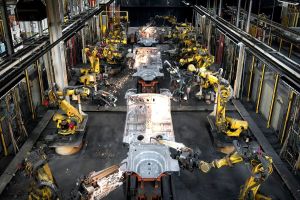
Nissan’s decision to drop a planned $500 million investment in electric vehicle (EV) production at its Canton, Mississippi plant is the latest indication that established manufacturers are reassessing how quickly the market will shift to battery power.
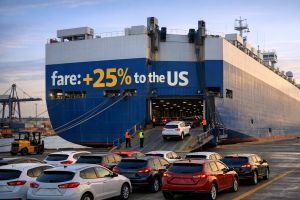
Donald Trump has threatened to increase United States (US) tariffs on cars and trucks imported from the European Union to 25% from next week, up from the 15% rate set under last year’s so-called Turnberry framework.
 Advertisement
 Advertisement
I have bad reflexes. I was once run over by a car being pushed by two guys
Woody Allen
Donald Trump has threatened to increase United States (US) tariffs on cars and trucks imported from the European Union to 25% from next week, up from the 15% rate set under last year’s so-called Turnberry framework.
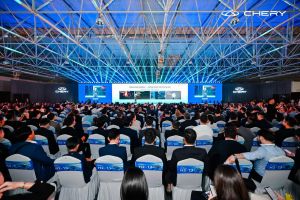
No, the Chinese are not coming to take over – they are already busy accomplishing it.

Motorists and households already under pressure will have to dig deeper into their pockets yet again from Wednesday, with sharp fuel and energy price hikes taking effect across South Africa.