

TVS powers South Africa’s growing delivery economy
South Africa’s rapidly expanding delivery sector is driving strong demand for affordable, dependable motorcycles that can withstand the demands of daily commercial use.
- Product News
- 20 November 2026
Victoria Backhaus-Jerling (photo) has been appointed as the new Chief Executive Officer (CEO) of the African Association of Automotive Manufacturers (AAAM).

She succeeds Dave Coffey, who has served as CEO since February 2020 and is retiring after five years. Victoria will be the first woman to lead the AAAM as CEO.
Martina Biene, President of AAAM as well as Chairperson and Managing Director of Volkswagen Group Africa, expressed her congratulations: “On behalf of the AAAM Management Board, I congratulate Victoria on her appointment. She has demonstrated remarkable expertise and commitment to the development of the African automotive industry, and our board is confident she will lead AAAM to even greater achievements. We are also proud to welcome the first woman to fill this pivotal role.”
“We also extend our gratitude to Dave for his tireless dedication in transforming AAAM into a highly respected organisation. Under his leadership, AAAM has grown from 17 members in 2020 to 80 members today and has become a key player in advancing automotive industrialisation in Africa,” Martina adds.
Before her appointment, Victoria served as Head of the Project Office in South Africa for the German Association of the Automotive Industry (VDA) since October 2020.
Victoria says she is honoured to be appointed into this role, and she looks forward to building on the strong foundation established by Dave and the AAAM team. “My focus will be on driving collaboration, inclusivity and innovation across the continent, ensuring that AAAM continues to serve its members and stakeholders effectively. We have declared 2025 the year of collaboration and inclusivity, and I am excited to work with partners to further industrialise and grow Africa’s automotive industry.”

South Africa’s rapidly expanding delivery sector is driving strong demand for affordable, dependable motorcycles that can withstand the demands of daily commercial use.
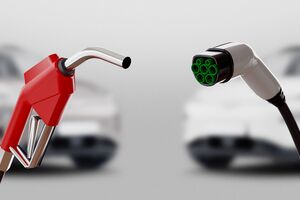
One of the main results of the 2026 Global EV Driver Survey, released by the Global EV Alliance (GEVA) this week, show that South African battery electric vehicle (EV) drivers are among the most satisfied in the world.
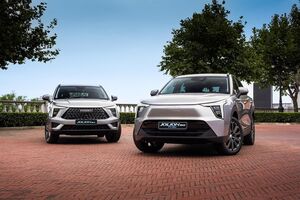
GWM South Africa has broadened its popular Jolion range with the introduction of the all-new Haval Jolion Max. Designed with modern families in mind, the newcomer combines increased interior space, new technology and a wider choice of powertrains, including petrol, hybrid and plug-in hybrid options.
 Advertisement
Cars are the ultimate symbol of freedom, independence and individualism. They offer the freedom to ‘go anywhere,’ whenever it suits and with whom one chooses.
Sarah Redshaw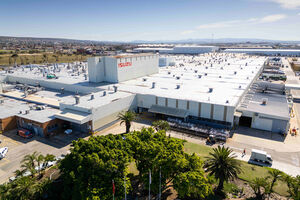
Isuzu Motors South Africa (IMSAf) has achieved a 38% reduction in Scope 1 and Scope 2 CO₂ emissions compared with its 2013 baseline while increasing vehicle production by 21% during the 2025/26 financial year at its Gqeberha manufacturing facility.

Diversifying oil supplies, investing in pipelines and rail infrastructure, improving port operations and expanding inland storage facilities are among the measures needed to reduce South Africa's vulnerability to international fuel supply disruptions.
Combined Motor Holdings (CMH) has appointed Charles Webber as the new Group CEO.