Manufacturers and suppliers find themselves navigating a compressed innovation cycle, heightened competition and a landscape shaped by new international partnerships.
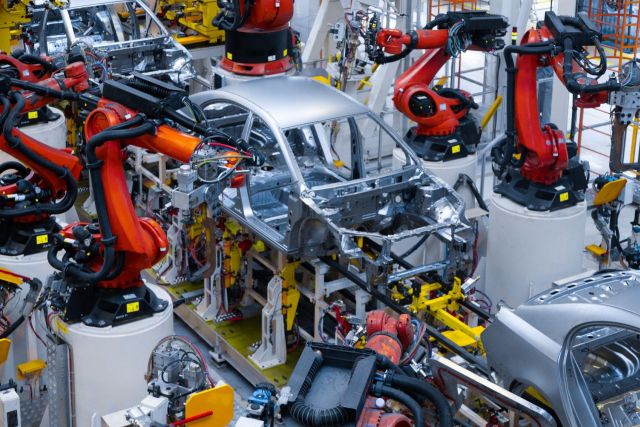
One of the most significant shifts is the dramatic reduction in vehicle development timelines. Processes that once spanned four to five years are now being condensed to as little as eighteen to twenty‑four months. This acceleration reflects both intensifying competitive pressures and the growing dominance of software‑driven design, where digital architecture increasingly underpins product differentiation.
Regulatory recalibration is also reshaping propulsion strategies across markets. Governments balancing sustainability goals with economic and energy‑security concerns are prompting a more nuanced approach to electrification. While battery‑electric vehicles continue to gain ground in some regions, others are seeing renewed interest in traditional and hybrid powertrains, particularly among consumers focused on affordability, practicality and charging accessibility.
Chinese manufacturers continue to strengthen their global presence, becoming pivotal players in reshaping supply chains, product platforms and strategic alliances. Collaboration between established automakers and Chinese original equipment manufacturers (OEMs) is accelerating innovation, yet simultaneously intensifying competitive dynamics across Europe, Asia and South America. The success of these cross‑border partnerships is increasingly seen as central to future industry leadership.
Technology remains at the heart of the industry’s evolution. The rise of connected services, artificial intelligence and over‑the‑air updates is redefining how drivers interact with their vehicles. Safety‑oriented connected features are especially valued, even as concerns around data privacy persist. Growing acceptance of artificial intelligence‑enabled (AI) personalisation further reinforces the shift towards software‑defined vehicles that evolve long after leaving the showroom.
These developments unfold against a backdrop of economic uncertainty. Global light‑vehicle sales are forecast to stabilise at around 91.8 million units in 2026, despite sluggish momentum in 2025 and persistent challenges related to tariffs, supply chain fragility and elevated interest rates. Regional trajectories diverge significantly, with declines anticipated in China and North America, while India continues to drive growth across South Asia.
In this environment, agility, collaboration and technological leadership are emerging as the defining attributes of successful automotive players. As development cycles compress and global partnerships deepen, 2026 marks a pivotal juncture in the race to deliver cleaner, smarter and more accessible mobility worldwide.