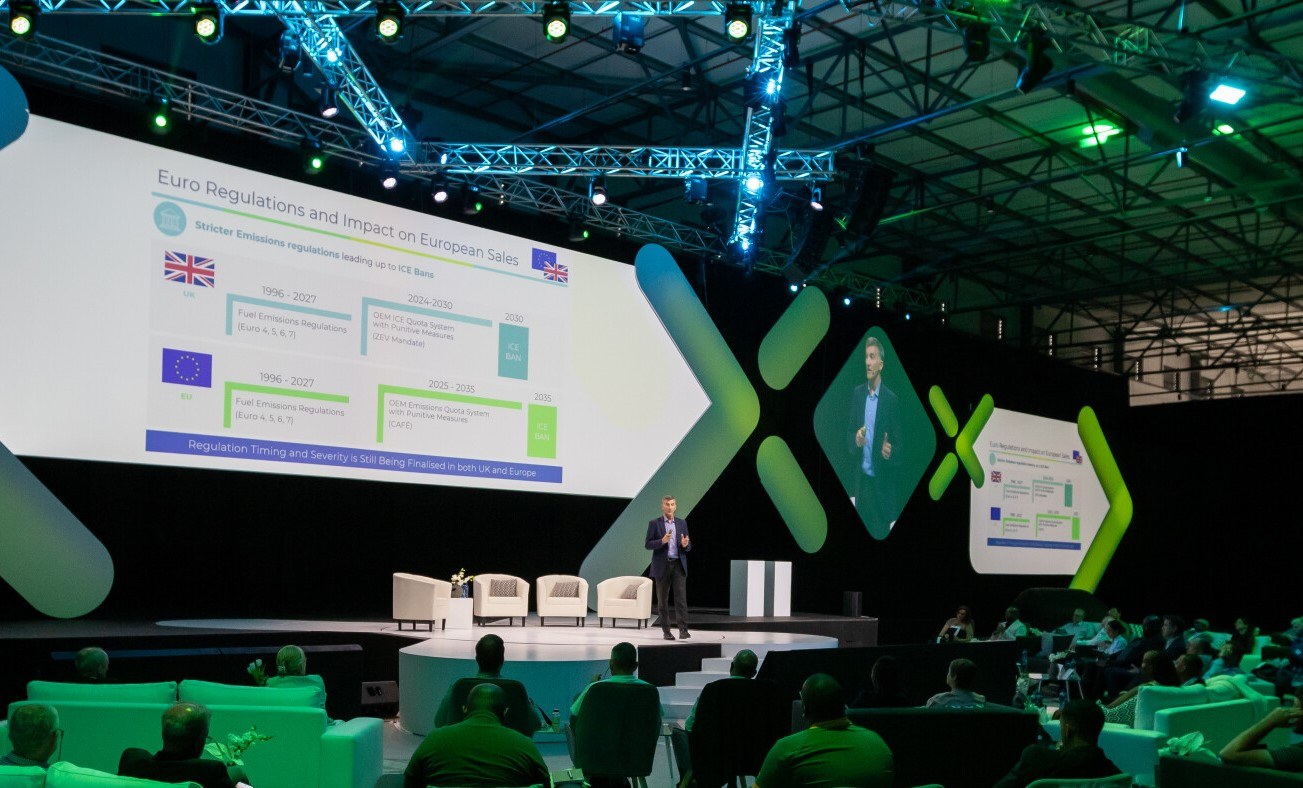
SOMI '25 (State of the Motor Industry) served as an ideal stage for Toyota SA Motors’ President and CEO, Andrew Kirby, to present an insightful overview of the motor industry's current landscape from the perspective of South Africa's leading automotive brand.
Share with friends
In the keynote address entitled “The Year that was”, Andrew highlighted the challenges facing the South African motor industry and the importance of growing sales to over the 600 000 threshold to provide the scale needed to attract more foreign direct investment.
He also stressed the need for government support. The SA government’s newly announced policy on incentivisation for the production of BEVs (Battery Electric Vehicles) is a step in the right direction, but it is not yet enough to secure the future of the automotive production base in South Africa. This problem is exacerbated by the slow creep of de-industrialisation as well as a concomitant drop in local content, which is now below the 40% mark for locally produced vehicles.
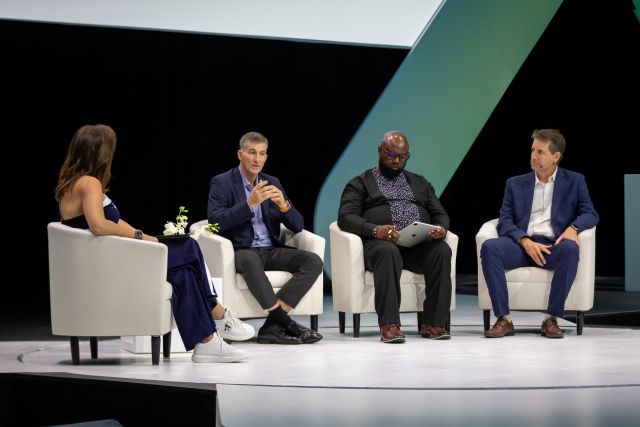
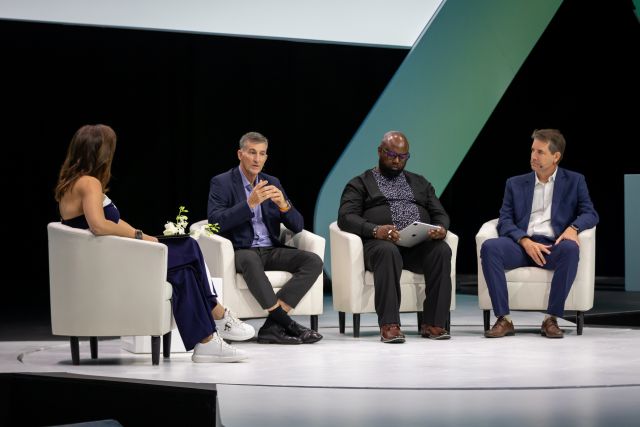
An interesting perspective presented by panellist Mikel Mabasa, CEO of naamsa, was that even though we have challenges, as a country our political environment is unusually stable as seen in the recent elections and the subsequent relatively incident-free transition to a GNU (Government of National Unity). In Mikel’s words, we can look forward to a ‘year of abundance’.
TSAM’s Andrew Kirby.
Andrew was not quite so upbeat when he made his sales forecast of 535 000 (a 3.7% increase on the actual sales for 2024) and he jokingly remarked that he should perhaps put a ‘more positive spin on the numbers’, which indicates that he is quietly optimistic that the much-hoped-for upswing kicks in sooner and more dramatically than anticipated. Of course, as he pointed out, this all hinges on the continuation of the interest-rate-cutting cycle, and further fuel price stabilisation.
Andrew also eloquently extracted five key trends emerging in the automotive sector:
Customers continue to buy down as evidenced by a continued migration to the B segment from C and D segments. Between 2023 and 2024, according to Lightstone Auto, the average selling price of passenger cars sold in last year declined by 2.27%, reinforcing this fact that consumers are purchasing cheaper cars.
The SUV phenomenon. In 2018 there were 114 model ranges that fell into the SUV/crossover category. Come 2024 and that number had risen to 166. SUVs now account for more than 50% of passenger car sales.
In-Car Tech. Customers demand a more immersive experience from their mobility device. This goes beyond wireless Apple Play/Android Auto. Customisation, social media integration, lighting and image personalisation, voice/gesture control and making the vehicle a true connected space is becoming the norm.
The rise of India and China as production hubs. Andrew presented some rather sobering statistics on this score - global Chinese production share has grown by 10.3% from 29% (2018) to 32% in 2023. Germany is no longer in the top five. From a South African perspective, locally produced vehicle sales have dropped by 6.5% from 46% in 2018 to 43% in 2023. Indian and Chinese sourced vehicles sales have increased from 18% (2018) to 37% (2023). Traditional source countries like Germany, Japan and Korea have significantly reduced.
The transition to NEV. This was a topic also covered by the expert panellist, Greg Cress who shared some interesting insights: more than 1 in 5 cars sold globally is an EV, in South Africa the turning point for NEVs was in 2022 with the Corolla Cross (first full retail year) which catapulted hybrid sales to 4 000 units. In 2024 that figure is approaching 12 500 units. Crystal ball gazing, Greg indicated that without BEV incentivisation, the inflection point at which mass BEV adoption becomes a reality (when BEVs get to around 5% of the passenger car parc) will only occur around 2032. With incentivisation, that inflection point kicks in far sooner – around 2029.
Volvo has confirmed that its vehicles will now integrate Google’s Gemini artificial intelligence system. This development builds on the company’s existing collaboration with Google, which already provides Android Automotive OS and Google services in Volvo models.
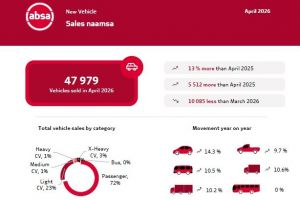
New vehicle sales in 2026 continued their positive trend in April, with the 47 979 units sold marking the best April figure since 2013. This represents a remarkable performance by local automotive retailers despite a host of economic headwinds and a challenging trading environment.
April 2026 marked a turning point in South Africa’s economic landscape, as global energy markets were jolted by escalating geopolitical tensions in the Middle East, according to naamsa | The Automotive Business Council.
Volvo has confirmed that its vehicles will now integrate Google’s Gemini artificial intelligence system. This development builds on the company’s existing collaboration with Google, which already provides Android Automotive OS and Google services in Volvo models.
New vehicle sales in 2026 continued their positive trend in April, with the 47 979 units sold marking the best April figure since 2013. This represents a remarkable performance by local automotive retailers despite a host of economic headwinds and a challenging trading environment.
April 2026 marked a turning point in South Africa’s economic landscape, as global energy markets were jolted by escalating geopolitical tensions in the Middle East, according to naamsa | The Automotive Business Council.