

Springboks score tries in Nissan Navara Pro4X
Two leading Springbok rugby players, Aphelele Fassi and Jordan Hendrikse, have taken delivery of their new Nissan Navara Pro4X bakkies in Durban.
- Industry News
- 12 May 2026
The auto battery parts joint venture between Volkswagen's PowerCo and Belgian materials firm Umicore has chosen Poland as the site for its first factory, the German automaker announced on 7 October, according to Reuters.
Through the R56 billion joint venture, dubbed Ionway, first flagged in December 2021, the companies are joining a number of European automakers that have brought battery supplies closer to home in the shift towards electric vehicles.
The Polish government is providing R99 billion in cash grants for the investment in the southwestern town of Nysa that will create around 900 jobs, it said.
Ionway wants to build up its annual production capacity by the end of the decade to around 160 gigawatt hours (GWh) a year – enough for 2.2 million electric vehicles.
PowerCo – whose Poland initiative comes after VW set out plans in April to invest up to R99 billion to build a car battery plant in Ontario, Canada – said it had decided on Poland because the location was strategically favourable, plus there was sufficient skilled labour and renewable energy sources for production.
Construction work will begin as soon as the permitting process is completed, it said.
Ionway is intended to supply PowerCo's European battery cell factories with key battery materials and to cover a large portion of PowerCo's needs in the European Union. In return, Umicore will receive secured access to an important part of Europe's demand for cathode materials for electric vehicles.
Two leading Springbok rugby players, Aphelele Fassi and Jordan Hendrikse, have taken delivery of their new Nissan Navara Pro4X bakkies in Durban.
Dealership service departments know the pattern: the moment warranties and service plans expire; a portion of owners quietly migrate to the independent aftermarket.
Mercedes-Benz Vans South Africa announced its top-performing Agents and Dealers for 2025, recognising their exceptional dedication, customer service and commitment to the brand.
 Advertisement
 Advertisement
I have bad reflexes. I was once run over by a car being pushed by two guys
Woody Allen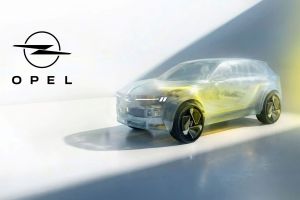
Opel has unveiled a key project under development in its model strategy: a completely new, all-electric SUV in the important and highly competitive C-segment that would extend the current line-up.
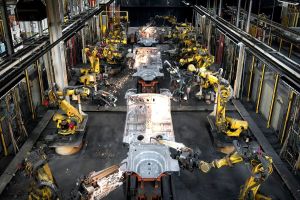
Nissan’s decision to drop a planned $500 million investment in electric vehicle (EV) production at its Canton, Mississippi plant is the latest indication that established manufacturers are reassessing how quickly the market will shift to battery power.
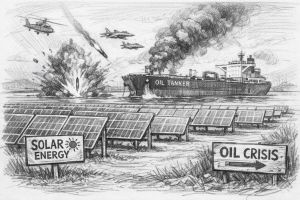
Zero Carbon Charge (CHARGE) welcomes the government’s extension of short term fuel levy relief measures aimed at cushioning consumers from rising fuel prices, but cautions that these interventions do not address the underlying structural challenge facing South Africa’s transport economy.