Uni Wheel a game changer for EVs, says Hyundai, Kia
A new drive system for an electric vehicle (EV) with the aim of providing more interior space, has been unveiled by Korean car manufactures, Hyundai and Kia.
Share with friends
Hyundai Motor Company and Kia Corporation say the new Universal Wheel Drive System, or Uni Wheel as its also called, is a paradigm-shifting vehicle drive system that will revolutionise the design of future mobility devices.
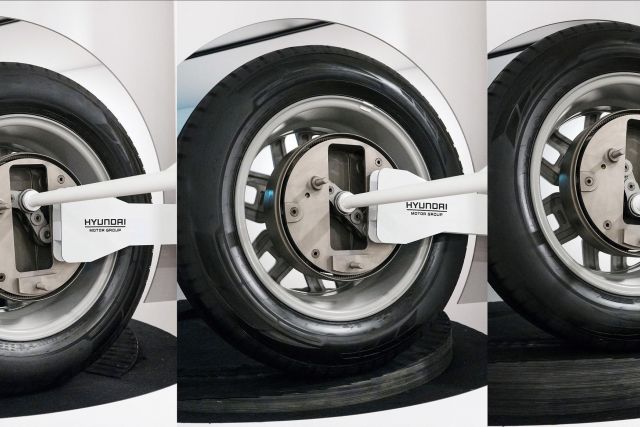
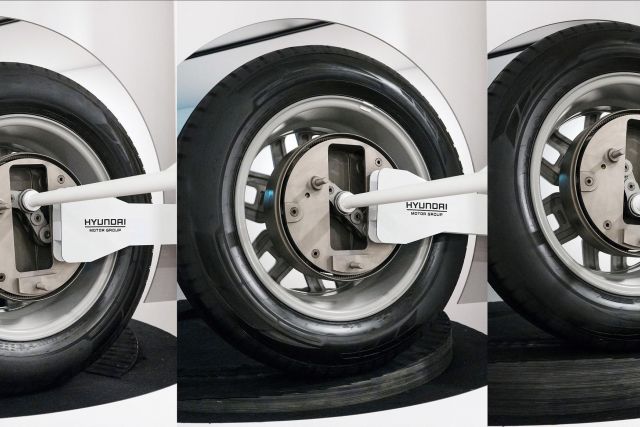
The Uni Wheel will allow for the EV’s main drive system components to be moved into the vacant space within the wheel hub. In doing so, Hyundai Motor and Kia have designed a completely new structure for the drive system.
In internal combustion engine (ICE) vehicles, power is transmitted from the engine through the transmission to the wheels via drive shafts and constant velocity (CV) joints. In EVs, the engine and transmission are replaced by a motor and reduction gear, but the final method of transmission to the wheels is the same.
More space thanks to the Uni Wheel’s compact dimension and location to the inside of the wheel hub, allows for more interior space and versatility.
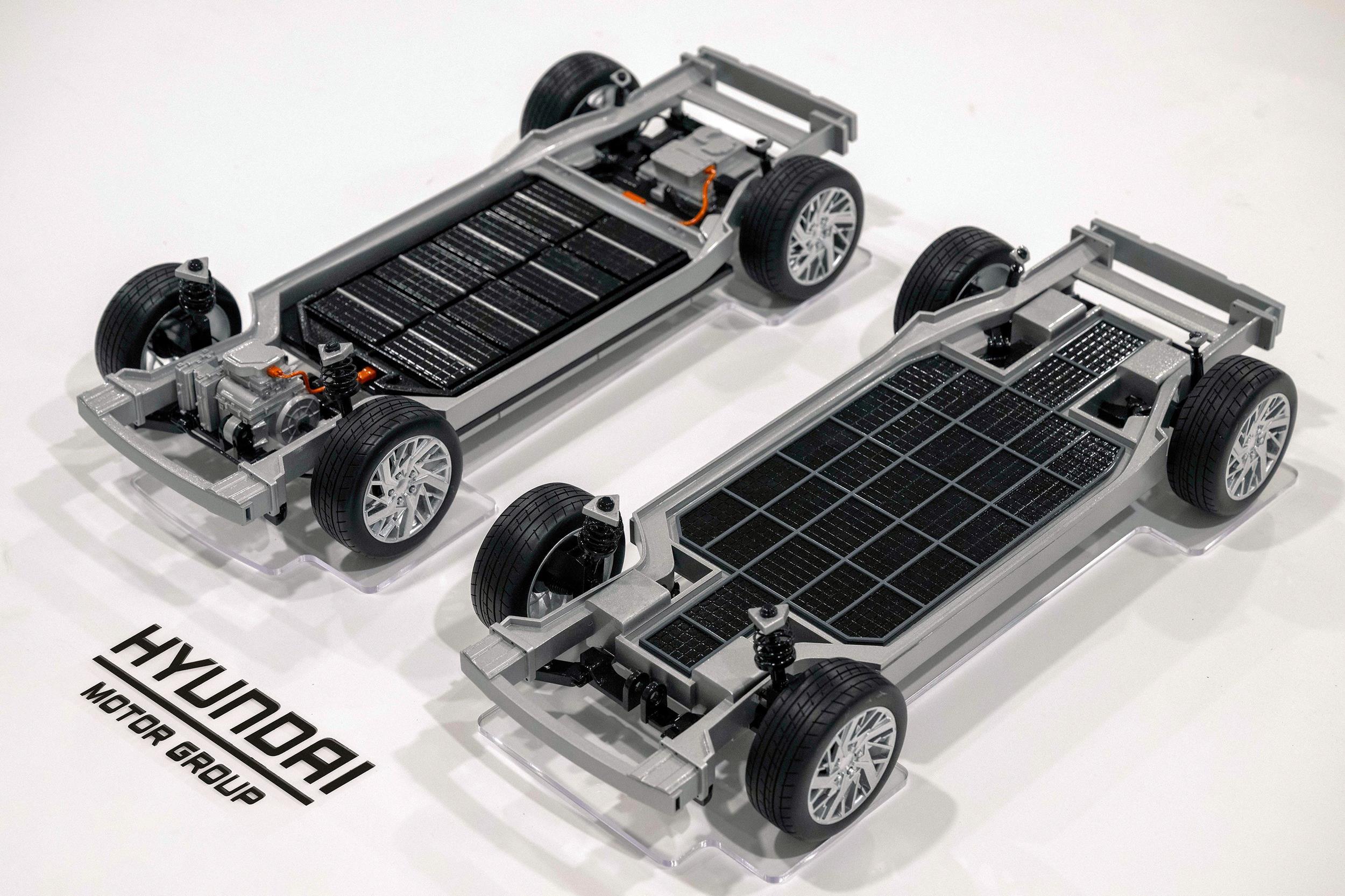
Uni Wheel opens new possibilities and enables a flat-floor configuration by moving an EV’s reduction gear to inside the wheel hub, placing a compact individual motor close to each wheel, thereby reducing the length of the drive shafts.
The system frees up significantly more interior space compared to conventional drive systems, enabling future mobility products optimised for various applications, such as Purpose-Built Vehicles (PBVs).
Uni Wheel uses a special planetary gear configuration consisting of a sun gear in the centre, four pinion gears on each side and a ring gear surrounding this arrangement. Power generated by the motor is transmitted to the sun gear, which in turn engages the pinion gears to rotate the ring gear. This is connected to the wheel to drive the vehicle.
The Uni Wheel uses a special planetary gear configuration.
Uni Wheel’s pinion gears are connected to each other to form two linkages, and this multi-link mechanism enables Uni Wheel’s multi-axis movement to allow a wide range of suspension articulation.
A conventional drive system using a regular CV joint suffers from a decrease in efficiency and durability as the angle of drive shaft deflection increases when travelling over bumpy, undulating surfaces. Uni Wheel can transmit power with almost no change to efficiency regardless of wheel movement, ensuring high durability and ride comfort.
When combined with electronic air suspension, which can adjust ride height according to the driving situation, this can be increased to stabilise the vehicle on rough roads, or decreased for high-speed driving to improve power and stability.
By moving the reduction gear to the wheel hub, Uni Wheel’s high reduction ratio delivers a significant torque output and allows for a more compact electric motor. With independent control of up to four efficient electric drive units, Uni Wheel also allows for unprecedented levels of torque vectoring.
It is also possible to move away from conventional seating arrangements designed around the driver, creating new interior layouts and designs for the era of fully autonomous driving. Utilising this space to improve battery capacity can also improve driving range, which means users can achieve the range of a large EV without the physical size of the vehicle increasing.
Hyundai Motor and Kia are continuously verifying the stability, efficiency and durability of Uni Wheel through various tests to perfect its development and will continue efforts to improve its efficiency by adjusting the reduction gear ratio and upgrading the lubrication and cooling system.
Europe’s used electric vehicle (EV) market is experiencing a notable surge as the Iran conflict drives up global oil prices and pushes petrol costs sharply higher across the continent.
Geely Auto has been recognised in the S&P Global Sustainability Yearbook 2026 (Global), marking a significant milestone for the brand’s global sustainability efforts and the first and only Chinese vehicle manufacturer to make the list.
Volkswagen Motorsport driver Jonathan Mogotsi has earned his Nürburgring Permit A ‘Ring Licence’ to qualify to race in the legendary circuit’s 24-Hour from 18 – 19 May 2026.
Europe’s used electric vehicle (EV) market is experiencing a notable surge as the Iran conflict drives up global oil prices and pushes petrol costs sharply higher across the continent.
Zero Carbon Charge (CHARGE), developer of a national network of off-grid, solar-powered electric vehicle (EV) charging stations, has formally submitted an objection to the South African National Roads Agency Limited’s (SANRAL) proposed amendments to its Rest and Service Facilities (RSF) Policy.
A new modelling study published in Nature Energy suggests that battery‑electric passenger vehicles (EVs) could become the most cost‑effective option for many African countries within the next two decades.