

Springboks score tries in Nissan Navara Pro4X
Two leading Springbok rugby players, Aphelele Fassi and Jordan Hendrikse, have taken delivery of their new Nissan Navara Pro4X bakkies in Durban.
- Industry News
- 12 May 2026
In line with its parent company’s recent strategic realignment to new-energy vehicles (NEV), Toyota South Africa recently laid its NRV cards for SA on the table.
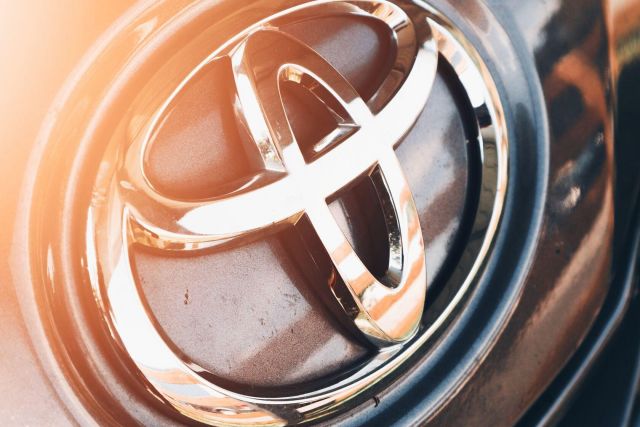
Although the company maintains that internal combustion engines (ICE) still have a role to play, it said it will be shifting a large part of its focus to traditional hybrid vehicles (HEV), plug-in hybrid vehicles (PHEV) and other engine conversions over the next few years, as far as the SA market is concerned.
The biggest news is that Toyota will be launching a new, mildly hybrid Hilux and Fortuner in early 2024 consisting of the standard ICE combined with an integrated starter generator and 12V-48V battery.
The company will also be introducing the Toyota Crown to South Africa this year. This crossover Crown variant is powered by a 2.5-litre, parallel-hybrid drivetrain with an output in the neighbourhood of 170kW and a fuel consumption of under 5.0L/100km.
Another NEV addition to the local market from Toyota will be a hybrid version of the new Urban Cruiser.
It is also rumoured that the plug-in hybrid RAV4, Lexus NX and RX are on their way.
Toyota has said that owing to the current scarcity of electricity on the African continent, that BEVs won’t be a practical solution yet for local consumers.
Two leading Springbok rugby players, Aphelele Fassi and Jordan Hendrikse, have taken delivery of their new Nissan Navara Pro4X bakkies in Durban.
Dealership service departments know the pattern: the moment warranties and service plans expire; a portion of owners quietly migrate to the independent aftermarket.
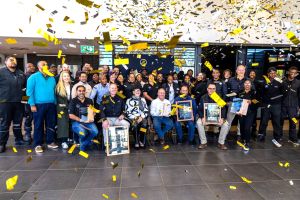
Mercedes-Benz Vans South Africa announced its top-performing Agents and Dealers for 2025, recognising their exceptional dedication, customer service and commitment to the brand.
 Advertisement
 Advertisement
You can't buy happiness but you can buy cars and that's kind of the same thing.
Unknown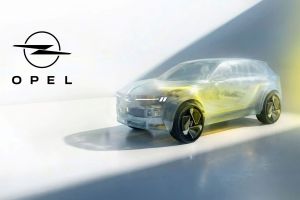
Opel has unveiled a key project under development in its model strategy: a completely new, all-electric SUV in the important and highly competitive C-segment that would extend the current line-up.
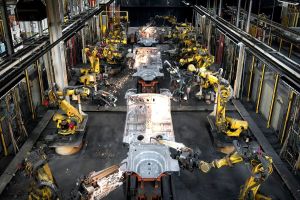
Nissan’s decision to drop a planned $500 million investment in electric vehicle (EV) production at its Canton, Mississippi plant is the latest indication that established manufacturers are reassessing how quickly the market will shift to battery power.
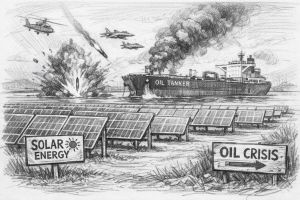
Zero Carbon Charge (CHARGE) welcomes the government’s extension of short term fuel levy relief measures aimed at cushioning consumers from rising fuel prices, but cautions that these interventions do not address the underlying structural challenge facing South Africa’s transport economy.