
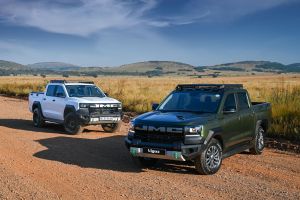
New JMC Vigus will make an impression
Following the official brand re-launch by the Salvador Caetano Group, JMC South Africa announce the arrival of the All-New JMC Vigus.
- Product News
- 17 April 2026
In line with its parent company’s recent strategic realignment to new-energy vehicles (NEV), Toyota South Africa recently laid its NRV cards for SA on the table.
Although the company maintains that internal combustion engines (ICE) still have a role to play, it said it will be shifting a large part of its focus to traditional hybrid vehicles (HEV), plug-in hybrid vehicles (PHEV) and other engine conversions over the next few years, as far as the SA market is concerned.
The biggest news is that Toyota will be launching a new, mildly hybrid Hilux and Fortuner in early 2024 consisting of the standard ICE combined with an integrated starter generator and 12V-48V battery.
The company will also be introducing the Toyota Crown to South Africa this year. This crossover Crown variant is powered by a 2.5-litre, parallel-hybrid drivetrain with an output in the neighbourhood of 170kW and a fuel consumption of under 5.0L/100km.
Another NEV addition to the local market from Toyota will be a hybrid version of the new Urban Cruiser.
It is also rumoured that the plug-in hybrid RAV4, Lexus NX and RX are on their way.
Toyota has said that owing to the current scarcity of electricity on the African continent, that BEVs won’t be a practical solution yet for local consumers.
Following the official brand re-launch by the Salvador Caetano Group, JMC South Africa announce the arrival of the All-New JMC Vigus.
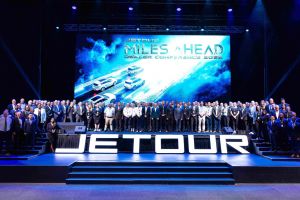
Jetour South Africa hosted its inaugural Dealer of the Year Awards on Tuesday night, bringing together its national dealer network of nearly 60 dealerships.
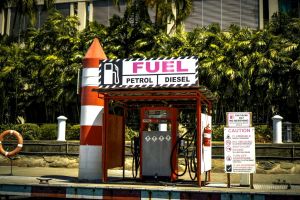
South Africa’s motorists and automotive sector are facing a fresh layer of uncertainty as the Middle East conflict continues to disrupt global oil markets, but for now the country’s fuel supply remains stable even as costs rise.
 Advertisement
Advertisement
Advertisement
You can't buy happiness but you can buy cars and that's kind of the same thing.
Unknown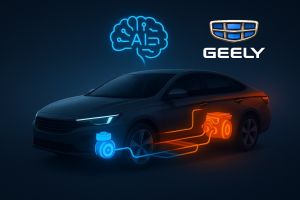
Geely Auto has lifted the curtain on a new hybrid technology that it believes can redraw the balance of power in a segment dominated for decades by Japanese brands.
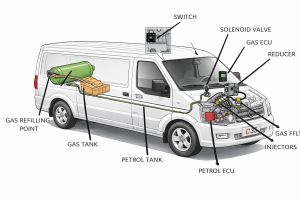
As fuel prices continue to place pressure on South African consumers and businesses, DFSK South Africa has introduced an LPG Autogas conversion solution aimed at reducing operating costs and improving vehicle efficiency across its petrol range.
Toyota Motor Corporation and Isuzu Motors are stepping up plans to bring hydrogen power into Japan’s light‑duty truck market, confirming a jointly developed fuel cell model scheduled for production in the 2027 financial year.