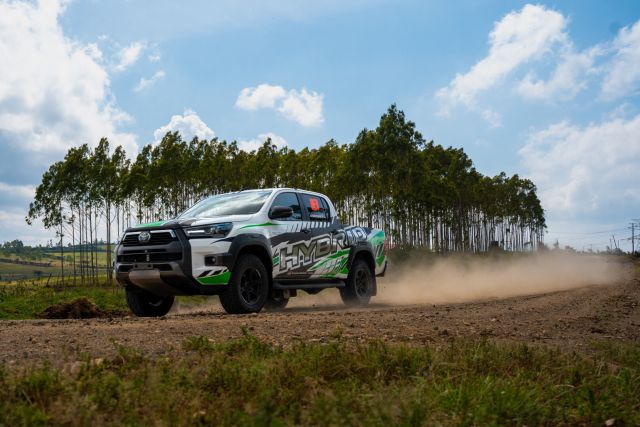
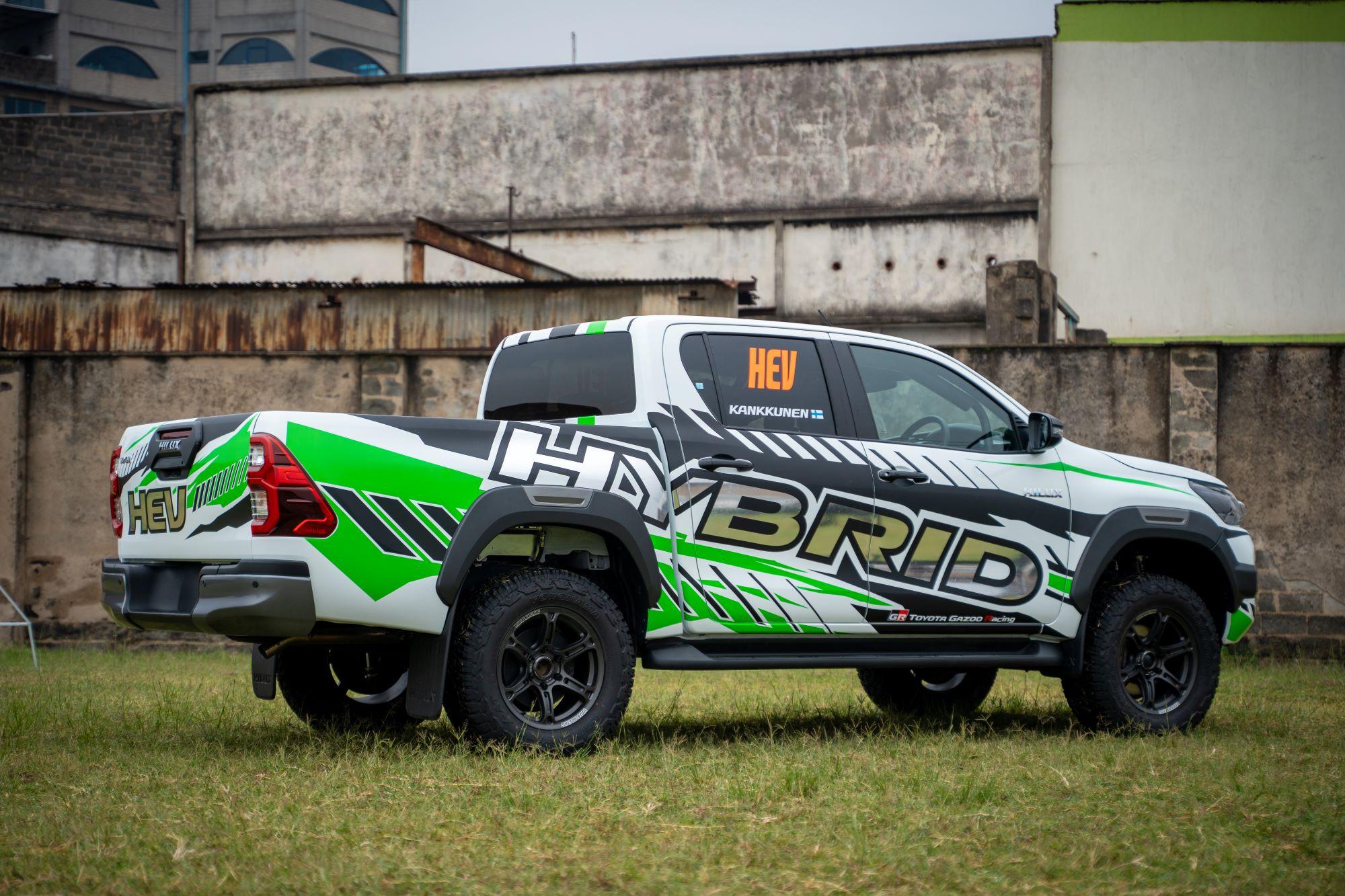
Toyota conducted a successful demo run of the Hilux MHEV (Mild Hybrid Electric Vehicle) concept model at Kasarani during the seventh round of the World Rally Championship (WRC) in Kenya.
Share with friends
The Hilux MHEV concept was driven by four-time WRC champion and former Toyota world title winner, Juha Kankkunen from Finland, with co-driver Jimmi Gathu, a renowned local Kenyan media personality and actor. The company showcased its clear stance to deliver diverse vehicle ranges on its journey towards carbon neutrality.
After the demonstration, Juha Kankkunen said: "I’m 100% sure that this type of car will fit in Africa very well because there are still long-distance drives and it's very difficult to charge electric cars. You can save fuel, which means less CO2. Africa is a good market for this kind of car, and you can reduce CO2 with hybrid cars. That is the future.
"I have had the pleasure of driving different models for the Toyota brand from Full-electric cars, Hybrid and Hydrogen and can attest that these models are much faster than standard models."
Jimmi Gathu excitingly gave his impression, saying: “It was an amazing experience. It’s fantastic that Kenya’s most popular, most reliable, toughest car is being tested as a concept car for hybrid especially in addressing the issue around carbon emissions, beginning with small steps as you seek to achieve carbon neutrality – I think it's perfect.”
Dennis Awori, who is a Country Delegate of CFAO Group in Kenya and Chairman of CFAO Kenya Toyota Tsusho Group, emphasised the importance of bringing vehicle options such as the Hilux MHEV to Africa, where robust and versatile vehicles like the Hilux are highly popular.
Even in relatively well-developed regions of Africa, such as Kenya or even in South Africa, there are some areas where electricity supply is unstable. In these areas, if it takes time to solve issues such as stable electricity supply, and the development of charging networks and securing resources, Mild HEVs are an important option for immediate CO2 reduction. They do not require new equipment or power supply and can also use existing petrol stations and can reduce CO2 emissions.
The Kia Carens nameplate makes its return to South Africa, this time as a seven‑seater designed with families in mind. It combines Sport Utility Vehicle (SUV) styling with Multi-Purpose Vehicle (MPV) practicality, offering space, comfort and efficiency, Kia says.
Volvo has confirmed that its vehicles will now integrate Google’s Gemini artificial intelligence system. This development builds on the company’s existing collaboration with Google, which already provides Android Automotive OS and Google services in Volvo models.
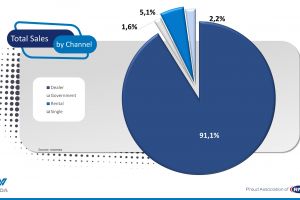
New vehicle sales in 2026 continued their positive trend in April, with the 47 979 units sold marking the best April figure since 2013. This represents a remarkable performance by local automotive retailers despite a host of economic headwinds and a challenging trading environment.
Nissan’s decision to drop a planned $500 million investment in electric vehicle (EV) production at its Canton, Mississippi plant is the latest indication that established manufacturers are reassessing how quickly the market will shift to battery power.
Zero Carbon Charge (CHARGE) welcomes the government’s extension of short term fuel levy relief measures aimed at cushioning consumers from rising fuel prices, but cautions that these interventions do not address the underlying structural challenge facing South Africa’s transport economy.
Volvo Cars has started building the fully electric EX60 at its Torslanda factory outside Gothenburg, with first customer deliveries due in early summer.