Toyota allegedly to announce adjustments to EV strategy
Reuters, citing “two people with knowledge of the work”, said Toyota is expected to outline adjustments to its electric vehicle (EV) strategy to key suppliers early next year.
Share with friends
It is alleged that the purpose of the exercise is to narrow the gap on price and performance with industry leaders Tesla and BYD.
The adjustments, to be communicated to suppliers, is said to take place over the next three years.
The motor manufacturing giant is planning to improve its competitiveness over the next decade by speeding up the adoption of performance-boosting technologies for its planned EV models.
But, according to the sources, the adjustments might cause delays to some of the EV development programmes originally planned for the period until 2026.
Reuters said that according to their sources, “the changes would be for the successors to Toyota's first two EVs for major markets, the bZ4X and the Lexus RZ, and are intended to close the gap with Tesla Inc on cost and performance”. According to analysts, Tesla made almost eight times the profit per vehicle as Toyota for the third quarter, partly because of its ability to simplify EV production and reduce costs.
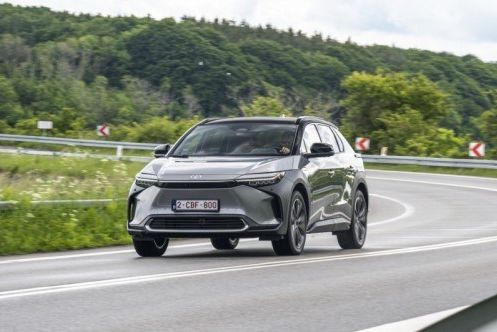
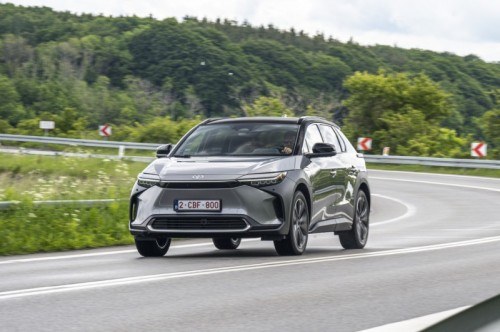
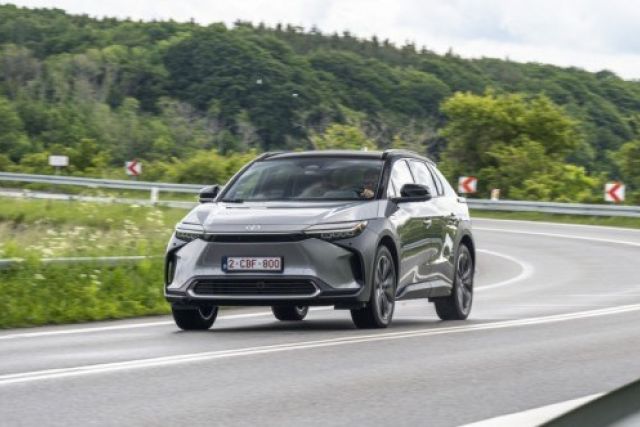
The Toyota bZ4X EV was recently launched in Europe.
According to Reuters, “Toyota has been reviewing a $30-billion, three-stage plan for developing and releasing EVs. It has suspended work on some battery-powered car projects announced last year, while a working group headed by former chief competitive officer, Shigeki Terashi, looks to improve cost performance and technology in the fast-growing market for EVs.”
Toyota's EV strategy has focussed on the rollout of cars like the bZ4X, the first of a string of battery electric vehicles under the series name "beyond zero".
The second stage of Toyota's plan covers the next several years when Toyota has models based on the e-TNGA platform under development, the company has told some suppliers. Adjustments to this phase are the changes likely to be outlined to suppliers early next year.
Now Terashi's group is allegedly considering whether to drop the three-year-old e-TNGA architecture, created by modifying a gasoline car platform, in favour of a dedicated EV platform.
E-TNGA was designed so EVs could be built on Toyota assembly lines with gasoline cars and hybrids, a compromise that limits the automaker's ability to deliver factory-floor innovations that Toyota engineers now recognise as key to Tesla's strength.
Toyota South Africa Motors (TSAM) is set to make history with a series of Guinness World Records attempts, bringing Hilux owners together from across the country in a bold, large-scale celebration of the all-new 9th generation Toyota Hilux.
To be named the overall Hyundai Dealer of the Year is not something that simply happens. It is the result of hard work, dedication, looking after your staff and customers, and maintaining a clear focus on your goal. That goal is to be the best.
Chery is intensifying its European expansion by exploring partnerships that would allow the company to utilise existing automotive factories rather than constructing new ones.
BYD and Tesla, two giants of the electric vehicle industry, are navigating diverging challenges. BYD faces mounting competition in China and questions over its pricing strategy, while Tesla grapples with fading incentives and unsold inventory in the United States.
Volvo has commenced on-road testing of heavy trucks powered by hydrogen combustion engines. This pioneering solution places Volvo at the forefront of the industry, with commercial launch planned before 2030.
While rising fuel prices often trigger spikes in interest around electric vehicles, Volvo Car South Africa believes the real reasons South Africans are starting to consider EVs go far beyond the petrol pump.