
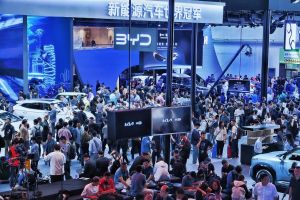
Auto China 2026 promises to be milestone event
Auto China 2026 marks another milestone in the evolution of an event that has tracked China’s rise from emerging market to global automotive powerhouse.
- Industry News
- 16 April 2026
At this year’s Automechanika Breakfast, Greg Cress, Principal Director for Automotive and eMobility at Accenture South Africa, delivered a clear and urgent message. He said the transformation of the global automotive sector is no longer a distant prospect, it is happening now.

From radical battery innovations to software‑defined driving experiences, the industry is undergoing its most significant shift in a century. South Africa, he argued, stands at a pivotal point, with immense potential if it acts decisively.
Electric vehicles enter a new orbit:
Greg began by highlighting the astonishing pace of progress in electric mobility. Battery technology presented at the Computer and Electronic Show (CES) 2026 showcased energy densities around 400Wh/kg, charging times that could drop to five minutes, and lifespans far beyond current lithium‑ion standards. Prototype vehicles already reaching 1 200km on a single charge indicate that commercial models exceeding 1 500km may arrive before the decade’s end.
Charging infrastructure is racing ahead as well. Zeekr’s ability to add hundreds of kilometres of range in mere minutes shows that ultra‑fast charging is moving from promise to practicality. For South Africa, the implications are profound: local manufacturing plants must secure next‑generation electric vehicle (EV) production, mines will see rising demand for key minerals, and renewable energy expansion will be crucial to support large‑scale electrification.
Autonomous technology becomes tangible:
Autonomous mobility, once overshadowed by hype, is steadily proving its commercial feasibility. Level 4 robotaxis now operate daily in several Chinese cities, and European hubs are preparing similar deployments. In the United States, fleets of driverless Jaguar I‑PACE vehicles are already providing substantial weekly ride volumes, with ambitious growth plans.
Although South Africa is not yet ready for fully autonomous public roads, it is already benefitting from the technologies that lead up to it. Features such as adaptive cruise control, lane‑keeping functions and collision‑avoidance systems are becoming standard in mid‑range and premium vehicles. This opens opportunities to localise the production of sensors, cameras and control units.
Connectivity rewrites expectations:
According to him, connectivity may be the most disruptive force of all. Modern vehicles are becoming intelligent, networked devices that interact with their surroundings in real time. In European testbeds, 5G‑Advanced networks enable rapid communication between vehicles and infrastructure, allowing cars to receive alerts about pedestrians, cyclists or hazards before they come into view.
South African drivers, particularly younger consumers, already expect seamless digital integration. This shifts the role of the vehicle from a static product to a continually evolving platform, enhanced through software updates and cloud‑based intelligence.
Cars that understand us:
One of the most intriguing trends Cress explored was the rise of the car as an emotional and conversational partner. Brands like NIO and Mercedes‑Benz are developing systems capable of natural dialogue, gesture recognition and contextual awareness. Volvo’s upcoming EX60 will even interpret visual data from external cameras to deliver smarter assistance.
For South Africa, success in this area depends on localisation. Voice assistants must recognise local accents, slang and multilingual nuances, a challenge that could inspire home‑grown artificial intelligence (AI) innovation.
Software becomes the heart of the vehicle:
Beneath these visible advancements lies a deeper structural shift: vehicles are rapidly becoming software‑defined. Centralised computing, by‑wire systems and routine over‑the‑air updates mean cars will evolve long after purchase, much like smartphones. This transition will reshape after‑sales service and increase the demand for software, electronics and AI talent across the automotive value chain.

Auto China 2026 marks another milestone in the evolution of an event that has tracked China’s rise from emerging market to global automotive powerhouse.
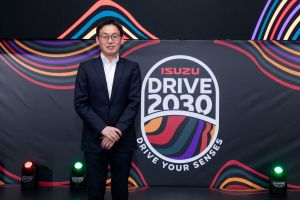
Isuzu Motors South Africa (IMSAf) has announced the appointment of Takashi Nishida as its new Chairman (Non-Executive Director), effective 1 April 2026.
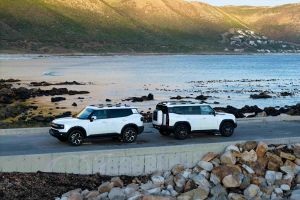
Jetour has quickly established itself in South Africa since its arrival in 2024, with the Dashing and X70 Plus paving the way for the rugged T-Series.
 Advertisement
 Advertisement
Have you ever noticed that anybody driving slower than you is an idiot, and anyone going faster than you is a maniac?
George Carlin
Geely Auto has lifted the curtain on a new hybrid technology that it believes can redraw the balance of power in a segment dominated for decades by Japanese brands.
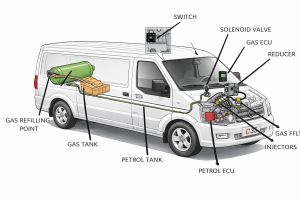
As fuel prices continue to place pressure on South African consumers and businesses, DFSK South Africa has introduced an LPG Autogas conversion solution aimed at reducing operating costs and improving vehicle efficiency across its petrol range.

Toyota Motor Corporation and Isuzu Motors are stepping up plans to bring hydrogen power into Japan’s light‑duty truck market, confirming a jointly developed fuel cell model scheduled for production in the 2027 financial year.