Stellantis ready for EV future with new battery centre
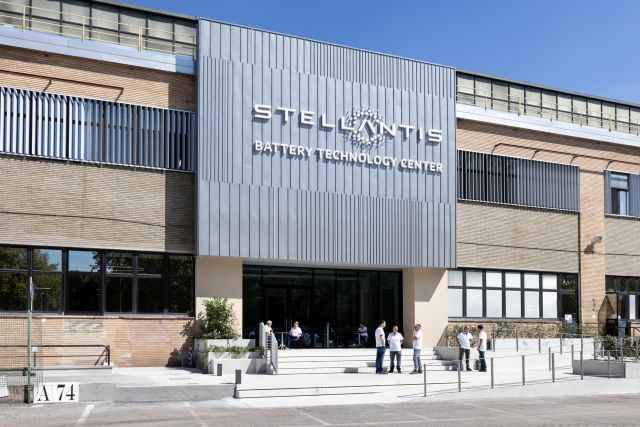
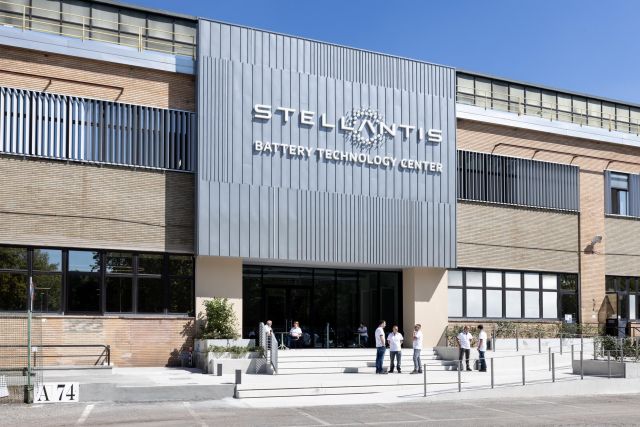
Stellantis opened a €40 million (R998 million) Battery Technology Centre, at the Mirafiori complex in Turin, Italy.
Share with friends
The investment to develop this state-of-the-art centre enhances Stellantis’s capabilities to design, develop and test battery packs, modules, high-voltage cells and software that will power upcoming Stellantis brand vehicles. The centre is the biggest in Italy and one of the largest in Europe.
More than 100 employees at the Mirafiori Battery Technology Centre, most of them upskilled Stellantis workers, will perform and oversee climatic stress tests, lifespan durability testing, battery management system (BMS) software development and calibration, and tear downs of packs and cells for analysis and benchmarking.
Stellantis is also building a Battery Technology Centre for North America, in Windsor, Ontario, Canada, as part of a global battery development and manufacturing network that will include six gigafactories.
Batteries being tested in one of the test chambers.
“We are in the midst of a once-in-a-lifetime opportunity to redefine mobility, providing smart and sustainable solutions for our customers,” says Ned Curic, Stellantis’s Chief Engineering and Technology Officer.
“Our new Battery Technology Centre at Mirafiori brings together the tools and talented people we need to design, test, verify and produce class-leading products that will meet our customers’ needs and accelerate bringing class-leading electric vehicles to customers around the world.”
Vertical integration of the key milestones for electric vehicle battery packs – from design to development and testing, to production – form the heart of the Stellantis strategy to produce class-leading BEVs with customer-focused performance.
As detailed in the EV Day 2021 presentation, the Stellantis battery plan includes a dual chemistry strategy to serve all customers, design efficiency in battery cells and modules, and housing and pack assembly, for cost competitiveness.
The Mirafiori Battery Technology Centre covers 8 000 square metres, spread over three levels. The heart of the centre is 32 climatic test chambers – 24 walk-in chambers for testing battery packs and eight chambers for testing cells.
The climate in the 24 walk-in chambers can be controlled for humidity and temperature, with a range from -40 to 60 degrees Celsius (-40 to 140 degrees Fahrenheit) and a maximum change of 20 degrees per minute. The centre can test up to 47 battery packs in parallel.
Designed for future growth, the technology centre’s power system can manage up to 1.2 kilovolts (kV) and 2.2 megawatts (MW) per test cell.
The eight cell chambers are capable of testing 96 cells in parallel. This part of the technology centre will be devoted mainly to screening innovative battery chemistry and cell behaviour characterisation for future development.
As part of the Dare Forward 2030 strategic plan, Stellantis announced plans of reaching a 100% passenger car BEV sales mix in Europe and 50% passenger car and light-duty truck BEV sales mix in the United States by 2030.
To achieve these sales targets, the company is securing approximately 400 GWh of battery capacity to be supported by six battery manufacturing plants in North America and Europe. Stellantis is on track to becoming a carbon net zero corporation by 2038, all scopes included, with single-digit percentage compensation of remaining emissions.
As fuel prices continue to climb across South Africa, many motorists are beginning to question whether owning a car still makes financial sense. With in-land petrol prices now at R26.63 a litre and diesel costs rising sharply in May, transport expenses are placing growing pressure on household budgets.
Pinewood.AI has added two new embedded modules to its Business Intelligence Solution, giving dealers and OEMs greater insight into financial performance and the customer journey, it says.
House lawmakers in the United States (US) have proposed bipartisan legislation that would require electric vehicles (EVs) to pay a R2 227 ($130) fee annually for road repairs, and R578 ($35) for some plug-in hybrid models, according to Reuters.
BYD is exploring the possibility of taking over underused car plants in Europe as it looks to expand its manufacturing base and strengthen its foothold in the region’s electric vehicle (EV) market.