

Springboks score tries in Nissan Navara Pro4X
Two leading Springbok rugby players, Aphelele Fassi and Jordan Hendrikse, have taken delivery of their new Nissan Navara Pro4X bakkies in Durban.
- Industry News
- 12 May 2026
Stellantis and Orano announced the signing of a memorandum of understanding to establish a joint venture to recycle end-of-life electric vehicle batteries and scrap from gigafactories.
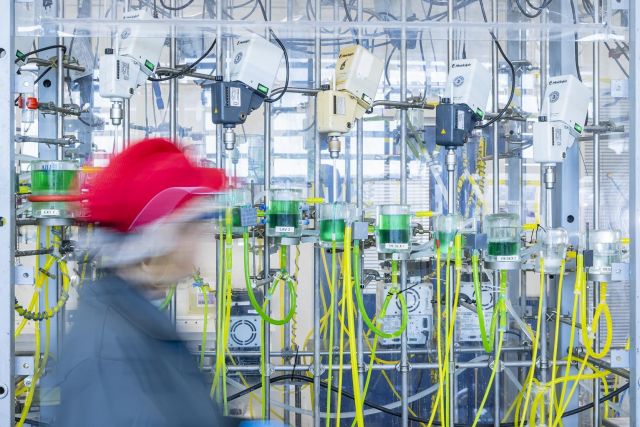
This will be done in Enlarged Europe and North America and will strengthen Stellantis’s position in the electric-vehicle battery value chain by securing additional access to cobalt, nickel and lithium necessary for electrification and energy transition.
“The United Nations’ Sustainable Development Goals have confirmed the need to find solutions like this one with Orano to meet the challenge of natural resource scarcity and sustainability,” says Stellantis’s Senior Vice President, Circular Economy Business Unit, Alison Jones. “Guided by our Dare Forward 2030 strategic plan, Stellantis is committed to shifting its production and consumption model by fulfilling its circular economy commitment.”
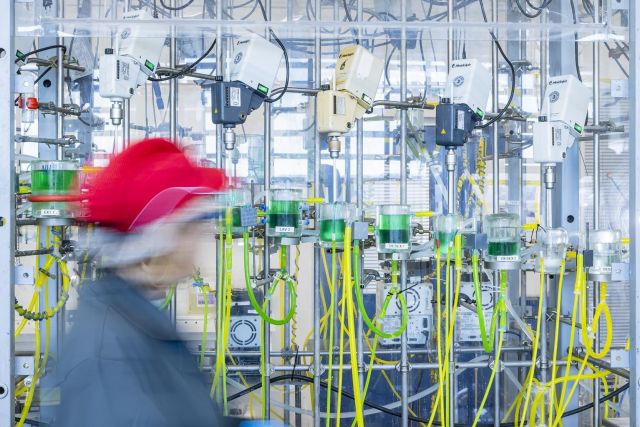
The joint venture capitalises on Orano’s innovative, low-carbon technology, which breaks with existing processes, allowing the recovery of all materials from lithium-ion batteries and the manufacturing of new cathode materials. The joint venture will produce materials also known as “black mass” or “active mass”. This can be refined in Orano’s hydrometallurgical plant to be built in Dunkirk, France, so that the materials can be re-used in batteries, thereby closing the loop of a circular economy.
Thanks to its innovative pre-treatment approach and cutting-edge hydrometallurgical technology, the recovery rates of metals can reach exceptional levels of more than 90%. It enables OEMs to reach European Commission levels of recycling rate with batteries of electric vehicles and ensure the sustainability of the business model.
In a context of increased demand for strategic metals and Europe's strong dependence on those metals, Orano positions itself as a key player in the integrated value chain, from battery recycling to the production of cathode materials.
As part of Stellantis’s Dare Forward 2030 strategic plan, its Circular Economy Business Unit is pushing to increase recycling revenues tenfold and achieve more than R40 billion in total circular economy revenues by 2030. Stellantis is on track to become a carbon net zero corporation by 2038, all scopes included, with single-digit percentage compensation of remaining emissions.
The new commercial recycling entity will also provide Stellantis’s partners, its after-sales network, and other OEMs with a solution to manage end-of-life batteries and scrap from gigafactories. Production will begin in the first part of 2026, reusing existing Stellantis assets and facilities.
Two leading Springbok rugby players, Aphelele Fassi and Jordan Hendrikse, have taken delivery of their new Nissan Navara Pro4X bakkies in Durban.

Dealership service departments know the pattern: the moment warranties and service plans expire; a portion of owners quietly migrate to the independent aftermarket.

Mercedes-Benz Vans South Africa announced its top-performing Agents and Dealers for 2025, recognising their exceptional dedication, customer service and commitment to the brand.
 Advertisement
Advertisement
Advertisement
You can't buy happiness but you can buy cars and that's kind of the same thing.
Unknown
Opel has unveiled a key project under development in its model strategy: a completely new, all-electric SUV in the important and highly competitive C-segment that would extend the current line-up.
Nissan’s decision to drop a planned $500 million investment in electric vehicle (EV) production at its Canton, Mississippi plant is the latest indication that established manufacturers are reassessing how quickly the market will shift to battery power.

Zero Carbon Charge (CHARGE) welcomes the government’s extension of short term fuel levy relief measures aimed at cushioning consumers from rising fuel prices, but cautions that these interventions do not address the underlying structural challenge facing South Africa’s transport economy.